

























































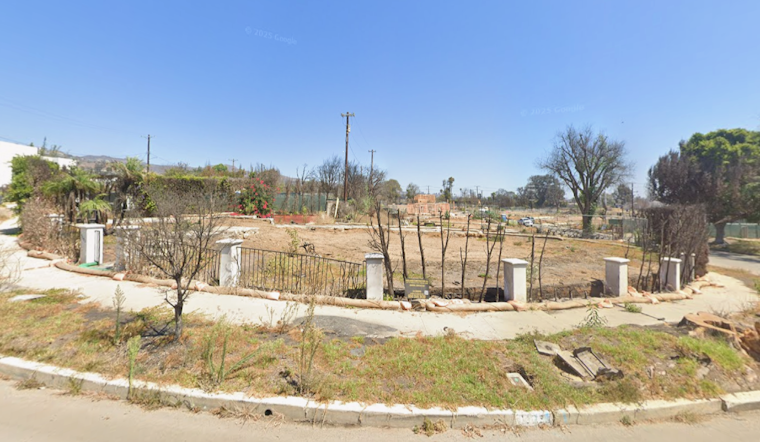
A Los Angeles nonprofit wants to tap the municipal bond market to build roughly 60 new houses priced around $3 million apiece in the fire-scarred Pacific Palisades, using a financing tool usually reserved for affordable housing to rebuild one of the city's wealthiest neighborhoods. Uplifters Foundation is planning to issue as much as $250 million in tax-exempt municipal bonds to fund the construction, with new homes already rising on Fiske Street in the community devastated by last year's wildfires.
The plan, reported by Bloomberg, would route the debt through the California Public Finance Authority rather than a conventional bank loan. Nonprofit groups typically sell this kind of tax-advantaged debt to finance traditional affordable housing, not multi-million-dollar single-family homes, which is part of why the arrangement has drawn scrutiny. According to the Uplifters Foundation, the initiative targets roughly 60 single-family “Heritage Homes,” with the nonprofit planning to repay the bonds by transferring completed houses to displaced families and reinvesting any leftover proceeds into local public infrastructure.
What the Heritage Homes Actually Look Like
The homes themselves are designed as 3- to 4-bedroom residences averaging about 2,600 square feet, built from six to eight standardized architectural templates meant to meet California's wildfire building and defensibility standards, per the foundation's own program materials. Standardizing the designs is intended to hold down construction costs while producing homes that are easier to insure for fire survivors returning to the burn zone. Los Angeles-based Six Peak Capital is serving as the owner's representative on the project, overseeing five general contractors working under guaranteed maximum price contracts to deliver the 60-home portfolio, according to a listing from Talents by Vaia.
Before any bonds can be issued, the Los Angeles City Council had to sign off through a Tax Equity and Fiscal Responsibility Act hearing, a process that lets the public weigh in on tax-exempt debt before local government gives final clearance. That TEFRA hearing wrapped up earlier this year, according to Six Peak Capital, and the project still needs a formal council resolution and a mayoral letter of support for full regulatory clearance.
A Governance Dispute Adds to the Friction
Tensions around the project boiled over in July after Uplifters Foundation executives claimed state Senator Ben Allen sat on the nonprofit's board — a claim Allen's office publicly disputed, stating he holds no board position. Pacific Palisades residents raised similar concerns about the project during a July 29 Community Council meeting, questioning why tax-exempt debt tools were being used to underwrite what critics describe as luxury market-rate housing, as reported by Politico.
The dispute lands against the backdrop of an already brutal rebuilding math in the neighborhood. The January 2025 Palisades Fire burned 23,448 acres across Pacific Palisades, Topanga, and Malibu, destroying 6,837 structures and killing 12 people before firefighters fully contained it on January 31, 2025, according to Frontline Wildfire Defense. That destruction left behind a glut of vacant lots that has since become its own battleground.
Investors and Land Prices Fuel the Debate
Institutional and cash buyers purchased roughly 40% of the vacant lots sold in fire-damaged Pacific Palisades zip codes in late 2025, part of more than 1,000 burned lots that changed hands across Altadena and Pacific Palisades by mid-2026, per The Real Deal. Burned residential parcels on Fiske Street itself — in the neighborhood's Alphabet Streets district — have sold for between $1.5 million and more than $2.1 million for nothing but the vacant lot footprint, according to Redfin listings. With land alone commanding that much, finished replacement homes were always going to land near the $3 million mark once construction costs were added in.
That price gap is part of why Hoodline previously reported on cheaper factory-built alternatives moving into the Palisades, which run about $500 per square foot compared to $800 to $1,200 per square foot for conventional custom stick-built construction. The steep cost of traditional rebuilding is also why some residents worry original homeowners are being squeezed out by better-capitalized buyers and builders. Those fears have already pushed state lawmakers to introduce Senate Bill 1090, which would pause high-density subdivisions in fire zones, and Senate Bill 1229, which would increase regulatory oversight of non-owner-occupied rebuilds, according to the same Real Deal report.
Uplifters Foundation frames its model as a way to lower capital costs and get displaced families back into their neighborhood faster, but the combination of public debt, luxury price tags, and a disputed board claim has turned the project into something of a test case. The pending City Council resolution and mayoral sign-off will determine whether the financing structure clears its final hurdle, at a moment when state lawmakers are actively weighing new limits on exactly this kind of post-fire development.





