

























































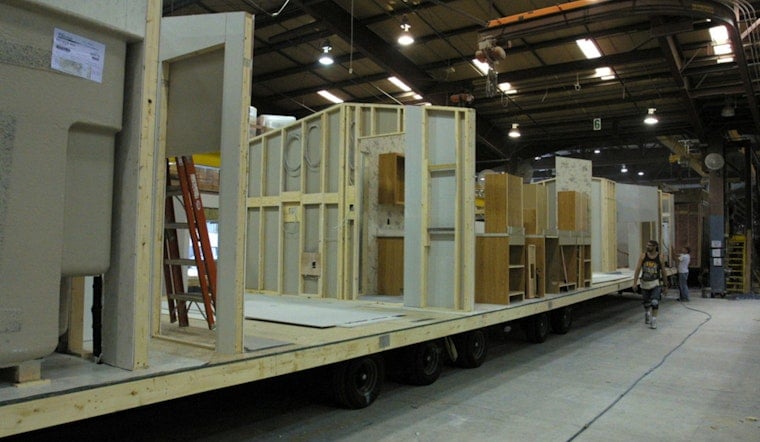
A factory-built home, the first installed in Pacific Palisades since January's devastating wildfires, was assembled on a burned lot this week, giving one displaced family a visible shot at getting back under their own roof. The delivery includes a fully customized 1,700-square-foot main residence and a 600-square-foot ADU that company leaders say will be move-in ready in roughly three months. For homeowners staring down long insurance disputes and soaring construction bids, the project is being framed as a way to compress what is often a years-long rebuild into a matter of months.
The project was built offsite by California-based The Home Gallery and hauled into the Palisades in multiple sections; the main house arrived in three pieces, while the ADU arrived as a single completed unit, according to the Santa Monica Daily Press. Company officials told the outlet the factory build phase takes about 15 days, followed by roughly three months of onsite stitching, and that its Riverside-area factories can produce as many as 20 homes per week. The same reporting put the company's figure for a finished home, including foundation, at about $500 per square foot, compared with many custom stick-built rebuilds in the Palisades that are running $800 to $1,200 per square foot.
"This moment in time, we're very excited that we're in a position to get people back into their homes so fast," The Home Gallery founder Joseph Michaelo told the paper. Vice President Trace McGuire added, "it gets stitched together and you'd never even know it came in multiple pieces." Those remarks were published in Santa Monica Daily Press, which reported the company expects several more installs in the Palisades in the coming weeks as permitting continues.
Faster, Cheaper: The Company Pitch
As outlined on The Home Gallery's website, the firm says factory construction shortens schedules and cuts waste by doing most of the work in a controlled plant, then setting finished sections on site. The company emphasizes that its homes are built to permanent-foundation standards and qualify for conventional financing rather than HUD mobile-home loans.
Permits And Policy Helping Speed Things Up
State laws and local emergency rules are also giving modular and factory-built units a faster lane after disasters. AB 818 requires local agencies to approve or deny complete permit applications for state-approved modular or prefabricated homes within 10 business days during a declared local emergency, while AB 462 lets detached ADUs in qualifying disaster counties receive a certificate of occupancy before a rebuilt primary dwelling is finished. Both measures were written to speed post-fire recovery in places like Los Angeles. AB 818 and AB 462 lay out those rules.
What Comes Next
For neighbors tracking the rebuild, a new interactive map and local reporting show that permit activity across the Palisades is picking up, but progress remains uneven, with many families still negotiating insurance settlements and waiting on utility connections. The Palisadian-Post's rebuild coverage and dashboard offer a parcel-level look at who has permits and who does not, giving a clear view of why factory-built deliveries could matter if they continue. Local officials and builders say the real test will be whether the quicker, factory-based projects actually translate into more families getting keys in the months ahead.
For the family on the lot, the modular delivery turned months of planning into a home-shaped outline in a single day. Whether factory-built homes become a mainstream solution in the Palisades will depend on permitting, insurance buy-in, and neighborhood acceptance, but this week's installation shows off-site construction can at least nudge forward a recovery that left many residents displaced.





