

























































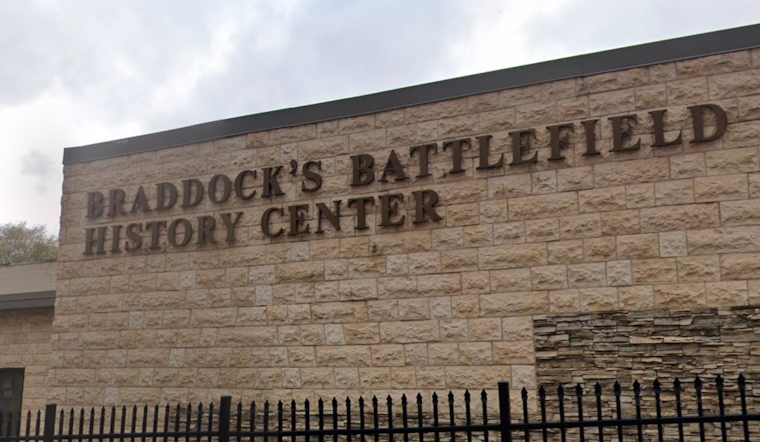
Whiskey tastings, 18th-century mocktails called shrubs, and costumed reenactors playing George Washington and Albert Gallatin will fill the grounds of Braddock's Battlefield History Center on Wednesday, as the North Braddock museum marks the 232nd anniversary of the Whiskey Rebellion with a fundraiser meant to pay for a very modern upgrade: a bigger HVAC system.
The event, called Whiskey Rebels at Braddock's Field, is set for August 12 near the actual site of the 1794 uprising, according to CBS Pittsburgh. The station reports the fundraiser will include historical reenactments, food trucks, whiskey tastings from local and statewide distilleries, and other entertainment throughout the evening. Organizers describe the effort as a way to preserve early American history in the Pittsburgh region while raising money for physical improvements to the museum building on Sixth Street, including an expanded HVAC system that would allow the museum to receive new exhibits.
Pennsylvania State Representative Abigail Salisbury said formative elements of the new nation happened right in the North Braddock neighborhood, per the same CBS Pittsburgh report. Braddock's Battlefield History Center has no lobbyists or huge endowment, the station notes, and it's been described as a labor of love for people who care about the issue in the community.
Why Braddock's Field Was Ground Zero
The site chosen for the fundraiser carries real historical weight. On August 1, 1794, roughly 7,000 armed militiamen and farmers gathered at Braddock's Field before marching eight miles into Pittsburgh to protest the federal whiskey tax, an assembly historians consider the high tide of the Whiskey Rebellion, according to Visit Pittsburgh. It was, according to that account, the largest armed assembly of the entire insurrection.
The tax itself dated to 1791, enacted by Congress under Treasury Secretary Alexander Hamilton to help pay down Revolutionary War debts, according to George Washington's Mount Vernon. That excise sparked what Mount Vernon calls the largest domestic armed resistance to U.S. federal law between the American Revolution and the Civil War. Frontier farmers relied on distilled whiskey as an informal currency, since grain itself was difficult to haul across the Allegheny Mountains, per the same account.
The rebellion, per CBS Pittsburgh, was an uprising eventually thwarted after being caused by a whiskey tax that triggered full-scale resistance on the western frontier. President Washington responded by invoking the Militia Act of 1792 and mobilizing nearly 13,000 militia troops, marking the only time in American history a sitting president personally commanded military forces in the field, according to the American Battlefield Trust. Washington raised that army specifically to put down the rebellion, and the resistance began to fizzle out once he reached the Bedford area, CBS Pittsburgh reports. Matthew Gault, quoted by the station, said the Whiskey Rebellion was the first true test of the new American government, adding that it is often overlooked in history books.
A Negotiator Who Would Later Run the Treasury
Amid the standoff, future Treasury Secretary Albert Gallatin met with rebel representatives at Parkinson's Ferry to negotiate a peaceful resolution, helping talk western farmers into standing down before federal troops ever reached Pittsburgh, according to the Pittsburgh Post-Gazette. Gallatin would go on to become the longest-serving U.S. Treasury Secretary in American history, per that account — a detail that gives the fundraiser's Gallatin reenactment its own historical footnote.
Craft Distillers and a Museum With Deep Roots
The tasting lineup draws on Western Pennsylvania's own distilling heritage. The event features spirits from West Overton Distilling, Liberty Pole Spirits, Red Pump Spirits, Still Mill Distillery, and Ponfeigh Distillery, according to the Pennsylvania Distillers Guild. Regional craft distillers frequently trace their recipes to Monongahela rye traditions dating back to the 18th century, the guild notes.
Braddock's Battlefield History Center itself opened to the public in August 2012 inside a renovated former Cochran Pontiac car dealership on Sixth Street, founded by retired attorney and local historian Robert T. Messner, according to Wikipedia. Messner personally funded early artifact acquisitions and site renovations before the museum's opening. In 2018, he transferred stewardship of the museum to the Fort Ligonier Association, establishing an independent board of directors before the venue reopened under Fort Ligonier's professional executive management in May 2019 — Fort Ligonier itself operates a larger, restored 18th-century French and Indian War fort and museum in Westmoreland County.
The museum sits on the actual battleground of the July 9, 1755 Battle of the Monongahela, known as Braddock's Defeat, where British General Edward Braddock was fatally wounded during the French and Indian War, according to Visit Pittsburgh. That 1755 battle also figured into the military education of a young George Washington, the tourism agency notes. Perched on a hillside overlooking the Monongahela River Valley, the museum faces U.S. Steel's active Edgar Thomson Works and sits across from the historic site of Carnegie Steel President Charles M. Schwab's former mansion, according to PA Bucket List. North Braddock, that account notes, holds physical remnants spanning the French and Indian War, the Whiskey Rebellion, and the birth of American steel.
State Grant Bolsters a Museum Without a Big Endowment
The fundraiser follows a modest but notable win for the museum's finances. In December 2025, Salisbury reported that Braddock's Battlefield History Center secured a $6,200 operating grant from the Pennsylvania Historical & Museum Commission — the museum's first direct state grant from that agency, part of broader Commonwealth funding distributed to regional historical institutions.
Climate control matters beyond comfort for visitors: accredited museums generally need functioning HVAC systems to qualify for loans of high-value historical artifacts and traveling exhibits, CBS Pittsburgh reports. Exactly how much capital the museum still needs to raise to finish the HVAC overhaul, and which new exhibits might arrive once environmental controls are upgraded, remain open questions the station's report did not resolve.





