

























































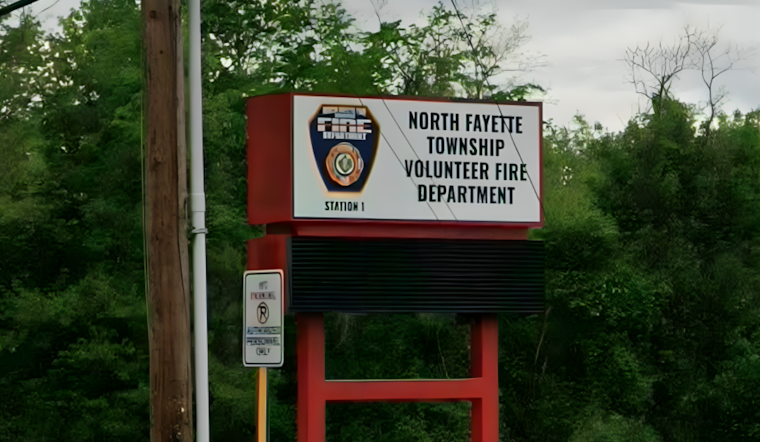
A man walked into the North Fayette Township fire station along Steubenville Pike just before 6 p.m. on Monday, and within moments he had handed an infant to Deputy Chief Alex Toth. The baby was choking. Toth recognized the emergency immediately and, with help from Lieutenant Tyler Pilewski, worked to clear the child's airway obstruction right there in the station.
The infant is expected to be okay, according to the North Fayette Township Volunteer Fire Department. The child's parents had originally been driving toward Children's Hospital by private vehicle when they changed course and pulled into the fire station instead, the department said. While Toth and Pilewski worked on the baby, Lieutenant Chuck Spencer called 911 to request an ambulance so the child could be transported for further evaluation.
It's the second time in just over a year that North Fayette firefighters have helped save a choking child at that same station. On August 4, 2025, Firefighter/EMT Zac Cummings delivered back blows to save another choking infant after a different panicked mother drove up to the same building, according to a report on Reddit's Pittsburgh community. In that earlier case, firefighters and EMTs at the station enabled the infant to resume normal breathing.
A Detour That May Have Made the Difference
UPMC Children's Hospital of Pittsburgh sits on Penn Avenue, roughly 18 to 20 miles east of North Fayette Township, a drive that can stretch out through urban traffic during a medical emergency, per Pittsburgh Metroguide. For parents watching an infant struggle to breathe, that distance can matter enormously. Medical literature from the American Academy of Pediatrics indicates that complete airway obstruction in infants can cause irreversible brain damage within four minutes of severe oxygen deprivation.
Airway obstruction is recognized by the National Safety Council and federal health agencies as the leading cause of unintentional injury death among infants under one year old. That statistic underscores why the decision to stop at a nearby fire station, rather than continue toward a hospital across town, can carry life-or-death weight in the moments after a baby starts choking.
Following Updated Choking Protocols
Updated guidelines released in October 2025 by the American Heart Association and American Academy of Pediatrics specify that for conscious choking infants under one year old, rescuers should alternate five back blows with five chest thrusts, and should strictly avoid abdominal thrusts because of the risk of organ injury. Those are the same techniques believed to have been used in both the August 2025 and 2026 rescues at the North Fayette station.
The department is able to respond to walk-in emergencies like Monday's because Station 209 is staffed by paid township fire inspectors during daylight hours, along with live-in members and volunteer staffers, according to the fire department. That hybrid staffing model kept trained personnel on-site at 5:45 p.m. Monday, when station members happened to be gathered to prepare for Quick Response Service recertification, per the same Reddit account. In Pennsylvania, QRS certification from the state Department of Health's Bureau of EMS authorizes fire departments to provide basic life support and patient stabilization ahead of an ambulance's arrival, according to Holiday Park VFD's description of the program.
Recognition for the Responding Crew
The North Fayette Township Volunteer Fire Department recognized Deputy Chief Alex Toth, Lieutenant Tyler Pilewski, Lieutenant Chuck Spencer, Firefighter Cory Russi, Firefighter Micah Fitzwilliams, and Firefighter John Leitschaft Jr. for their roles in Monday's rescue. The department, founded in 1970, responds to more than 400 emergency calls annually across North Fayette Township and its mutual aid districts, according to the department's own account.
Still, the department itself has noted that volunteer fire stations do not guarantee round-the-clock on-site personnel, meaning walk-in emergency visits carry real risk even when they succeed. Monday's outcome, and last year's, both depended on trained responders happening to be present at the moment parents needed them. The Monday incident was first reported by CBS Pittsburgh, in an article by Mike Darnay.



