

























































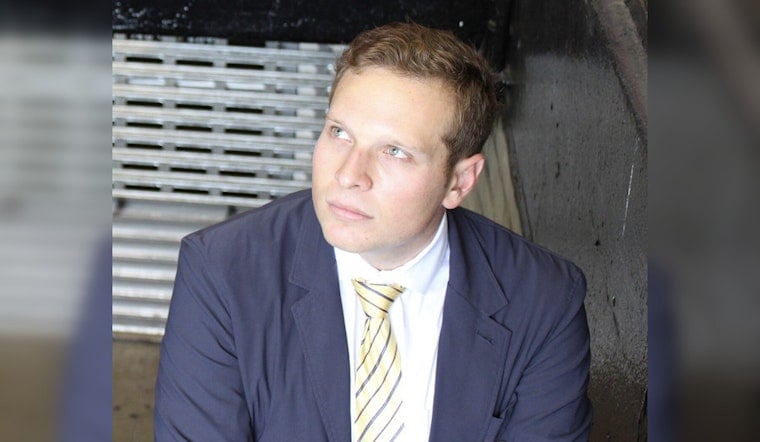
New York Magazine has ended its column with writer Ross Barkan after a three-month internal review found that 67 of his pieces lacked proper attribution of language, information, or sourcing. The magazine is now updating those archived columns and has apologized to the writers whose work went uncredited. Barkan, a left-leaning political writer with bylines in the New York Times, has close personal ties to New York City Mayor Zohran Mamdani, whom he hired as his campaign manager during his own unsuccessful 2018 run for a Queens seat in the New York State Senate.
The trouble started in May 2026, when a Washington Post reporter flagged striking similarities between the lead of a Barkan column and a Washington Post story published just days earlier, according to KPBS. That flagged column concerned Ben Shapiro, and New York Magazine responded by adding direct attribution to the Washington Post reporter. Once the initial allegations surfaced, Barkan defended himself on social media, arguing that hyperlinking to original sources or naming authors within the text was sufficient attribution for a political columnist building on existing reporting, and he maintained the issue was overblown.
That defense did not hold for long. An NPR correspondent ran an automated spot check of Barkan's archive using a large language model days later, in mid-May 2026, and turned up additional instances of verbatim and near-verbatim text lifted from articles in The Intercept and Compact Magazine, per the same KPBS account. Compact Magazine's editor, Matthew Schmitz, condemned the lifted passages and publicly called on New York Magazine to take action. Barkan has denied the additional plagiarism allegations that emerged from that search.
A Three-Month Review Turns Up 67 Cases
New York Magazine launched a formal review of Barkan's body of work in response to the mounting allegations, ultimately examining nearly 250 pieces over three months, according to the New York Post. That review, reported by Post writer Alexandra Steigrad, found 67 columns lacking proper attribution of language, information, or sourcing. The magazine said it regretted that Barkan's work did not meet its editorial standards and said it is committed to addressing any other instances that come to light. New York Magazine will no longer publish Barkan's column, and it is updating the 67 flagged pieces with proper attribution.
Barkan, for his part, said he should have been more careful with citations across some of the nearly 250 pieces reviewed and apologized for the citation errors. He said he and New York Magazine mutually decided to end his column there, and he has pledged to do more careful work going forward. Barkan has written both fiction and nonfiction, including the novel Colossus, published in April 2026, along with the earlier novel Glass Century and the 2024 political analysis Fascism or Genocide, per background reporting from Current Affairs. He grew up in Bay Ridge, Brooklyn, and holds degrees from Stony Brook University and New York University, according to background compiled by The Nation, where he is now writing a new column at what he has described as a more considered pace.
The Mamdani Connection
The dismissal has drawn attention in part because of Barkan's long relationship with Mamdani. Barkan first met Mamdani in late 2017 and hired him as campaign manager the following year for his Queens state senate primary bid, when Mamdani was a 26-year-old political organizer, as detailed by Current Affairs. Barkan has since mentioned Mamdani's role as his old campaign manager across his Substack and other platforms, and he has a forthcoming book on Mamdani titled The Revolutionary: Zohran Mamdani and the Remaking of American Politics, chronicling the mayor's rise from grassroots organizer to City Hall, according to The Guardian.
Barkan has also boosted Mamdani in his writing, praising him in pieces for left-leaning publications and calling Mamdani's 2025 election victory “seismic” in a piece for The Nation. Mamdani won the New York City mayoral race in November 2025 as a Democratic Socialist and took office in January 2026, and a Siena University poll conducted in late June 2026 found him holding a 58 percent favorability rating among New Yorkers, with only 26 percent disapproving despite persistent criticism from conservative outlets, the Guardian reported. Hoodline previously covered Mamdani's move into Gracie Mansion and his early appointments as mayor, though this is the first Hoodline story tied specifically to Barkan's plagiarism review.
What Comes Next
Barkan is not leaving journalism. He confirmed he will keep writing a regular column on national politics for The Nation, the left-leaning publication that had already published some of his commentary on Mamdani, per TheWrap's reporting on the New York Magazine review. The New York Post reported that it asked The Nation whether the outlet plans to continue employing Barkan going forward.
Barkan previously drew media attention for a different kind of professional exit, resigning from the New York Observer in April 2016 in protest of then-executive editor Ken Kurson's advisory role to Donald Trump and the paper's endorsement of Trump in the Republican primary, according to background compiled on Wikipedia. The Observer was owned at the time by Jared Kushner, Trump's son-in-law. For now, the scope of New York Magazine's continuing review remains open, with the publication saying it is committed to addressing any further instances of improper attribution that may surface.





