

























































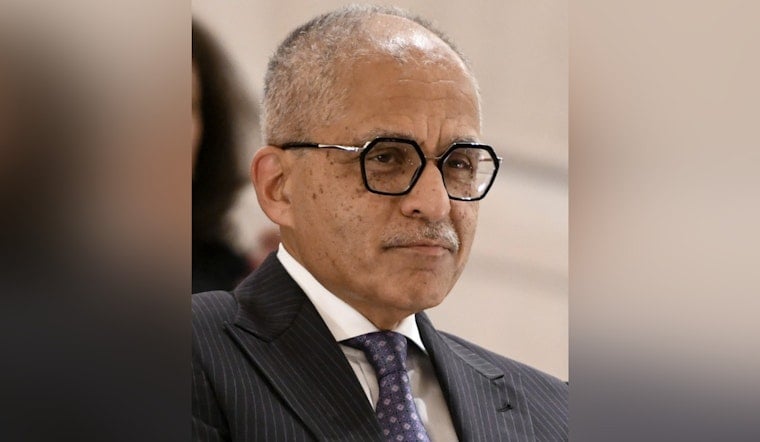
New York's Chief Judge Rowan Wilson has been cleared of misconduct by the state's judicial ethics watchdog, but only after conceding that he should not have called on voters to oust judges who hand down lengthy prison sentences he described as “stupid.” The State Commission on Judicial Conduct dismissed a complaint against Wilson without imposing any penalty, closing out a monthslong dispute that pitted the state's top jurist against Republican lawmakers who accused him of crossing ethical lines meant to keep judges out of politics.
According to a confidential six-page letter from the Commission on Judicial Conduct dated July 7, first reported by Newsday, the panel accepted Wilson's March 30 clarification that his “stupid” remark referred to wasting state resources on incarcerated people who had already been rehabilitated, not to criticizing lengthy prison terms in general. As reported by the New York Post, Wilson wrote in his own defense that he had lost control of his remarks because of extreme disgust at hearing human beings compared to caged animals, and he said he was reacting to an unnamed judge who had called a defendant an “animal” who should be locked up for life.
Wilson made the remarks on February 27 during the Second Look Symposium at the CUNY School of Law, an event organized by the school's Second Look Project in partnership with the criminal justice reform groups Communities Not Cages and the Center for Community Alternatives, according to CUNY School of Law. At the forum, Wilson encouraged attendees to vote out judges who support harsh punishments, a comment that became the crux of the ethics complaint filed weeks later.
Republicans Say Wilson Crossed a Line
Eight Republican state legislators, led by Senate Judiciary ranking member Sen. Anthony Palumbo and Assembly Judiciary ranking member Asm. Michael Tannousis, filed the formal misconduct complaint on March 11, according to the New York State Senate. The lawmakers argued that Wilson had crossed a line by asking forum attendees to vote out hard-nosed judges, and Tannousis said the comments were “wholly inappropriate” and sought to galvanize opposition against judges with whom Wilson disagreed, per the Post's report.
Palumbo said he was glad Wilson was forced to address his comments, but he also questioned whether the commission applied a deferential standard to Wilson that it would not have applied to a judge with an alternative viewpoint, the Post noted. Under Section 100.5 of New York's Rules Governing Judicial Conduct, state judges are strictly prohibited from engaging in political activity, making campaign endorsements, or participating in political gatherings outside their own election windows, according to the New York State Unified Court System. Judges statewide must follow those strict rules governing their political statements, regardless of the cause they might personally support.
The commission concluded that while Wilson's remarks urging attendees to vote against judges who use disparaging language could be construed as directing votes, his written clarification — stating that voters should become informed and express their preferences through the electoral process — was sufficient, particularly because he did not name specific individual judges. Wilson wrote that “the rights conferred on others define who society is” and added, “I wish I had been clearer,” language the commission apparently found persuasive enough to close the case without sanction.
The Second Look Act's Slow Climb Through Albany
The commission separately did not object to Wilson's call for Albany lawmakers to pass the Second Look Act, the sentencing reform bill at the heart of his advocacy, finding that a chief judge may advocate for and propose legislation concerning the law, the legal system, and the administration of justice. Under the proposed bill, Senate Bill S321, incarcerated individuals who have served at least 10 years or half of their court-imposed sentence could petition a judge for a resentencing hearing to evaluate rehabilitation and potential early release, according to the Queens Daily Eagle.
The bill passed out of the Senate Codes Committee in May, the furthest it has advanced since it was first introduced in 2022, per the same outlet's reporting. Wilson devoted his entire February 2025 State of the Judiciary address to urging lawmakers to pass the measure, arguing that prolonged mass incarceration is fiscally wasteful and does not enhance public safety. Sentence reconsideration laws have gained traction nationally, with at least 25 states introducing legislation allowing courts to re-evaluate lengthy prison sentences after individuals serve 10 to 15 years, according to The Sentencing Project.
A Historic Appointment, and a Record of Advocacy
Wilson was nominated by Governor Kathy Hochul and confirmed by the state Senate in April 2023 as New York's first Black chief judge, taking the helm of the Court of Appeals after Senate Democrats rejected Hochul's initial, more conservative nominee, Hector LaSalle. He has presided over the Court of Appeals since 2022, and his tenure has included high-profile rulings such as the overturning of Harvey Weinstein's first sex-crimes conviction in a Manhattan court, as well as a dissenting opinion supporting Happy the elephant's ability to petition for freedom from the Bronx Zoo, an argument built on habeas corpus access to challenge alleged wrongful imprisonment.
Wilson ultimately admitted he should not have called for voters to oust judges who support lengthy prison sentences, and he acknowledged he should not have called such sentences “stupid” without the context he later provided. That concession closed the ethics matter, but it did not end the broader argument over how far a sitting chief judge can go in pushing a legislative agenda from the bench — a debate Hoodline previously covered when advocates rallied at the Capitol in support of the same bill. As the Queens Daily Eagle noted, the ethics inquiry is officially closed, but the legislative fight over the Second Look Act continues as the bill makes incremental progress in Albany.



_Rowan_Wilson.jpg)