

























































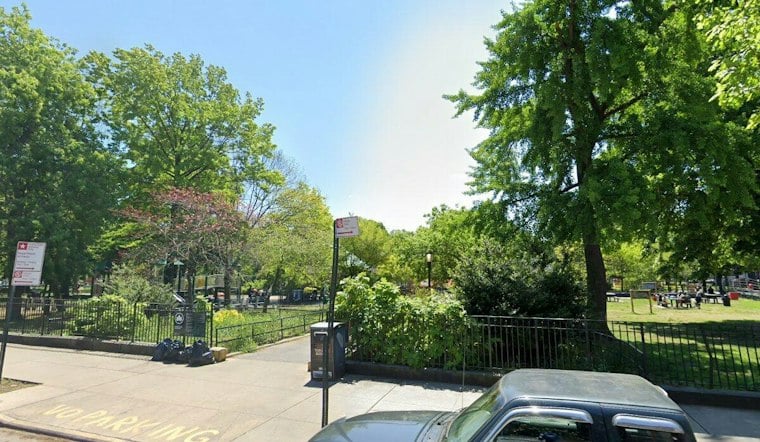
Dozens of frustrated ratepayers packed Herbert Von King Park in Bedford-Stuyvesant on Tuesday night, venting over utility bills that keep climbing while demanding the city ditch Con Edison and National Grid altogether in favor of a publicly owned power system. The gathering, billed as a utility rip-off hearing, came as Con Edison has acknowledged that some recent increases in energy costs are outside its control.
The event was organized by the Public Power New York coalition, which wants to abolish Con Edison and National Grid in favor of a publicly owned utility, according to PIX11. Zach Jones, who pays several hundred dollars a month for electricity in his two-bedroom apartment, was among those who showed up to air his frustrations, the outlet reports. Harrison Carpenter-Neuhaus, a speaker at the hearing, put it bluntly: the for-profit utility system prioritizes shareholders over New Yorkers, he said.
Utilities Defend Their Record Amid Criticism
National Grid and Con Edison both pushed back on the criticism, defending their practices, per the same report. Con Edison said it has provided more than $500 million in discounts to income-eligible customers over the past two years, and that it has expanded its energy affordability programs and offered flexible payment options to ease customers' financial burden. The utility also said it has invested in the electric grid to maintain reliable service and build out clean energy systems.
National Grid, meanwhile, has requested that state regulators approve a rate freeze, saying the move would provide relief to nearly 1.3 million New York City customers. The company pointed to a range of existing offerings, including regulator-approved efficiency programs, affordability initiatives for income-eligible New Yorkers, weather-related protections, expanded multilingual customer support, and a commitment to non-pipeline alternatives. Carpenter-Neuhaus was unimpressed, calling National Grid's proposed rate freeze insufficient.
That freeze proposal, a “Rate Stabilization Proposal” filed in May with the New York Public Service Commission, would lock in gas delivery rates for 1.9 million downstate customers from April 2027 through March 2028. But consumer watchdogs including AARP New York and the City of New York filed formal opposition in September, according to Newsday, alleging the plan merely defers costs into future customer surcharges rather than delivering real savings.
Labor Pushes Back On Public Power Push
Not everyone at odds with the utilities is on board with the public power solution, however. Laborers Local 731 has opposed the plan to replace investor-owned utilities with a government-controlled grid, with the union's Carmine D'Amato warning that such a shift could endanger union jobs and workers' livelihoods.
The coalition's push rests on the Build Public Renewables Act, which New York enacted in May 2023 as part of the state budget. The law empowers the publicly owned New York Power Authority to construct, own, and operate renewable energy projects whenever private developers fail to meet state climate targets, according to Public Power NY. The authority's board unanimously approved an expanded strategic plan in December 2025 targeting 5.5 gigawatts of public solar, wind and battery storage capacity statewide, as reported by Canary Media. This year's enacted state budget backed that buildout with $100 million in funding, per Third Act Upstate New York.
Property Taxes Set To Appear On Bills
Starting next month, Con Edison customers will see local property taxes itemized directly on their bills, a change tied to a November 2025 Joint Proposal approved by state utility regulators that requires explicit parenthetical breakdowns for New York City and Westchester County, according to the New York State Public Service Commission. New York City property taxes have increased 45 percent over the last five years and now constitute 21 percent of utility bills, according to the PIX11 report.
The move follows a January 2026 decision by the Public Service Commission approving a three-year rate plan for Con Edison covering 2026 through 2028, authorizing electric delivery revenue increases of $234 million in year one, $409.7 million in year two, and $421.1 million in year three, as reported by Westfair Communications. Statewide, the affordability crisis runs deep: utility data published in 2025 showed more than 1.3 million New York households were 60 days or more behind on energy bills, with a collective unpaid balance exceeding $1.8 billion, according to New York Open Data. New York City residential customers already pay electricity rates roughly 35 to 40 percent higher than the national average despite relatively high household energy efficiency, per Brooklyn SolarWorks.
Lawmakers And Activists Keep Up Pressure
State lawmakers have moved on their own front too. In April, the New York State Senate passed a package of utility ratepayer protection bills that prohibits service disconnections during extreme weather events and restricts utility companies from recovering legal fees from customers, according to the New York State Senate. The Tuesday night hearing in Bedford-Stuyvesant also follows months of more confrontational tactics, including an August protest in which nine climate activists were arrested after blockading the entrance to Con Edison's Manhattan headquarters, as Hoodline previously reported.
For now, the standoff shows no sign of resolving. Ratepayers like Jones remain stuck with bills they say keep climbing, while Con Edison and National Grid point to investment, discounts, and regulatory approvals as evidence they are working to ease the burden. The Public Power New York coalition, meanwhile, is betting that public ownership, not corporate reform, is the only real fix.





