

























































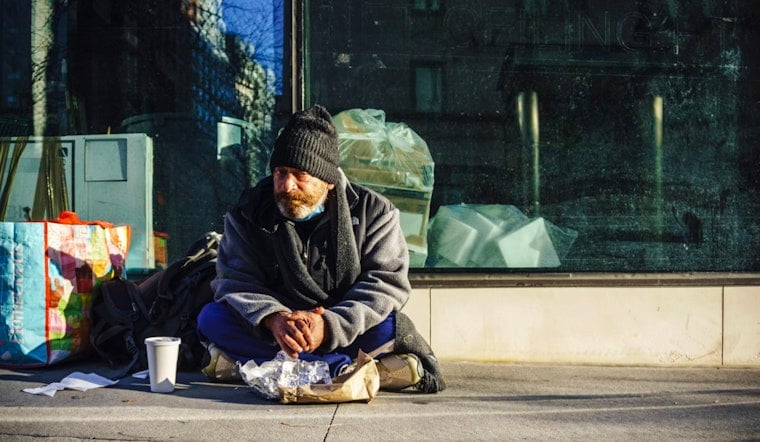
Six hundred thirty-four homeless New Yorkers died between July 2024 and June 2025, and drug addiction, overdoses or alcoholism were tied to nearly half of those deaths, according to the city's latest annual report on mortality among people experiencing homelessness. Drug-related causes alone killed 251 people, or 40 percent of everyone who died, making it the leading cause of death among the city's unhoused population for the period covered by the report.
The total marks a decline of nearly 18 percent from the 770 deaths recorded in FY2024, according to the report, which was jointly issued by the city's health and homeless services departments and covered here by the New York Post. Drug-related deaths specifically dropped 28 percent, from 348 in FY2024 to 251 in FY2025. Still, the report's authors cautioned that the true death toll is likely undercounted, because agencies serving thousands of migrants housed in temporary border-crisis encampments did not provide complete matching data to identify homeless decedents.
This is the 20th such report the city has issued, a requirement under New York City law dating back to Local Law 63 of 2005 and later made permanent by Local Law 7 of 2012, which mandates that the Department of Health and Mental Hygiene and the Department of Homeless Services jointly track and publish this data every year. The report says the information provides critical insight into the population's health issues and challenges, and prior versions of the annual report have helped the city develop programs like its opioid overdose prevention effort and naloxone administration trainings.
Where and How People Died
Beyond overdoses, alcohol misuse or dependence accounted for another 34 deaths, or 5 percent, while heart disease caused 78 deaths, or 12 percent, and cancer caused 23 deaths, or 4 percent. Fifteen people died from cold exposure or hypothermia, another 15 died in subway accidents, 14 died in auto accidents, and 11 were homicide victims. Suicide claimed 18 lives, falls killed three people, heat-related causes killed four, and toxic substances outside of drug overdose killed five. Ten deaths were listed with no determined cause, and accidents excluding drug overdose accounted for 60 deaths, or 9 percent. The Office of the Chief Medical Examiner investigated and confirmed the overwhelming majority of the deaths documented in the report.
Nearly half of those who died, 48 percent, died inside a homeless facility, while 58 percent died in a hospital. Fifty-two percent of decedents were unsheltered at the time of their death, and among that unsheltered group, 22 percent died outdoors. The report counted deaths across a wide range of settings, including temporary shelters, streets, subways, abandoned properties and acquaintances' homes.
A Shelter System Reshaped by the Migrant Crisis
The incomplete data behind this year's undercount traces back to how the city restructured its shelter system during the asylum-seeker influx. NYC Health + Hospitals, the Department of Housing Preservation and Development, and the city's Office of Emergency Management all provided temporary shelter to tens of thousands of new migrants during the border crisis, expanding emergency housing well beyond the traditional Department of Homeless Services network. The Department of Health and Mental Hygiene did not receive data from those three agencies for matching homeless decedents, the report noted, which is why officials believe the death totals are likely undercounted rather than fully resolved.
New York City's shelter population swelled to more than 100,000 people at the peak of the migrant crisis in 2023. As of Aug. 6, 2026, the city's shelter system held 83,197 people. In response to the pressures on emergency housing, the Mamdani administration re-upped a $1.86 billion contract for commercial hotels to provide emergency homeless space over three years, according to the Post's reporting.
Broader Trends Behind the Numbers
The FY2025 drop in overdose deaths follows a longer and more troubling pattern documented separately by HELP USA, which found that total deaths among NYC's homeless population grew 375 percent from 162 in FY2006 to 770 in FY2024, with drug overdose deaths surging 815 percent over the same span and remaining the leading cause of unhoused deaths for 11 consecutive years. That same research found a sharp divergence in safety outcomes: overdose deaths among sheltered homeless New Yorkers fell 37 percent between FY2022 and FY2024, while overdose deaths among unsheltered residents living outdoors surged 160 percent over that same period. Drug-related deaths accounted for 45 percent of all homeless deaths in FY2024, according to the report, before falling to 40 percent this year.
Citywide, the overdose crisis extends well beyond the homeless population. New York City recorded 3,046 total drug overdose deaths in 2023, according to the NYC Department of Health and Mental Hygiene, with synthetic fentanyl involved in 80 percent of fatal overdoses. Bronx residents faced the highest overdose death rate in the city that year, at 78.0 per 100,000 people, more than double Manhattan's rate of 36.0 per 100,000, with South and Central Bronx neighborhoods bearing the heaviest toll.
People experiencing homelessness face a greater risk of health issues and death overall, the report noted, and negative social factors and housing instability increase the likelihood of poorly controlled physical and mental health conditions. The report's authors said this annual accounting continues to help city policymakers and care workers identify and address pressing health concerns facing the unhoused population.
Deaths That Followed a Deadly Winter
The FY2025 reporting period closed just months before a brutal stretch of weather tested the city's emergency response system. A severe cold snap in January killed at least 13 unhoused New Yorkers during Mayor Zohran Mamdani's first month in office, prompting emergency shelter placements and public scrutiny over the administration's outreach efforts. The City Council later grilled the Mamdani administration over its handling of those weather-related deaths, and in the spring, the Council introduced legislation to track street homeless movement, drawing pushback from civil liberties advocates worried about potential police access to that navigation data.
City agencies continue to provide temporary emergency shelter alongside assistance transitioning people into permanent and supportive housing, even as debates persist over voluntary versus involuntary placement and harm-reduction funding. The current annual mortality figures arrive against the backdrop of a prior record: in Fiscal Year 2021, the city logged what was then a record-high 640 homeless deaths, a 52 percent single-year surge from 404 in FY2019 driven by the COVID-19 pandemic and escalating fentanyl poisonings. This year's total of 634 sits just below that pandemic-era peak, underscoring how overdose deaths among the city's most vulnerable residents remain stubbornly persistent even as overall numbers ease.





