

























































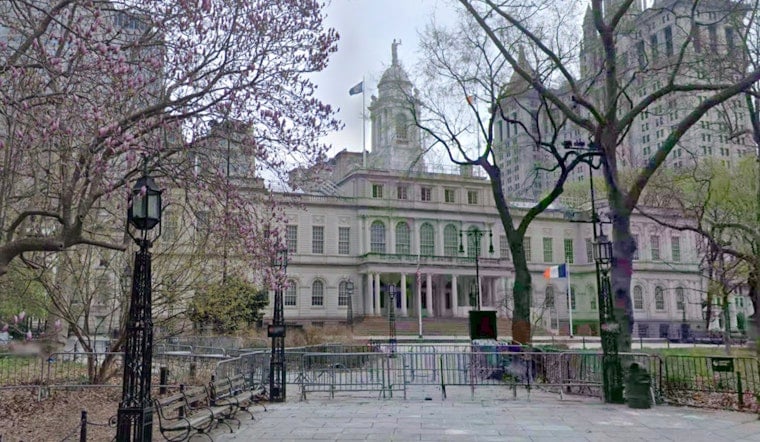
Rents across New York City keep climbing even as officials push a sweeping package of tenant protections they say could become among the toughest in the nation. Elected officials, advocates and community leaders gathered Wednesday at City Hall Park to call for stronger protections and lower rents, framing the moment as a turning point in the city's long-running housing fight.
State Assemblymember Tony Simone outlined 32 legislative actions addressing the housing crisis, according to a report from PIX11. Officials said the pro-housing package would be among the strongest in the country if enacted in Albany. The rally comes as new figures show Manhattan's average rent sitting at $6,555 a month, with studios and one-bedrooms averaging $5,486 and two- and three-bedroom rents continuing to climb compared to 2025, per a Corcoran Group report cited by the outlet.
Brooklyn tenants are facing similar pressure. Studios and one-bedrooms in the borough averaged $4,302, up 6% over the past year and the highest level recorded since the borough began tracking that data in 2023, the same report found. Two-bedroom units averaged $5,547, a 2% annual increase, while three-bedroom rents held at $7,161, unchanged from July 2025.
What's in the Pro-Housing Package
The package includes several targeted bills. The Hazard Free Homes Act would allow tenants to repair hazardous housing code violations themselves when landlords fail to act, then deduct the repair costs from rent — a response to the reality that New York City apartments often require constant repairs. The Tenant Protection Strengthening Act and the Penalties for Rent Overcharges Act round out the core of the proposal.
Under bills A654 and S467, penalties would increase for property owners who overcharge tenants in rent-regulated housing. The state legislation, filed as S467 in the State Senate, would raise civil penalties up to five times the overcharge amount unless a landlord proves the charge was non-willful, addressing gaps where owners fail to properly register rent-regulated units or treat them as market rate.
Another measure, A659 and S9650, would prohibit landlords receiving 421-a tax benefits from including false or misleading rent-decontrol information in leases or renewals. That bill passed both houses of the state legislature in May, according to the New York State Assembly.
Tackling Vacant Public Housing
The package also includes the NYCHA Vacant Unit Database Act, which would require the New York City Housing Authority to create and maintain a public database of vacant units under bill A794. That database would track how long units have sat empty, repair timelines and projected availability, with updates required every quarter.
The push follows earlier reporting on the scale of the problem. Roughly 6,700 NYCHA apartments across the five boroughs were sitting vacant as of a March review, Hoodline previously reported on stalled repairs locking up thousands of units during a severe citywide housing shortage.
A Market With Almost No Room to Move
The pressure behind Wednesday's rally traces back to numbers that have alarmed housing officials for years. The city's rental vacancy rate plunged to 1.41% in the 2023 Housing and Vacancy Survey, its lowest level since 1968, according to the NYC Department of Housing Preservation and Development. Units renting under $1,100 a month were nearly impossible to find, with a vacancy rate of just 0.39%, a level low enough to keep the city's declared housing emergency legally in effect.
That scarcity leaves New York City apartment seekers struggling to find reasonably priced units, and it also discourages tenants from moving once they find a place to live. The median move-in year for city renters is 2017, four years earlier than the national median of 2021, per data cited by Realtor.com; in the Bronx, the median move-in year drops even further, to 2015.
State lawmakers have already enacted some major tools aimed at the crunch, including the Good Cause Eviction Law, which caps annual rent increases for many market-rate tenants, and the 485-x tax incentive that replaced the expired 421-a program with mandatory wage standards and permanent affordability set-asides. The 421-a break had lapsed in June 2022, contributing to a multi-year lull in private residential construction.
Other Fronts in Albany's Housing Fight
Simone has pushed other measures this year beyond the City Hall Park package, including a proposal to raise the household income eligibility limit for the Senior Citizen Rent Increase Exemption and Disability Rent Increase Exemption programs from $50,000 to $75,000. Those programs freeze rents for qualifying tenants, but Social Security cost-of-living increases had inadvertently pushed some recipients above the old threshold.
The rent pressure has already shown up in the city's regulated stock. The Rent Guidelines Board authorized increases of 3% for one-year leases and 4.5% for two-year leases across nearly one million rent-stabilized apartments last year, Hoodline previously reported in its coverage of the board's rent-cap vote. And even the city's affordable housing lotteries have drawn scrutiny — an East New York lottery this summer offered studios starting at $830 a month for households at 40% of Area Median Income, a threshold advocates say can still be burdensome because it's calculated regionally across the entire metro area, as Hoodline detailed in its report on that lottery's $830 studios.
Whether the 32-bill package advances in Albany remains to be seen. Tenant advocates frame the proposals as essential checks against overcharging and administrative neglect, while property owner groups have argued in related coverage that rising compliance costs and fixed rent caps squeeze the capital needed to maintain aging buildings — a tension that is likely to shape the debate as the measures move through the legislature.





