

























































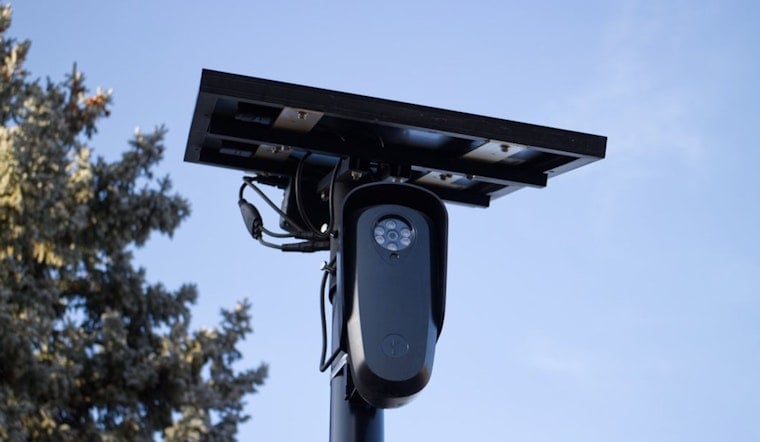
Oconee County Council held a special called meeting Wednesday to stop the sheriff's office from immediately canceling its contract with license plate camera company Flock Safety, after fears grew that scrapping the deal too soon could wipe out data investigators need to review how deputies have been using the surveillance system.
The emergency session came just days after Oconee County Chief Deputy Kevin Davis submitted a letter to the county procurement office on August 24 requesting a “termination for convenience” of the sheriff's office Flock Safety contract, citing a newly passed county ordinance as the reason, according to FITSNews. As reported by WYFF News 4, council members want to wait until after a third reading of the proposed camera ban before any cancellation goes through, and during the August 26 meeting they passed a motion to send a letter to Flock Safety asking the company not to destroy any records or data gathered by the cameras.
An Ordinance Aimed at Mass Surveillance
The dispute traces back to August 18, when Oconee County Council voted 4-1 to approve the first reading of Ordinance 2026-26, the “Protection from Mass Surveillance Ordinance.” The measure would bar county funds, property, personnel, equipment, and road rights-of-way from supporting mass surveillance devices, and it would penalize any municipality that still participates by withholding discretionary county funding, per 101.7 WGOG. Councilman John Elliott cast the lone dissenting vote, arguing that Flock cameras remain a vital tool for law enforcement.
According to the South Carolina Association of Counties, Oconee's vote marks the first county-level legislative effort in the state to defund or prohibit Flock-style surveillance camera networks, as noted by the Post and Courier. While some South Carolina cities have evaluated their own camera use, counties have typically left surveillance decisions to elected sheriffs, making Oconee's move a notable break from that pattern.
A Fight Over Who Sees the Audit Logs
Underlying the contract dispute is a deeper disagreement over transparency. Oconee County Sheriff Mike Crenshaw has requested a formal legal opinion from the South Carolina Attorney General on what audit log details his office can legally share with county council members, the Lake / WSNW reports. Councilman Tommy James clarified that council is specifically seeking audit logs tied to closed cases, not ongoing investigations, while members passed motions demanding preservation of the data as they await the state's guidance.
The concern over vanishing records did not come out of nowhere. During a July 21 public safety committee meeting, Sheriff Crenshaw disclosed that his office had previously disciplined an employee for misusing the department's Flock camera system, and that he subsequently instituted a policy mandating immediate termination for any future misuse, according to FITSNews. That disclosure helped fuel the council scrutiny that followed.
Misuse Scandals Across Upstate South Carolina
Oconee's debate is unfolding against a backdrop of Flock-related misconduct cases across the Upstate. In August, a Mauldin police officer was fired after state Criminal Justice Academy records showed she used her department's Flock system 166 times between March and July to track an ex-boyfriend, logging the searches under false justifications such as welfare checks and traffic stops, per the Post and Courier. She faced no criminal charges.
Nearby in Greer, city officials physically covered all 10 of their Flock Safety cameras and enacted a 90-day suspension of the program on August 21, after firing two police officers in late June for misusing the system to track private citizens and ex-partners, according to the Greenville Journal. City officials there say the pause is meant to weigh the cameras' effectiveness against privacy risks and to examine the vendor's data retention policies.
An August internal audit in Colleton County turned up an even larger breach: a sheriff's lieutenant was terminated after investigators found he had conducted more than 2,000 unauthorized Flock camera searches targeting himself, fellow deputies, friends, and former associates, WCIV ABC 4 reported. Together, the cases suggest license plate reader database abuse has become a broader statewide challenge rather than an isolated incident.
Pushback Turns Physical Elsewhere
Frustration with automated license plate readers has occasionally spilled into vandalism. In Pageland, South Carolina, newly installed Flock cameras were cut from their poles in July, and in Winona, Minnesota, all eight of the city's Flock cameras were stolen that same month, with Winona police ultimately declining to reinstall them, citing public trust concerns, the Washington Times reported.
U.S. Representative Tim Burchett introduced House Bill 9800, the Protection Against Mass Surveillance Act, in July, which would bar federal agencies from purchasing automated license plate readers and prohibit local police departments from using federal grant funds to buy ALPR camera networks, as Hoodline has reported elsewhere.
According to a Congressional Research Service report published July 21, 2025, ALPR case law typically focuses on law-enforcement queries of certain databases containing automated license plate reader data.
For now, Oconee County's Flock cameras remain under contract while the third reading of Ordinance 2026-26 looms and the Attorney General's office weighs in on what audit information council members can lawfully review. Sheriff Crenshaw has maintained the cameras are a critical crime-fighting tool, even as county leaders push to preserve records that could reveal how — and whether — the system has been misused closer to home.





