

























































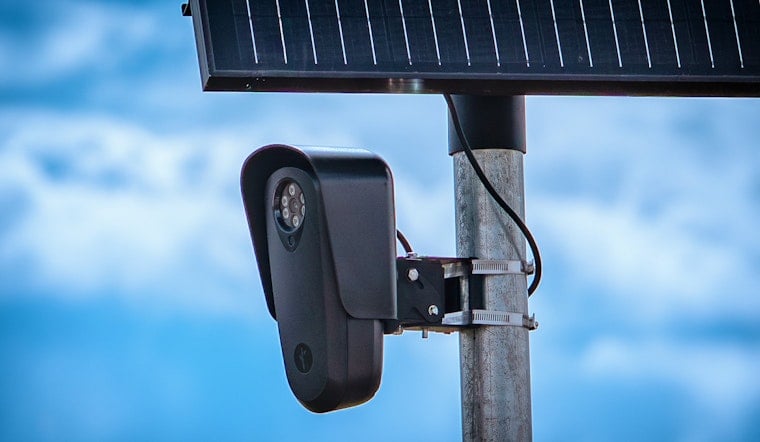
East Bridgewater police are terminating their contract with Flock Safety and working with the company to physically remove the license plate cameras that were only just being installed, after residents packed a Select Board meeting to voice privacy concerns. Police say they identified no misuse of the system before pulling the plug, framing the decision instead as a response to community pushback rather than any scandal involving the cameras themselves.
According to WHDH, East Bridgewater police announced the force will terminate its contract with Flock Safety and said the department recognized the privacy concerns of East Bridgewater residents. The three-year, roughly $38,000 deal for four cameras was funded entirely through federal drug asset forfeiture money tied to the department's participation in the FBI Boston Metro Gang Task Force, not local tax dollars, according to South Shore News.
Only one of the four planned cameras had been mounted, and it had not yet become fully operational, when Police Chief Michael Jenkins paused the rollout following a packed Select Board meeting on August 10. The outlet's report on the cancellation notes that strong resident opposition at that meeting led directly to Jenkins' decision to halt the project and move toward canceling the contract altogether.
East Bridgewater's Data Rules Didn't Stop the Objections
The department's written automated license plate reader policy had required that all collected vehicle data, including plate images, make, model, color, and timestamps, be automatically purged after 30 days unless flagged for an active criminal investigation, according to the East Bridgewater Police Department. The policy also explicitly barred using the cameras for traffic citations or personal monitoring. Those safeguards, however, weren't enough to quiet residents who showed up in force to oppose the deployment.
Even with East Bridgewater's camera gone, local drivers won't escape automated tracking altogether. Neighboring South Shore communities continue running sizable Flock networks, including Quincy with about 50 cameras, Weymouth with 34, and Pembroke with six, the same reporting notes, since these regional systems share license plate hit data across municipal borders.
A Statewide Pattern of Cancellations
East Bridgewater's reversal fits into a fast-moving statewide trend. On the very same day East Bridgewater's decision became public, the town of Hopkinton terminated its own Flock Safety contract and demanded all cameras be removed by September 30, after an internal legal review found the agreement violated state municipal procurement laws, according to John Guilfoil Public Relations. Hopkinton had two cameras running on local roads for five months before pulling the deal.
Just over a week earlier, the New Bedford Police Department suspended its entire Flock Safety camera network after an internal affairs investigation into an officer accused of using the system to track her ex-girlfriend's vehicle hundreds of times. The New Bedford Light reported that court records showed the officer conducted more than 200 searches per month around the time of her breakup. East Bridgewater now joins Salem, which terminated its contract in July, along with prior rejections or cancellations in Cambridge, Watertown, Framingham, Natick, and Brookline, in a widespread 2026 pattern of Massachusetts communities backing away from Flock deployments.
Vendor Response and Looming Federal Legislation
Facing municipal cancellations and officer misuse scandals nationwide, Flock Safety CEO Garrett Langley announced platform-wide security updates on August 13, introducing mandatory search codes, automated audit alerts, and access lockouts for suspicious search behavior, according to ASIS International. Flock Safety operates automated license plate reader systems across more than 120,000 locations nationwide, per the same report.
In July, U.S. Representative Tim Burchett introduced House Bill 9800, the Protection Against Mass Surveillance Act, which would ban federal agencies from accessing mass automated surveillance systems and prohibit local police from using federal grant funds to buy license plate reader networks, according to Police1. If enacted, the measure could directly affect the type of federal forfeiture funding East Bridgewater used to buy its cameras in the first place.
Underlying much of the resident pushback is data from the American Civil Liberties Union, which found in an analysis updated this month that less than 1% of all vehicles scanned by automated license plate readers nationwide are tied to any crime or active investigation. The ACLU also noted that roughly 1 in 10 scans misidentifies a vehicle's state of registration, a statistic privacy advocates have cited in campaigns against ALPR deployments across Massachusetts.
It remains unclear whether East Bridgewater will face financial penalties or equipment removal fees from Flock Safety, or whether neighboring South Shore towns will see similar resident-led efforts to dismantle their own camera networks. For now, East Bridgewater residents have gotten their local camera removed, even as the wider regional surveillance web keeps humming along around them.





.jpg)