

























































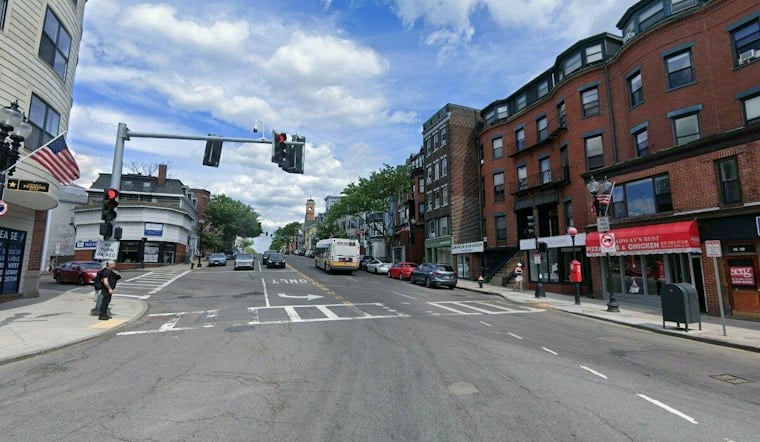
A bike lane that appeared outside a South Boston senior housing building in August has already been ripped out, after residents said the roughly two-hundred-foot stretch of pavement cut off access to their front door and never connected to anything else in the first place. Construction crews pulled out the concrete barriers and paved over the unfinished gravel surface in late October, less than three months after the lane first went in.
A Lane That Went Nowhere
The lane ran along O’Connor Way next to a 46-unit senior residence, and according to The Boston Globe, it stretched about 200 feet and did not connect to any other bike paths. Boston 25 News described it differently, reporting the lane was roughly 100 feet long and likewise didn’t link up with any bike network — fueling the nickname some neighbors gave it: the bike lane to nowhere. Either way, residents said the string of concrete barriers eliminated street parking along the block, and the lane itself sat covered in unpaved gravel, never fully finished.
Many people living at the senior residence said they hadn’t even heard about the project until it was already installed, the Globe reported. Once it went in, there was broad agreement among residents that it would make it harder for people with limited mobility to reach their building’s front door. The lane also eliminated several accessible parking spots, adding to the frustration and confusion the installation stirred up around the neighborhood.
Neighbors Push Back, City Pulls It Out
The Andrew Square Civic Association moved quickly, lodging a protest with the mayor’s office and local elected officials soon after the lane appeared. Residents later met with city officials to air their concerns, and the city responded with a repaved driveway entrance as a near-term fix while officials pledged that planners would look at ways to improve both bike connections and pickup and drop-off access for seniors.
According to Mass Daily News, the removal came about two months after Mayor Michelle Wu’s administration put the two-way lane in. City Councilor Ed Flynn didn’t mince words about how the whole episode unfolded, saying the community engagement process was poor and that residents and taxpayers paid for what he called a boondoggle. Flynn has since requested a City Council hearing specifically on the bike lane’s construction and removal.
City officials said taking the lane out would let planners revise its design so senior access and comfort could be preserved while still providing a bike connection down the line. They declined to say how much money was spent installing and then removing the lane in the first place.
Part Of A Much Bigger Project
The bike lane was never meant to stand alone. It was tied to the Mary Ellen McCormack redevelopment, a roughly 30-acre project that broke ground in 2025, carries a projected cost of two billion dollars, and is expected to take 15 years to complete. The massive project calls for an interconnected network of bike lanes, and planners had initially envisioned a route running from Dorchester Avenue to Moakley Park by way of Kemp Street before that plan shifted to O’Connor Way instead.
Had it stayed in place, the lane could have remained largely unused until a connection toward Moakley Park was extended, something the Globe’s reporting says could take another six to eight years. Boston Cyclists Union executive director Tiffany Cogell said city transportation officials met with her before the final decision to remove the lane, and that city officials did not rule out restoring some form of bike infrastructure there in the future. Cogell said the lane may eventually provide a useful connection to Moakley Park and the city’s broader bike network, and that the issue would be discussed again.
The episode echoes a broader pattern playing out across Boston’s bike network. A Streetsblog Massachusetts report on a recent City Council hearing noted that many of the city’s planned bike routes don’t connect to each other, with protected lanes often disappearing at busy intersections — and the same report pointed to the city’s decision to scrap a long-planned, privately funded protected lane on Bennington Street in East Boston as another example of routes getting cut before they’re finished.



