

























































A federal judge has barred authorities from accessing data copied from Boston immigration lawyer Andrew Lattarulo’s phone while his lawsuit proceeds. The preliminary injunction requires the government to preserve the copy in its current unreadable, unreviewable format; Judge Allison D. Burroughs declined to order its destruction and did not decide whether the seizure violated the Fourth Amendment, Newsweek reported.
The order rests on a speech claim
Burroughs found Lattarulo was likely to show that authorities searched him in retaliation for speech protected by the First Amendment, including his criticism of immigration policies and his representation of immigration clients. He runs an Instagram account with immigration know-your-rights videos, Newsweek reported. The government denies targeting him for his speech and has withheld further evidence, citing its ongoing investigation.
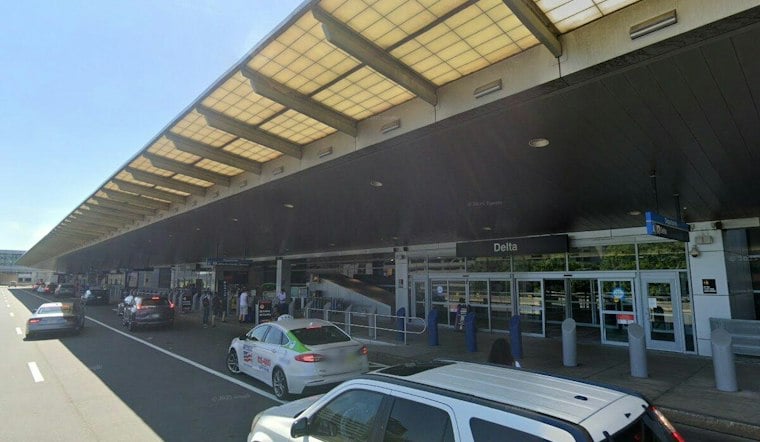
The inquiry concerned employment at Georges Cote LLP, where Lattarulo is a part owner. The firm received an initial inspection notice on September 8, 2025; prosecutors told the Boston Globe that the Department of Homeland Security notified it on September 25 that 117 employees appeared unauthorized to work in the United States. Lattarulo was stopped at Logan Airport on September 28 after returning from Aruba. The government said the phone search arose from an investigation into whether the firm hired workers unauthorized to work in the country, the Globe reported.
In assessing the First Amendment claim, Burroughs questioned why the search occurred before the usual ten-business-day period for an employer to respond to questions about work authorization had run. She also noted that colleague Audai Cote had the same or greater access to the firm’s employment records but was not similarly searched, while Lattarulo had publicly discussed immigrant rights and Cote had not, according to Newsweek. These were factors in the judge’s assessment, not a final determination of the government’s motive.
What the injunction pauses—and what it does not
Agents copied the phone’s data and returned the device eight days later, Newsweek reported. The government argued that border-search authority permitted the search and proposed using a filter team to screen privileged material if it could proceed. Lattarulo’s lawsuit said the phone held sensitive client information and privileged communications, according to the ABA Journal. The injunction prevents access to the copy for now; it does not settle the broader constitutional dispute or establish whether the seizure itself was lawful.
The scale and limits of border-search data
The case sits within a larger practice, but published totals do not show how often lawyers’ devices are involved. U.S. Customs and Border Protection says it searched 55,318 international travelers’ electronic devices in fiscal year 2025, out of more than 419 million travelers processed at ports of entry. CBP defines an “advanced search” as one in which an officer connects equipment to copy or analyze a device’s contents. The agency’s definition and totals do not establish how it classified Lattarulo’s search.
There are also limits to what can be inferred from shorter-period comparisons. The ABA Journal reported that CBP searched 14,899 devices from April through June 2025, 16.7% more than during the prior significant three-month surge in 2022. That comparison concerns two periods; it does not by itself establish a sustained increase. Separately, the ABA House of Delegates called in January 2019 for government standards to protect attorney-client privilege, work product, and client confidentiality during device searches, an advocacy position rather than a court ruling, the ABA Journal reported.
A separate lawyer’s case addressed a different claim
A Fifth Circuit decision involving Texas immigration lawyer Adam A. Malik provides a comparison, not a ruling on Lattarulo’s First Amendment claim. Malik’s phone was searched at the Dallas airport in January 2021. In an August 15, 2023 decision, the appeals court found reasonable suspicion based on officers’ perceived connection between Malik and an arms dealer, according to the ABA Journal. Malik’s appeal raised Fourth Amendment issues. Lattarulo’s injunction, by contrast, addresses the likelihood of First Amendment retaliation and leaves the Fourth Amendment question open.



