

























































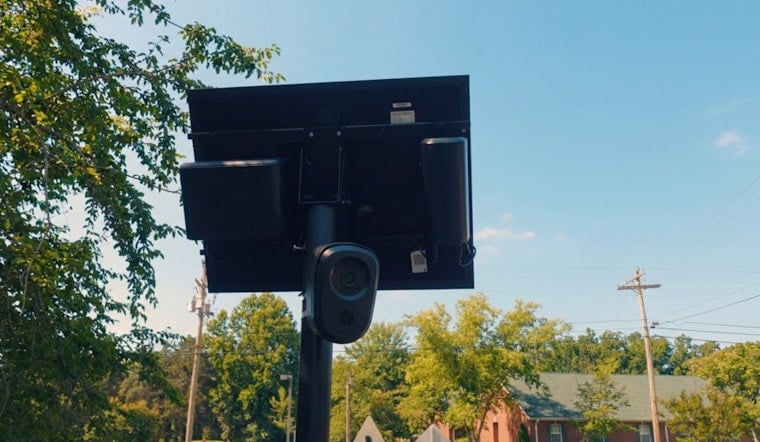
Loudon County Sheriff Jimmy Davis says his office will not be using automated license plate readers anytime soon, telling residents at a county commission workshop that the technology's cost to personal freedom is too high to justify, even though he considers it one of the most powerful crime-fighting tools available today.
Davis discussed the decision during a Loudon County Commission workshop on Monday, according to WBIR. He described the cameras as the most technically advanced crime-solving tool since DNA, but said he has no plans to start using the technology in Loudon County, even though the sheriff's office has received approval to do so. Davis said he wants a balance between using the cameras and protecting people's privacy, a tension that has come to define this year's ALPR debate across East Tennessee.
The sheriff's office itself is not currently operating any plate-reading cameras, though nearby agencies have already moved forward. Both the Loudon Police Department and Lenoir City own license plate cameras that cover parts of the Loudon area, per the same WBIR report, meaning residents already drive past camera-equipped roads even as the county sheriff holds off.
A Federal Bill Enters the Conversation
Davis's caution comes as a federal proposal targeting the technology moves through Congress. U.S. Rep. Tim Burchett introduced House Bill 9800, the Protection Against Mass Surveillance Act, on July 21, and the measure has since been referred to the House Committee on Oversight and Government Reform, according to WBIR. The bill aims to ban federal agencies from purchasing or accessing automated surveillance systems that identify, track, or record individuals, and it would also block state and local law enforcement from using federal grant funds for license plate reader networks, according to Police1.
Burchett has been an outspoken critic of the cameras, and Davis met with law enforcement leaders, district attorneys, and the congressman to discuss safeguards for the devices, per WBIR. Police1 reports that Burchett introduced the bill directly in response to privacy concerns tied to the expanding rollout of plate-reader camera networks across East Tennessee.
Any camera network Loudon County might eventually consider would still have to operate within Tennessee's existing data rules. State law, under Tennessee Code § 55-10-302, bars governmental entities from storing license plate data captured by automated readers for longer than 90 days unless it's tied to an active criminal investigation, according to Justia Law.
Neighboring Counties Are Hitting the Brakes Too
Loudon County's hesitation fits a broader pattern spreading across East Tennessee this summer. In Knox County, the sheriff's office had planned to deploy nearly 300 grant-funded Flock Safety cameras, but the rollout was paused after public pushback and scrutiny from county commissioners, who set an informational workshop for August 24, according to WIVK-FM. Commissioners there called for greater transparency about data tracking and surveillance oversight.
Anderson County Mayor Terry Frank raised similar alarms this month, calling for public hearings on four Flock cameras used by the local sheriff's office and warning that expanding multi-jurisdictional networks risk creating what she called a warrantless mass surveillance system without state or federal oversight, as detailed in Hoodline's earlier coverage of her concerns. The Anderson County Commission's Operations Committee has scheduled a public forum at Clinton High School for next month.
The backlash has turned physical in at least one case. Independent U.S. House candidate Adam Lee Heimerman of Lenoir City was arrested in July and charged with four counts of felony vandalism after allegedly using a firearm to shoot and disable four ALPR cameras across Blount County and Maryville, according to WBIR. Investigators alleged Heimerman fired on one camera from church property while services were underway, a case Hoodline previously reported in its story on the Blount County arrest.
Even Sheriffs Who Deployed the Cameras Are Backing Off
Sullivan County offers the most recent example of a law enforcement agency reversing course. That sheriff's office suspended its use of Flock cameras on Monday following public controversy and threats, announcing plans to let community members vote on the technology's future, WBIR reported. The decision reflects what WBIR describes as mounting regional reluctance among law enforcement leaders to deploy the cameras against public sentiment.
Rocky Top has made a similar call for financial rather than privacy reasons. The city announced this month it will end its Flock contract, which cost $3,500 per camera annually, once it expires in October, with Police Chief John Thomas saying the system failed to deliver enough investigative results to justify the expense, according to The Courier News. Thomas noted the department paid $7,000 a year for two cameras without seeing meaningful case results.
Flock Safety itself has responded to the national scrutiny. The company announced on August 13 that it is cutting its recommended default data retention period from 30 days to seven days, while adding mandatory search justification codes and automated misuse audit logs for police users, per Police1. The changes followed national investigative reporting documenting nearly 50 instances of officers misusing ALPR databases for personal reasons.
Why Some Departments Still See the Cameras as Essential
Law enforcement's case for the technology is not hypothetical. WBIR has reported that FBI agents relied on an ALPR snapshot from Asheville Highway in Knoxville to identify and track a Ford Fusion connected to the 2021 arson of a Planned Parenthood clinic and a subsequent federal building shooting, a case proponents frequently cite when defending camera installations. It's the kind of success that informs Davis's own description of the cameras as the most advanced crime-solving tool since DNA, even as he declines to deploy them.
Statewide, the technology is already widespread. A survey published in October 2025 by the University of Tennessee's Municipal Technical Advisory Service and the Baker School of Public Policy found that two-thirds of responding Tennessee police departments use ALPRs, with departments operating an average of 20 units, according to Our Tennessee. Departments that haven't adopted the cameras cited affordability, technical access limitations, and a lack of community support as the main obstacles.
For now, Loudon County stands apart from many of its neighbors by choosing not to move forward at all, even while cameras already dot roads nearby under Loudon Police Department and Lenoir City ownership. Davis's stance, paired with the debates unfolding in Knox, Anderson, Sullivan, and Rocky Top, underscores a wider recalibration in East Tennessee over how much surveillance residents are willing to accept in exchange for the promise of solved crimes.





