

























































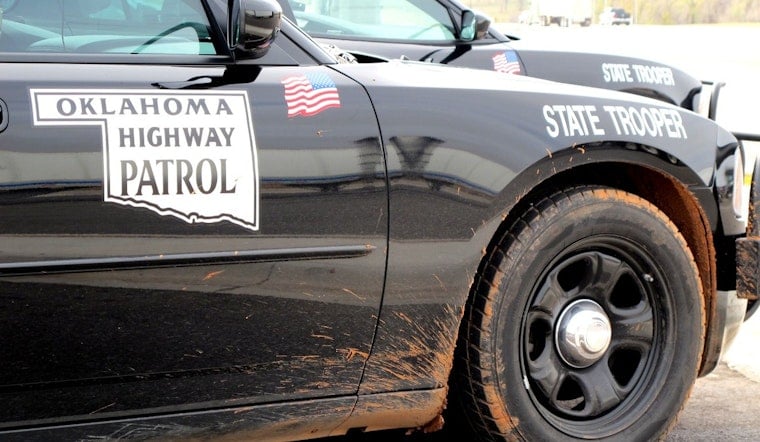
A 32-year-old Oklahoma City man died Friday after driving the wrong way on Interstate 40 near North Cimarron Road, according to the Oklahoma Highway Patrol. Troopers say Skyler Scott Burditt left the roadway, rolled his vehicle twice, and struck a concrete barrier after heading west in the eastbound lanes.
According to KOCO, Burditt was not wearing a seat belt at the time of the collision. The crash near North Cimarron Road adds another fatal entry to a stretch of Interstate 40 in Canadian County that has already seen tragedy this year, including a wrong-way collision that killed four young adults Wrong-Way Horror On I-40 Near Yukon Kills Four Young People near Yukon back in May.
That May crash shut down eastbound I-40 for over four hours while crews cleared the scene, underscoring how disruptive and dangerous wrong-way collisions can be on this corridor. The North Cimarron Road interchange itself has a fraught recent history — in January 2024, an Oklahoma Highway Patrol trooper was struck and thrown while conducting a shoulder traffic stop at the same location, an incident captured on dashcam video and cited by officials as a reminder of Move Over law compliance.
A Pattern of Deadly Wrong-Way Crashes on I-40
Wrong-way collisions are rare compared to other crash types, but they are exceptionally lethal. National Transportation Safety Board data shows wrong-way highway collisions are four times more likely to result in fatal or severe injuries than other crash types, largely because of high-speed head-on impact force, the agency has found, citing driver confusion and alcohol impairment as the top causes of wrong-way entry onto interstate ramps. Research from the AAA Foundation for Traffic Safety found that between 2010 and 2018, nearly 2,921 fatal wrong-way crashes occurred on divided highways nationwide, killing 3,885 people, with wrong-way drivers themselves accounting for 53% of those deaths.
Impairment appears to be a major driver of Oklahoma's wrong-way crash toll specifically. A national analysis of fatal crash data found that 61.54% of wrong-way drivers in fatal Oklahoma crashes were intoxicated, the highest share of any state in the country, even though wrong-way collisions account for just over 3% of all fatal highway crashes nationally. The dossier does not indicate whether impairment played a role in Burditt's crash.
State Has Poured Millions Into Wrong-Way Detection Technology
The Oklahoma Department of Transportation has invested heavily in trying to prevent exactly this kind of collision along the I-40 corridor. In July 2022, the agency launched a $2.3 million thermal-camera pilot project on six eastern I-40 exit ramps designed to trigger illuminated warning signs when a driver enters an off-ramp going the wrong direction. The pilot's apparent success led ODOT to expand the technology, and in March 2023 the state began installing a $4 million wrong-way driver detection system across 49 interchanges along western I-40, incorporating thermal cameras, flashing warning lights, and red-reflective pavement markers.
Despite those investments, wrong-way crashes remain disproportionately lethal on Oklahoma highways. Friday's fatal crash follows a string of other deadly incidents this year along the same interstate that Hoodline has reported on, including a Midnight Wrong-Way Chase on Kilpatrick Sparks Turnpike Safety Review in July, a rollover crash that killed a teen in McIntosh County in June, a bridge crash near Kickapoo that killed a Guthrie man in March, and a fiery crash near Sayre in February that also involved a driver who was not wearing a seat belt.
Seat Belt Compliance Remains a Statewide Weak Spot
Burditt's lack of a seat belt fits into a broader statewide pattern that Oklahoma officials have flagged as a public safety concern. State officials have noted that Oklahoma ranks 44th nationally in seat belt usage, prompting safety agencies to launch targeted awareness campaigns. According to the Oklahoma Highway Safety Office's FY24 Annual Report, the state's observed seat belt compliance rate was 86.4% in 2024, up from 81.2% the year before, though it still trails the national daytime average of nearly 92%.
The stakes of that gap are stark. Oklahoma Highway Safety Office data compiled in 2023 showed that 256 people killed in the state's traffic accidents were not wearing seat belts, with pickup truck drivers and adults between 18 and 34 recording the lowest restraint usage of any group. Investigators have not released additional details about the circumstances that led Burditt to enter the eastbound lanes traveling west, and no further information on the crash has been made public.





