

























































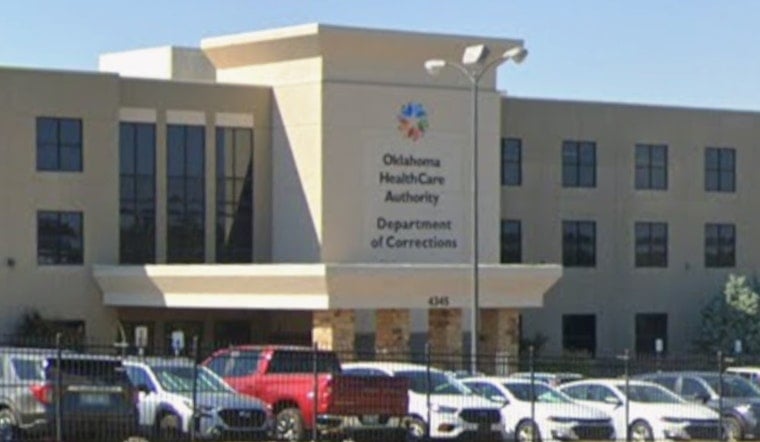
Inmates at four Oklahoma correctional facilities have been placing political phone calls for a conservative super PAC, earning $2 an hour while the Oklahoma Department of Corrections collects $10 an hour per worker under a contract that has been in place since January 2026. The calls, which reached voters in Oklahoma primary races as well as contests in other states, were part of a program the state defends as job training but that has drawn fresh scrutiny after inmates said they were reading scripts with demeaning references to opposing candidates.
The arrangement came to light through open records requests that revealed a contract between the Oklahoma Department of Corrections and HBW Leads, as first reported by KGOU. HBW Leads was acquired in 2020 by Toledo, Ohio-based Double A Solutions, which later launched Visible Trends in January 2025 as a dedicated live-calling subsidiary for political campaigns, according to KGOU. The two firms are connected and operate under the same corporate umbrella, per the outlet's reporting.
Make Liberty Win, a Virginia-based conservative super PAC, paid HBW Leads and Visible Trends slightly less than $600,000, according to KFOR. Federal Election Commission filings reviewed by KGOU show that money funded state legislative campaigns as well as calls for federal candidates such as Kentucky U.S. Representative Thomas Massie. Make Liberty Win's mission focuses on ousting moderate Republicans and progressive Democrats, the station reports.
Inmates Named Specific Candidates on the Line
Inmates at James Crabtree Correctional Center reported placing calls in primary races involving candidates including Gentner Drummond, Mike Mazzei, Jon Echols, Chip Keating, and Justin “J.J.” Humphrey, per KGOU. The incarcerated callers said they were handed those prominent names without being prompted to ask about them. KFOR reports inmate callers also worked at Mabel Bassett, Lexington Correctional, and Joseph Harp, in addition to James Crabtree.
Keaton Ross, an investigative reporter with Oklahoma Watch who first surfaced elements of the story, said inmates primarily called candidates running in other states, and that the calls may have included South Carolina political races as well as Kentucky contests. The amounts HBW Leads paid to the Department of Corrections, and what the company itself earned from the work, were not yet available, Ross said.
Push-Polling Disguised as Surveys
Incarcerated workers described the calling operations as push-polling — disguising campaign persuasion as single-question surveys — and said they could earn $2 performance bonuses for capturing client data, while facing quotas and penalties from managers if they fell short, according to KGOU. Former inmate workers said only voter names and phone numbers appeared on their computer screens, offering little context about who they were calling or why. Inmate scripts included demeaning references to opposing candidates and culture-war topics, per Ross's reporting.
HBW Leads, Visible Trends, and Make Liberty Win did not respond to requests for comment from KFOR. Make Liberty Win Executive Director Barrett Young told KGOU that the super PAC was unaware Visible Trends was using prison labor and terminated its vendor contract on June 29, citing poor performance rather than the labor concerns.
State Defends Program as Reentry Tool
The Oklahoma Department of Corrections has described the call centers as part of its reentry efforts, saying private partnerships help prepare inmates for life after incarceration. Oklahoma Correctional Industries provides the broader framework of inmate work programs and job training, and the agency says call-center opportunities allow participants to develop work histories and demonstrate workplace skills while reducing idle time.
According to the department, participants learn attendance, accountability, conflict resolution, workplace discipline, and performance expectations, along with professional communication, customer service, sales, data entry, and computer operations skills. The remaining contract funds support Oklahoma Correctional Industries' overhead costs, and officials say the opportunities encourage positive behavior and participation in other facility programming. Oklahoma correctional facilities have operated call centers for years, the department notes.
The program's history is not without blemish. Oklahoma previously shut down its state prison call centers in 2021 after an incarcerated worker serving eight life sentences downloaded child sexual abuse material from a work computer, according to a First Watch report. State lawmakers never enacted a permanent statutory ban, and the centers were quietly restarted.
Not Oklahoma's First Brush With This Practice
Using incarcerated workers for political outreach is not new, either in Oklahoma or nationally. In 2019, Michael Bloomberg's presidential campaign cut ties with a third-party vendor after learning that female inmates at Oklahoma's Dr. Eddie Warrior Correctional Center were making calls on his behalf through a subcontractor; Bloomberg's campaign maintained it had been unaware that prison labor was involved. Inmate-staffed campaign calling dates back further still, to at least 1994, when a Washington-based firm employed prisoners to call voters in a U.S. Congressional district under the guise of an opinion poll.
Federal courts and the National Labor Relations Board have consistently held that incarcerated workers are excluded from employee status under the Fair Labor Standards Act, leaving them without federal minimum wage protections or collective bargaining rights — a legal carve-out rooted in the penal-labor exception clause of the 13th Amendment. That framework is precisely what allows a state agency to collect $10 an hour per worker while the inmate performing the labor takes home $2.
The debate playing out in Oklahoma echoes a broader municipal pushback against public dollars tied to prison labor. St. Petersburg, Florida, killed a $420K prison labor deal in August, and Sacramento, California, passed a similar policy in June barring city contracts or investment funds connected to prison labor, with officials in both cities citing 13th Amendment concerns and ethical purchasing standards.
Oklahoma is also not the only state where prison call centers have generated headlines this year. A separate case in Oregon, where a prison call center scandal cost the state $122,000, has spotlighted the same oversight questions now facing Oklahoma facilities. Whether Oklahoma's Department of Corrections will revisit its HBW Leads contract in light of the political-calling revelations remains an open question, and neither the agency nor the vendors have indicated any plans to change course.




