

























































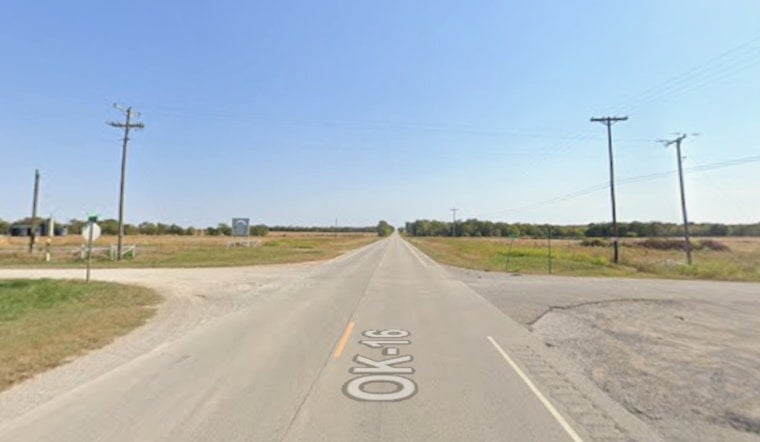
An 88-year-old Okmulgee man has died from injuries he suffered when his car left Highway 16, struck a culvert and rolled over earlier this month. Ed Peters was driving westbound on the rural two-lane highway around 3:30 p.m. on Aug. 18 when emergency crews responded to the crash just west of NS 320 Road in Okmulgee County. He was rushed to a Tulsa hospital that day and died four days later, on Aug. 22.
According to KOKH, investigators say Peters' vehicle left the road, hit a culvert, went airborne and then rolled an unknown number of times before coming to rest. The Oklahoma Highway Patrol has classified it as a single-vehicle accident. Because Peters died within 30 days of the crash, it is officially recorded as a traffic fatality under Oklahoma Highway Safety Office reporting guidelines, a standard the state adopted in 2001 to align with national tracking criteria.
A Dangerous Stretch of Rural Highway
Highway 16 is a 99.2-mile state highway maintained by the Oklahoma Department of Transportation that runs east-west through Okmulgee County as an undivided rural two-lane corridor, according to state highway records. The road was originally laid out as a gravel route in 1936 before later being paved and extended. The crash also occurred during one of the state's most statistically dangerous windows for collisions — state crash records compiled by the Oklahoma Highway Safety Office show that 3 p.m. to 6 p.m. accounts for roughly 26 percent of all crashes statewide, a period when afternoon traffic volume tends to climb on rural feeder routes.
Run-off-road crashes involving culverts carry particular risk. Culverts and roadside ditches account for more than 10 percent of all fatal run-off-road crashes nationwide, according to the American Association of State Highway and Transportation Officials Roadside Design Guide, cited in research from the University of Nebraska-Lincoln. Engineers note that culvert impacts frequently act as launching ramps that trigger vehicle rollovers, a mechanical sequence consistent with what investigators described in Peters' crash.
Older Drivers Face Higher Crash Risk
Peters' age places him within a demographic that national safety researchers have flagged as especially vulnerable. Fatal crash involvement per mile traveled begins climbing among drivers ages 70 to 74 and reaches its highest rate among drivers 85 and older, according to Insurance Institute for Highway Safety analysis. The IIHS attributes the elevated death rate primarily to older drivers' greater physical vulnerability to trauma during impact, rather than to any single behavioral factor.
Nationally, the Insurance Institute for Highway Safety's data lines up with broader federal figures. NHTSA recorded 8,019 people aged 65 and older killed in U.S. traffic crashes in 2024, representing 20 percent of all nationwide traffic fatalities, even though older drivers made up 23 percent of all licensed drivers that year. Preliminary NHTSA estimates for 2025 show single-vehicle crash fatalities fell 7 percent nationwide compared to 2024, and rollover fatalities specifically dropped 11 percent, though roadway departures and rollovers remain among the leading categories in fatal crashes.
Part of a Troubling Pattern in Okmulgee County
Peters' death adds to a string of fatal crashes in rural Okmulgee County this year. Just days after his crash, an 18-year-old died in a separate incident on Smith Road, which Hoodline previously reported. In May, a 55-year-old Henryetta driver was killed in a crash on U.S. 75 near 321st, another incident covered in earlier Hoodline coverage. Both of those cases remain under investigation by the Oklahoma Highway Patrol.
Statewide, Oklahoma's overall traffic fatality numbers have trended downward even as rural roads continue to see recurring single-vehicle incidents. NHTSA recorded 645 total traffic fatalities in Oklahoma in 2024, a 9.3 percent drop from the 711 deaths reported statewide in 2023, though alcohol-impaired fatalities rose over the same period. A 2024 study by national transportation research group TRIP estimated that traffic crashes cost Oklahoma $17 billion annually, with the state's traffic fatality rate running 19 percent higher than the national average.
Investigators have not said whether mechanical failure, a medical emergency or road conditions caused Peters' vehicle to leave Highway 16, nor have they released information on whether he was wearing a seatbelt. The Oklahoma Highway Patrol's collision investigation into the crash remains ongoing.


