

























































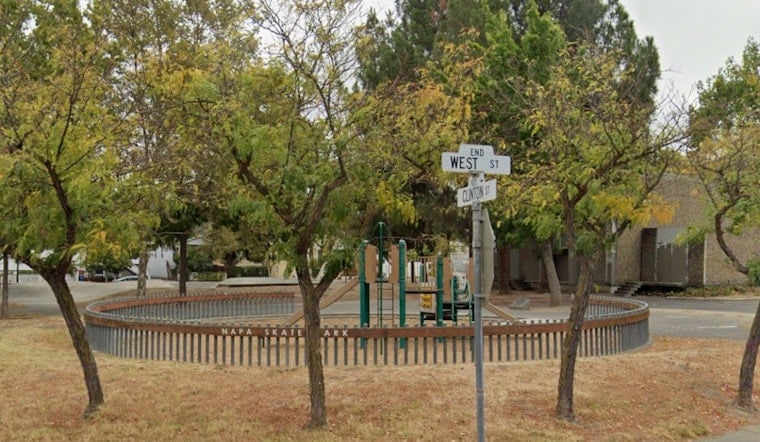
A decommissioned sewer pump station on West Street has emerged as the top contender for a new downtown Napa parking garage, according to a consultant study that Napa city leaders are set to hear tomorrow. The site at 1210 West St. would provide the highest yield of any option studied — between 390 and 460 new parking spaces — at the lowest cost per space among four sites the city considered.
The findings come from the first phase of a feasibility study conducted by Walker Consultants, as reported by The Press Democrat. Napa hired the firm in February through a contract approved by the Napa City Council and funded through the city's Parking Impact Fee Fund, according to the City of Napa. That fund collects fees paid by developers of new commercial and residential projects specifically to mitigate their strain on municipal parking, meaning the study itself is not being paid for with general tax dollars.
The pump station site, owned by the Napa Sanitation District, sits close to both the Oxbow District and downtown Napa, and it complements the Napa Farmers Market's temporary West Street location, per the Press Democrat's reporting. A structure there would cost roughly $34.2 million overall, or about $73,500 per space — the cheapest per-space cost of the four sites analyzed. City staff recommended studying the site, and a staff report found it offers the strongest overall balance of capacity, cost-effectiveness, community support, implementation feasibility, and long-term redevelopment potential.
Why Napa Needs More Parking, Fast
The urgency behind the search is not abstract. The city is legally obligated to find 129 parking spaces for the First Street Napa hotel project under an existing agreement, the Press Democrat reports. That project, now under construction, includes 161 hotel rooms and condominiums as part of a $200 million, 325,000-square-foot commercial development anchored by the Archer Hotel, according to 7x7 Bay Area. Under the June 2025 development agreement, the city must provide those spaces in the municipal Pearl Street garage or other city-owned facilities, per the City of Napa Community Development Department.
Additional pressure is coming from the historic Franklin Station Post Office, which has sat vacant since it was structurally damaged in the 6.0-magnitude South Napa earthquake in August 2014. The Napa City Council approved a plan in July to rehabilitate the 1933 landmark into a hotel with up to 120 rooms, Hoodline previously reported. State environmental filings from August show the project has since grown to include a second five-story building with 37 for-sale branded residential hotel units and ground-floor retail. Downtown Napa has seen increasing parking demand over the past two decades, and approved development projects are expected to worsen the strain on the existing system, according to the Press Democrat's reporting.
Three Other Sites, Bigger Tradeoffs
Consultants also studied three other publicly owned locations. Lot X and Lot X West, the former Cinedome movie theater site south of the pump station, could yield 320 to 410 net new spaces at $98,300 per space, but the city would need to purchase Lot X from SyWest, and the site currently hosts the Napa Farmers Market. That option raises concerns about displacing the market and creating visual impacts, per the study cited by the Press Democrat — a real tension, since the farmers market moved to West Street specifically because the Cinedome lot offered enough combined parking for vendors and shoppers, according to DoNapa.
A structure on the county-owned Third Street lot near the Fifth Street garage could provide 290 to 370 net new spaces at $95,000 per space, with moderate community support but potential visual impacts. The Goodman Library lot along Second Street fared worst on cost efficiency, yielding just 170 to 230 net new spaces at $143,400 per space — the highest cost and lowest yield of the four options — and the study found it does not fully address the city's long-term parking needs.
A Playground and Skate Park in the Balance
Choosing the pump station site is not without its own complications. The 1.25-acre parcel currently includes a playground and skate park alongside the long-decommissioned pump station, according to a community post referencing the site's existing amenities. Reworking the lot for a multi-story garage would likely require reconfiguring or replacing that recreation space, even as the Press Democrat reports that community members favored the pump station site during the city's public engagement efforts.
City staff gathered that input through a public open house on May 27 at the Napa Senior Center and a community survey that ran through June 5, seeking preferences on integrating electric vehicle charging, solar arrays, public restrooms, and farmers market facilities into any new structure, according to the City of Napa. Napa currently owns three downtown parking garages, while Napa County owns one; the city also owns part of Lot X and Lot X West. The city has already taken smaller steps to manage demand, including improving parking wayfinding, adding license plate readers for enforcement, and raising parking impact fees for developers, per the Press Democrat.
What Comes Next
Napa City Council members will hear the consultants' findings Tuesday, but selecting the pump station site as a preference would only mark the start of a longer process. The study's next phase will include a more detailed cost model and funding strategy, along with refined engineering designs, according to the Press Democrat's reporting — but it does not authorize construction or property acquisition. The city would still need to negotiate acquiring the pump station parcel from the Napa Sanitation District, which has separately been raising sewer rates by 3% annually through 2030 to fund capital maintenance across its pipeline and pump-station network, Hoodline reported in March.





