

























































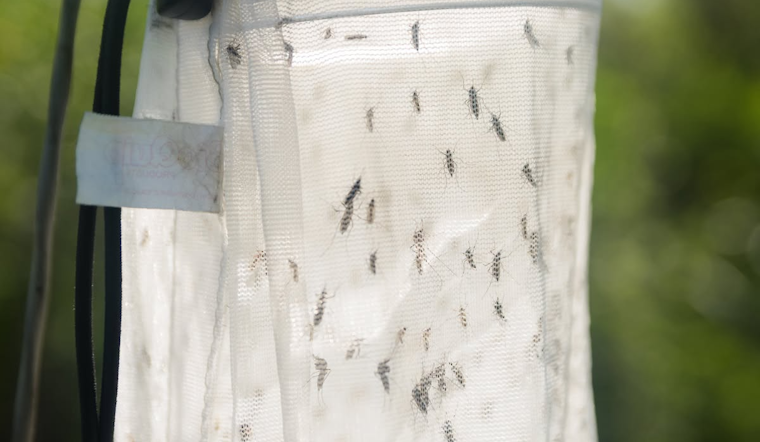
Orange County is under a mosquito-borne illness advisory after several sentinel chickens used to monitor viral activity across the county tested positive for West Nile virus. The Florida Department of Health announced the advisory Thursday, pointing to the positive chicken tests as evidence of increased virus circulation in parts of the county.
According to a post from Orange County, Florida Government, the health department issued the advisory after multiple sentinel chickens returned positive results, a signal that the virus is moving between birds and mosquitoes in the area. The Florida Department of Health in Orange County confirmed the advisory the same day, tying it directly to the biological surveillance detections rather than a spike in confirmed human illness.
Why Sentinel Chickens Are the Early-Warning System
Orange County Mosquito Control has long relied on flocks of sentinel chickens stationed in coops around the county as an early detection tool. The chickens act as what officials call dead-end hosts, developing detectable West Nile antibodies after being bitten without getting sick or carrying enough virus in their blood to pass it back to mosquitoes or people, per Orange County Government. Chickens typically remain in the program for two seasons before retiring to local farms, the county notes.
Hoodline previously reported on how the sentinel chicken program works, and later covered the county's aerial mosquito treatments that followed earlier virus detections in the coops.
Drought Conditions Are Making Things Worse, Not Better
It might seem like dry weather would mean fewer mosquitoes, but Orange County Mosquito Control manager Steve Harrison says the opposite is happening. West Nile activity frequently escalates during dry or drought periods like the one Central Florida experienced in August 2026, because sparse rainfall forces wild birds and mosquitoes to concentrate around the same shrinking water sources, according to Orange County Government. In response, mosquito control crews have increased surveillance and targeted spraying across affected neighborhoods.
The county also offers a free, longer-term option for residents dealing with standing water on their property. Orange County Mosquito Control provides native Gambusia fish, commonly called Mosquitofish, at no cost for stocking in private ponds, canals, and other stagnant water bodies, per the same account from the county. The fish feed on mosquito larvae before they can mature into biting adults.
How Orange County Fits Into a Bigger Picture
Florida Department of Health surveillance figures through mid-August showed the state had recorded one symptomatic human case, one asymptomatic blood donor, 46 positive sentinel chickens, and seven positive mosquito pools spread across 12 counties statewide. That data offers a benchmark for how Orange County's activity compares to the rest of Florida's arbovirus landscape this season.
The elevated activity isn't confined to Florida. Centers for Disease Control and Prevention tracking reported in July that the United States saw an unusually early and strong start to its 2026 West Nile season, logging 48 human cases nationwide by early July compared with a typical historical average of about 10 cases by that point, according to FOX 13 Tampa Bay. That marked the highest early-season total since 2004, with warmer spring temperatures nationwide accelerating mosquito breeding cycles.
What the Health Risk Actually Looks Like
Most people infected with West Nile virus never know it. Roughly 80% of infected individuals show no symptoms at all, about 20% experience mild flu-like symptoms such as fever and body aches, and fewer than 1%, or roughly 1 in 150, develop severe neuroinvasive conditions like encephalitis or meningitis, according to the Florida Department of Health. Severe neuroinvasive cases are most common among older adults and people who are immunocompromised.
Florida's peak window for West Nile transmission runs annually from July through September, as hot summer weather speeds up viral replication inside Culex mosquitoes, the health department notes. That seasonal pattern explains why late August has historically been a high-risk period for mosquito-borne disease alerts across Central Florida.
What Residents Are Being Asked to Do
Health officials are urging Orange County residents to take basic precautions: use mosquito repellent, wear long sleeves and pants outdoors, discard outdoor items that could collect water, and tip out standing water around yards and neighborhoods, per the Orange County Government post. Anyone with mosquito-related concerns can call the Florida Department of Health at (407) 836-3111.
Officials are also asking the public to help track the virus's spread by reporting dead wild birds to the Florida Fish and Wildlife Conservation Commission. Species like crows and blue jays suffer high mortality from West Nile virus, making clusters of dead birds an important early indicator of local viral activity, according to the Florida Department of Health in Orange County. Since its introduction to Florida in 2001, two years after first appearing in New York, West Nile virus has spread to all 67 Florida counties and is now considered an established, if fluctuating, endemic threat rather than a new one.


