

























































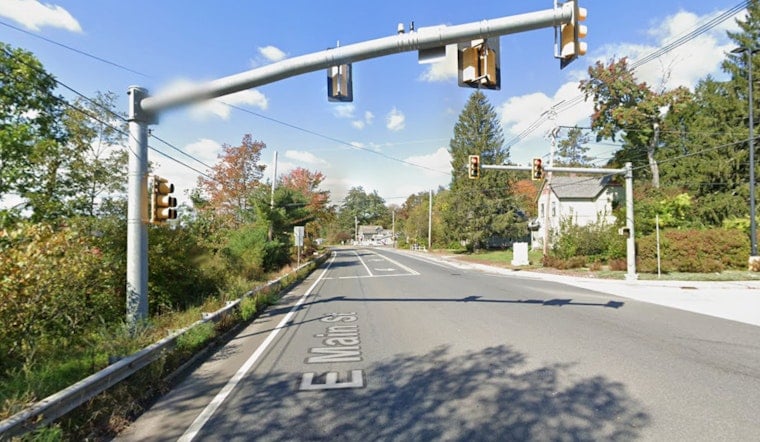
A driver was left unresponsive inside a smoking vehicle after it struck a utility pole on East Main Street in Orange, Massachusetts on Thursday afternoon — and it was ordinary bystanders, not first responders, who reached the driver first. Two passersby began CPR immediately, others pulled the driver from the wreckage, and still more blocked traffic through a nearby Walmart entrance to keep the scene safe until crews could arrive.
The Orange Fire Department was alerted to the crash at approximately 3:36 p.m., according to WWLP-22News. At the time, the department's on-duty members were tied up responding to other medical calls, and available medical helicopters were unavailable to respond to the scene. With resources stretched thin, the on-call captain called the Athol Fire Department for backup, a mutual aid arrangement that small-town Western Massachusetts departments regularly lean on when local crews are pulled to simultaneous calls.
While emergency crews made their way to the scene, the crowd of bystanders did not wait. Two of them provided immediate CPR while others worked to free the driver from the vehicle and direct traffic, the fire department said, per the same WWLP report. One bystander diverted vehicles through the entrance of the nearby Walmart, keeping the heavily traveled roadway clear. East Main Street runs along Route 2A, a regional arterial that carries both local commercial traffic near retail hubs and east-west commuter travel, according to the Central Massachusetts Regional Planning Commission.
Extrication From a Smoking, Pole-Struck Vehicle
The vehicle was smoking after striking the pole, according to the fire department's account. Collisions with utility poles account for more than 15 percent of fixed-object traffic fatalities nationwide and carry immediate risks of fire or downed live wires, per the Transportation Research Board. That backdrop underscores the risk bystanders took on when they moved to pull the unresponsive driver free before firefighters arrived.
Once responders reached the scene, they continued CPR after removing the driver and used an AED, the fire department said. Additional police and fire crews arrived to assist as the response expanded. The driver was then transported by ambulance to Athol Hospital, a 25-bed critical access facility roughly ten miles away that operates the Starrett Center for Emergency Care under Heywood Healthcare.
Fire Department Praises a Community That “Stepped Up”
The Orange Fire Department publicly thanked the passersby who contributed during the incident, saying that no one overstepped and everyone stepped up without complaining, per WWLP-22News's report. The department's account credits the crowd's swift action — the CPR, the extrication, the traffic control — with holding the scene together while mutual aid crews made their way in from Athol.
National data helps explain why those first minutes mattered so much. Bystander CPR raises out-of-hospital cardiac arrest survival to 11.4 percent compared with 7.6 percent without it, and bystander AED use pushes survival to 15.5 percent, according to 2025 CARES registry data cited by the Sudden Cardiac Arrest Foundation. Irreversible brain injury can begin within four to six minutes after blood flow to the brain stops, which is why 2025 American Heart Association guidelines emphasize hands-only CPR and rapid chest compressions as the single most critical intervention bystanders can offer before EMS arrives.
Legal Protections Behind the Rush to Help
Massachusetts law shields people in situations like this one from civil liability. Under Massachusetts General Laws Chapter 112, Section 12V, anyone who renders emergency CPR or defibrillation in good faith and without pay is protected from damages tied to their attempt, according to the Massachusetts Legislature. A separate statute, Chapter 258C, Section 13, extends civil immunity more broadly to laypeople who provide good-faith emergency assistance to crash or crime victims, unless their conduct is willful, wanton, or reckless.
Those protections exist precisely to remove hesitation in moments like the one on East Main Street, where a rural fire department found itself short-handed and a car full of strangers decided not to wait. Orange, a Franklin County town of roughly 7,570 residents spread across 36 square miles, depends on exactly this kind of overlap between citizen action and mutual aid when emergencies stack up faster than a small department can cover alone.





