

























































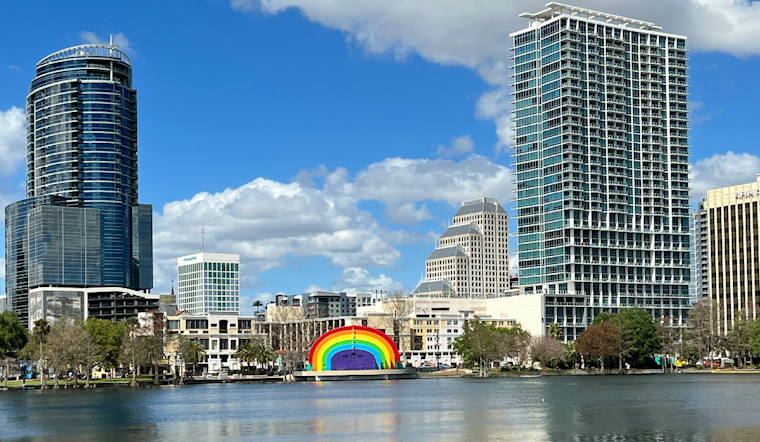
Orlando businesses are opening at a faster clip than anywhere else in the country, with a new analysis putting the metro's business entry rate at 14.14 percent — the highest of any metropolitan area studied. But the same report found Orlando also posted the nation's highest exit rate, at 11.49 percent, underscoring just how much churn comes with the region's entrepreneurial boom.
The findings come from a Squarespace ranking built on federal data, as reported by WFTV. Researchers pulled business entry and exit figures from the U.S. Census Bureau's Business Dynamics Statistics program and layered in establishment survival data from the Bureau of Labor Statistics' Business Employment Dynamics program, covering 19 industries. Squarespace produced the ranking using that federal data, and the station noted the information was current as of June 22, 2026, per Squarespace. The company also stressed the list is not an official government ranking.
Despite the high exit rate, Orlando still posted a net business growth rate of 2.65 percent, meaning new companies outpaced closures overall even as turnover ran hot. The Orlando-Kissimmee-Sanford metro area landed at No. 11 among the 50 largest U.S. metro areas in the broader rankings, with researchers noting that rapidly growing markets often experience considerable business turnover as new companies enter and reshape the local economy, per researchers cited in the same report.
How Orlando Stacks Up Against Other Fast-Growing Metros
Hartford, Connecticut, actually topped the overall metropolitan ranking, recording a business entry rate of 13.11 percent and a net business growth rate of 4.69 percent — outpacing Orlando on net growth even though Orlando's raw entry rate ran higher. Hartford also posted the top exit rate among that specific measure at 8.42 percent, though Orlando's exit rate of 11.49 percent was described as the highest among the metropolitan areas studied overall. San Antonio, Nashville, Raleigh and Austin rounded out the top five metros in the broader ranking.
Other Florida metros fared differently in the study. Tampa came in at No. 14, Jacksonville landed at No. 12, and Miami ranked No. 19 among the metropolitan areas examined.
Florida's Statewide Numbers Tell a Similar Story
At the state level, Florida had the highest business entry rate among all states, at 13.11 percent, but it also posted the second-highest statewide exit rate at 10.91 percent. That pattern — aggressive new business formation paired with elevated closures — mirrors what's happening in Orlando specifically and points to why business turnover, reflecting businesses both opening and closing, has become such a defining feature of the state's economy.
Florida's tax structure helps explain part of the draw. The state levies no personal income tax, no state-level property tax, and no corporate tax on limited partnerships and S-corporations, which contributed to its ranking as the 5th best state tax climate in the 2026 Tax Foundation State Tax Competitiveness Index, according to the Tax Foundation. Standard corporations still face a 5.5 percent corporate income tax rate, but the broader climate has made Florida especially attractive for new filings.
Why So Many New Companies Are Forming — and Failing
The formation numbers back up the trend. Orlando registered 3,013 new business entities over 30 days ending in mid-August, ranking third statewide behind Miami and St. Petersburg, according to Sunbiz Daily's analysis of state records. LLCs made up 85.5 percent of all new Florida registrations, and the state now averages roughly 2,091 new corporate registrations per business day.
But local business owners are growing more uneasy about what comes next. Business confidence among Orlando-area business owners dropped to a two-year low in the second quarter of 2026, with only 35 percent expressing confidence in the national economy and 72 percent in their own prospects, according to the Orlando Economic Partnership. Cost pressures have become the top challenge reported by local firms in recent months.
Part of that pressure traces to a labor market that's outgrowing job creation. The Orlando-Kissimmee-Sanford metro area's labor force grew by 17,267 workers between June 2025 and June 2026, but regional employment grew by only 6,000 jobs, pushing the local unemployment rate up 0.7 percentage points to 4.6 percent. Consumer spending has softened too, falling 2.9 percent year-over-year through April, while total regional sales dropped 0.5 percent in the first quarter of 2026 to $58.3 billion.
Compliance Deadlines Add to the Churn
Florida law adds another layer of pressure on newly formed companies. Active profit corporations, LLCs, and limited partnerships must file an Annual Report with the Division of Corporations between January 1 and May 1 each year, facing an automatic $400 late fee and potential administrative dissolution if they miss it, according to the Florida Department of State. With millions of filings processed annually through Sunbiz.org, missed deadlines alone can contribute meaningfully to business exits.
Even so, Orlando's underlying growth story remains strong by historical standards. Cumulative job growth in the metro reached 12.3 percent over the five years leading into 2025, nearly triple the national rate of 4.7 percent and good for fifth among U.S. metros with more than 1 million residents, according to Wells Fargo Securities. Business services and finance accounted for nearly half of those job gains. A diverse and rapidly growing workforce has helped fuel that expansion — foreign-born residents made up 27.3 percent of the Orlando area workforce in 2024, one of the fastest-growing shares among large U.S. regions, per USAFacts.
Hoodline previously reported that Orlando topped midsized cities for growth, detailing how local owners have adjusted prices and offerings amid cost pressures. That trend lines up with the latest Squarespace figures: entry barriers may be low in Central Florida, but staying open long-term is proving to be the harder part.





