

























































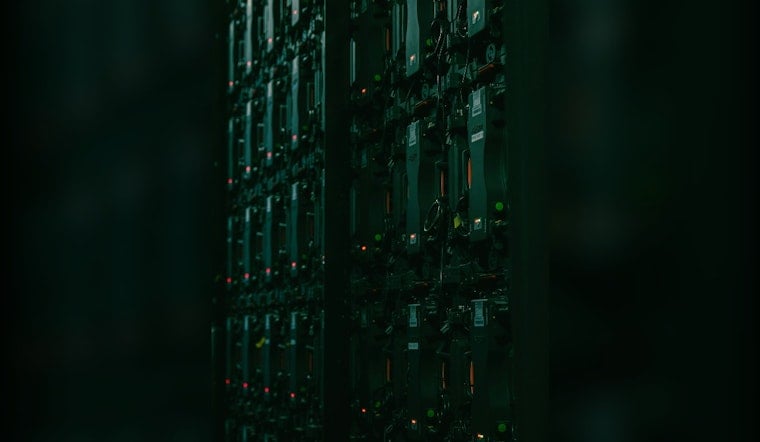
Osawatomie, Kansas lost its railroad economy decades ago, and now city leaders are betting the town's future on something entirely different: a data center campus so large it could reduce or potentially eliminate the city's property taxes. Project Catalyst, a proposed multibillion-dollar server farm planned for 283 acres on the town's outskirts, has become the most consequential economic decision Osawatomie has faced in generations — and not everyone wants it.
City Manager Bret Glendening has said the project could significantly reduce or potentially eliminate Osawatomie's property taxes altogether, according to The Kansas City Star. Nearly 80% of Osawatomie's property tax revenue currently comes from residential homeowners, per the Star's reporting, a burden made heavier by the fact that Miami County posted the third-highest median property tax bill in Kansas in 2024, at $3,643. Glendening has called the current situation unsustainable, telling the Star that Project Catalyst represents the most realistic solution the city has seen.
The math behind that optimism comes down to how Kansas taxes commercial property. Under the Kansas Constitution, commercial real estate is assessed at 25% of appraised market value, compared with just 11.5% for residential properties, according to the Kansas Policy Institute. Developers claim the project could funnel more than $30 million annually to Osawatomie, and an economic impact report cited by the Star projects nearly $600 million to the city between 2030 and 2044, plus another $358 million to Miami County, schools, and other special districts over that same period.
A Town Still Defined by What the Railroad Left Behind
Osawatomie's hunger for a new anchor employer traces back to two gut punches decades apart. The town lost 450 railroad jobs in the 1950s when Missouri Pacific operations moved to Kansas City, and it lost another 330 jobs when Union Pacific's maintenance yard left town a few decades later, after Union Pacific merged with Missouri Pacific, the Star reports. The Missouri Pacific Shops themselves are part of the town's railroad history. John Fletcher, a volunteer with the Osawatomie Museum Foundation, told the Star that the railroad was the backbone of the community — a phrase that captures how deeply the town's identity, and tax base, was built around rail jobs that never came back.
The city has owned the Northland site, which includes more than 250 acres designated for economic development, since 2006, and it secured a state grant in 2024 covering 75% of the cost of extending utilities to prepare the land for investment, according to comments from Osawatomie's mayor reported via a local video interview. The site has existing utility access, with water and electrical service extended. Project Catalyst has been under consideration since 2023, and it was formally brought before the Osawatomie City Council by the end of 2025, with a predevelopment agreement established in early 2026.
Air-Cooled Design Meant to Blunt Water Concerns
Alcove Development, a Lawrence-based development agency, and MDH Partners, an Atlanta-based firm experienced in large acquisitions, are building the project as a shell for a later end-user to purchase, the Star reports. Developers plan Project Catalyst as a multi-phase campus with over 500 megawatts of capacity, using an air-cooled design intended to minimize water consumption, according to Ingram's Magazine. That design choice is increasingly common in Midwest data center proposals as developers try to head off community pushback over municipal water depletion.
The project's total capital investment could reach up to $10 billion, with hundreds of construction jobs during build-out, though the permanent site workforce is expected to be far smaller — around 95 jobs beginning in 2032, per the Star's reporting. Project Catalyst is slated to begin construction in 2028, and its developers project $15 in tax revenue for every $1 spent on municipal services, a figure sourced to the project's own website. Developers plan to submit a zoning-modification application within about a month, and land surveying is already underway.
Residents Push Back With a Petition
Not everyone in Osawatomie is convinced. Keira Shipley-Welter opposes Project Catalyst and told the Star that a data center would bring no real growth or jobs to the town. Residents have also raised concerns about electricity use, environmental impact, noise, safety hazards, and the project's proximity to homes and Osawatomie State Hospital, and a group of Osawatomie residents has filed a petition seeking a city ordinance that would ban data centers outright. A public meeting on the project drew a crowd that packed the room for nearly four hours, according to the Star's account.
Those local anxieties echo a much larger fight playing out across Eastern Kansas this year. Heading into the August primary elections, more than a dozen Kansas legislative candidates and four gubernatorial candidates signed a “No Data Centers in Kansas” pledge calling for studies, water protections, public hearings, buffer zones and an end to preferential treatment through special tax incentives, as Hoodline previously reported. Those incentives trace back to Senate Bill 98, signed by Governor Laura Kelly in April 2025, which created a 20-year state and local sales tax exemption for data center projects investing at least $250 million and creating 20 permanent jobs, according to Ankura.
A Kansas Legislative Post Audit Committee report is also mentioned.
Osawatomie's Fight Mirrors a Regional Reckoning
Osawatomie is far from alone in navigating this tension. Nearby De Soto is weighing tax breaks for a major data center campus near the Panasonic EV battery plant on former ammunition-plant land, a project Hoodline detailed in its coverage of the tax negotiations. Other data-center proposals are also part of the regional debate. And in Kansas City itself, a public hearing on a proposed downtown data tower was scheduled, according to Hoodline's local report.
Electricity demand is one issue in the debate over data centers.
A recurring fear is that massive new energy draws could spike residential electricity bills. Whether that concern is enough to quiet Osawatomie's petition drive remains to be seen, as the town's zoning process and public hearings continue to unfold in the months ahead.





