

























































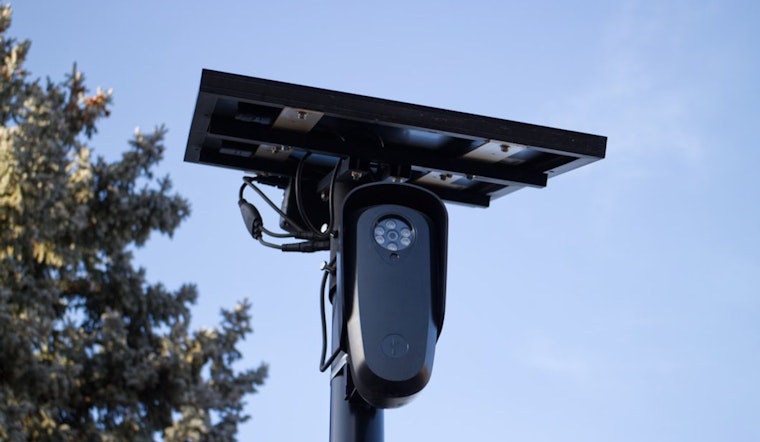
Palm Springs Police opened the doors of its Real-Time Surveillance Center to residents this week, giving Coachella Valley locals a rare look at how the department's network of automated license plate reader cameras tracks vehicles moving through the city. The tour walked attendees through what the Flock cameras actually collect, how long that data sticks around, and which outside agencies can tap into it.
The cameras, positioned at roughly one percent of intersections across Palm Springs, capture vehicle characteristics, movement patterns, and license plates as cars pass through, according to NBC Palm Springs. That footage is stored for 30 days before it's automatically deleted, and the department currently shares its Flock data with 25 law enforcement agencies across California. Flock Safety, the company behind the network, is the same vendor whose technology now underpins over 700 ALPR cameras across the greater Coachella Valley.
Why Two Data-Sharing Deals Got Cut
Palm Springs Police ended data-sharing agreements with two outside agencies after internal review raised red flags. In one case, the department stopped sharing information after learning the data was being shared outside California; in the other, officials terminated the arrangement over concerns that federal agents could gain access to information collected through the cameras, per the same NBC Palm Springs report. City officials say they've emphasized close monitoring of what the cameras collect and who is allowed to see it.
Those cutoffs track with state law. Under California Senate Bill 34, codified in Civil Code § 1798.90.55, state and local law enforcement agencies are barred from sharing or transferring ALPR data with out-of-state law enforcement or federal entities, according to the ACLU of Northern California. Separately, California's Values Act, known as SB 54, restricts local police from using public safety databases — including ALPR location records — for federal civil immigration enforcement, per the California Department of Justice.
A Regional Network Built Camera By Camera
Palm Springs' cameras are a small piece of a much bigger regional surveillance web. As of this month, more than 700 Flock ALPR cameras operate across the Coachella Valley, with the Riverside County Sheriff's Department running the majority — 564 cameras — spread across unincorporated desert communities and contract cities, according to the Palm Springs Desert Sun. Eight of the valley's nine municipalities now use the technology; Coachella remains the lone holdout after its city council voted 3-2 in 2023 against installing 70 cameras over privacy and civil liberties concerns, per the Coachella Valley Independent.
Flock Safety's footprint extends well beyond the desert. The company now operates in more than 6,000 communities nationwide, according to Lexipol. Palm Springs has authorized its contract with Flock Safety, and the cameras operate at key city intersections, per city records.
Privacy Advocates Push Back on Warrantless Tracking
Not everyone is comfortable with how far the network reaches. Civil liberties organizations argue that widespread fixed ALPR camera systems enable mass surveillance and routine location tracking, according to the ACLU of Northern California. Concerns raised about the Flock system generally center on three issues: who can access the data, how long it's retained, and the potential for misuse.
Palm Springs maintains a public ALPR Transparency Portal that discloses search counts, permitted and prohibited uses, operational policies, and a current list of data-sharing partner agencies, according to the City of Palm Springs. Officials say the department plans to keep holding public tours and maintaining that transparency even as it continues expanding its use of the technology.
Crime Numbers and a Department in Transition
Department leadership has pointed to the cameras as part of a broader technology push that coincided with a drop in crime. Palm Springs Police reported an overall 11 percent reduction in total crime for 2025 compared to the year before, including an 8.87 percent drop in violent crime and an 11.83 percent drop in property crime — a trend Hoodline previously reported department leaders partially credited to tools like the Flock network. Those officers are tasked with covering roughly 50,000 permanent residents alongside an estimated 5 million annual tourists and seasonal visitors who pass through the city each year.
The public tour comes at a moment of transition for the department, as Chief Andy Mills prepares to step down. Whoever takes over will inherit a fully staffed department and a surveillance center, operating in a valley where nearly every neighboring city except Coachella has already embraced automated license plate readers.





