

























































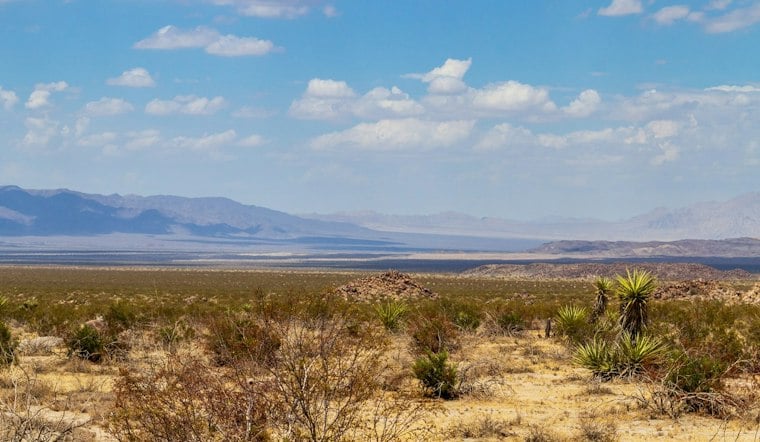
Thirty salvaged yachts could soon sit on the desert floor just outside Joshua Tree National Park, hoisted into place by crane as the centerpiece of a boutique hotel called Compass Yacht Club. The project, still working through permits, pairs a circular clubhouse with guest rooms built from two-level luxury vessels arranged like a marina stranded in sand, and its developer says it is less than a year from breaking ground.
The hotel is the work of Lucky Find Hospitality, a boutique hotel development and management firm that has helped launch close to 40 boutique hotel projects around the globe, according to the Los Angeles Times. The company purchased a 23-acre parcel across the highway from AutoCamp in 2023, and the property sits about a five-minute drive from the entrance to Joshua Tree National Park, per the same report. Plans call for 30 two-level luxury yachts alongside 28 boat houses, arranged in a circle around a central clubhouse that will include a restaurant, bar and swimming pool.
Nick Ovanessoff, managing director of Lucky Find Hospitality, described the pitch to the Times in nautical terms: guests, he said, could fall asleep in a yacht and wake in the desert with mountain views near a national park. CEO Rigel Bitterman, who was born in Idyllwild, raised on a sailboat in San Diego, and grew up camping and rock climbing in Joshua Tree National Park, called Compass Yacht Club the company's wildest, hardest and most personally meaningful project, the Times reported.
Design and Site Plan
Lucky Find Hospitality has launched hotels featuring yurts, treehouses, glamping tents and airstreams, but Compass Yacht Club represents a larger leap in scale and ambition, per the Times. The company already has a modular yacht hotel room design ready with design partner Rad Labs, and separate marketing materials from Rad Labs describe the project as a glamping retreat nestled in the desert landscape, with 30 salvaged wooden ships reimagined as guest accommodations.
Those plans include a 3,500-square-foot circular clubhouse combining reception, dining and event spaces, according to Rad Labs. Outdoor amenities are planned to include a pool, hot tub, fire pits, shuffleboard and bocce courts, with elevated walkways reminiscent of marina docks connecting guests to those spaces. The yachts themselves will be built off-site and placed on the desert floor using a massive crane, the Times reported.
Local radio station Z107.7 has tracked the project's early public rollout, describing a 58-room nautical-themed boutique hotel proposed for the southern border of the 23-acre lot near Border Avenue and Twentynine Palms Highway. That report noted the project would feature a public restaurant and bar, wellness center, pool and flexible indoor and outdoor spaces, and that renderings showed salvaged, sand-locked yachts potentially surrounding the lobby and clubhouse. At the time of that report, the station noted, the project was not yet listed on the county's Land Use Services website.
Permits, Flood Zones and a 2027 Groundbreaking
The parcel was zoned for commercial use but includes a section in a FEMA flood zone, which the Times reported required Lucky Find Hospitality to work with federal and local agencies on permits and entitlements. The company has worked to clear geotechnical, biological and cultural development hurdles, according to the Times, and final conditional use permit approval is expected by the end of this year. That permit would allow portions of the property to open to the general public as well as hotel guests, with groundbreaking planned for 2027 and a full opening targeted by the end of 2030.
Lucky Find Hospitality has framed the project around sustainability, with the company's own site stating it aims to develop and implement sustainable practices, reduce its carbon footprint and enhance ESG performance, according to Lucky Find Hospitality. Per the Times, the company has prioritized environmentally friendly development processes, designed the hotel to use minimal water and plans to build with sustainable materials.
Water and visitation context
Lucky Find says the hotel is designed to use minimal water, but the project descriptions cited here do not specify its proposed water source, groundwater plan or projected demand. According to the Joshua Basin Water District, Joshua Tree receives an average of 4.65 inches of precipitation each year; that local climate figure provides context but does not establish the hotel’s water demand. The National Park Service lists 2,932,644 visits to Joshua Tree National Park in 2025, down from 3,270,404 in 2023 (and 2,991,874 in 2024). Those figures show recent visitation levels, but do not establish demand for lodging at the proposed hotel.
Not Everyone Is Sold on the Yacht Theme
Community feedback has been part of the project’s public rollout. Bitterman holds quarterly town hall meetings to inform residents and gather feedback, the Times reported. Z107.7 reported that about 50 residents attended the company’s first town-hall-style meeting, where Lucky Find Hospitality pledged to update its project website with current information, mock-ups and more ways for residents to weigh in.
Compass Yacht Club is not the only unconventional desert lodging project drawing scrutiny near Joshua Tree. The Ofland Twentynine Palms glamping resort, planned near the national park, is the subject of a lawsuit filed by the Center for Biological Diversity and the community group Indian Cove Neighbors, according to the Los Angeles Times. That project calls for 100 cabins, two lodges, multiple pools, a stargazing area and an outdoor movie screen, along with a wastewater treatment plant processing more than 13,000 gallons a day. Opponents allege Twentynine Palms failed to adequately assess and mitigate traffic, water, air-quality and wildlife impacts before approving Ofland through a mitigated negative declaration rather than a full environmental impact report; Ofland Hotels has estimated groundbreaking in early 2027.





