

























































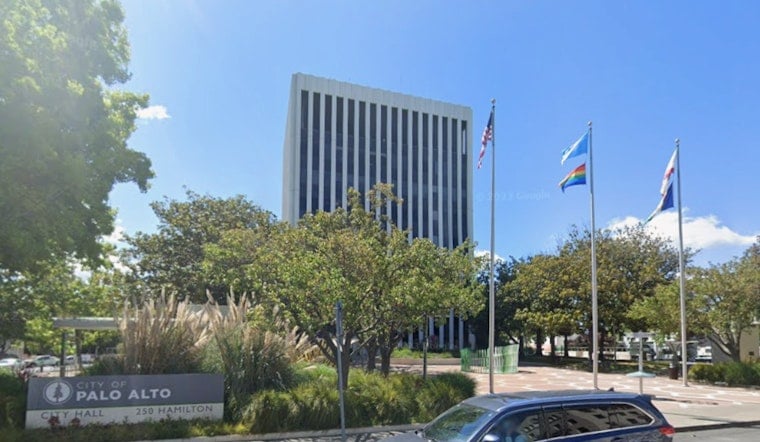
Two Palo Alto councilmen are pushing their colleagues to release a $50,000 investigative report examining whether Planning and Transportation Commissioner Forest Peterson tried to use his city position to get special treatment after his daughter's 1994 Ford Mustang was towed from a city parking garage. Councilmen Pat Burt and Keith Reckdahl want the council to discuss waiving attorney-client privilege over the report in closed session and to consider releasing it publicly, reigniting a fight over transparency that has simmered since the spring.
The dispute traces back to a complaint the tow yard owner filed with City Manager Ed Shikada, alleging that Peterson repeatedly invoked his role as a city commissioner in a way that appeared intended to influence the outcome of what was otherwise a private commercial matter, according to the Palo Alto Daily Post. Peterson's daughter's Mustang had been impounded after police towed it over a DMV registration issue. Per the complaint, Peterson allegedly told the tow yard owner he had police friends who would agree with him and that he could change the rules, and he allegedly tried to obtain a discount at the yard.
Shikada hired an outside attorney on March 9 to investigate the complaint, ultimately paying $50,000 for the probe. That attorney sent the finished investigative report to the full City Council on April 7. The report's scope, however, was limited strictly to factual questions about whether the alleged conduct occurred, not to reaching legal or policy conclusions — a distinction Peterson has since emphasized in his own defense.
A Split Council And A Reappointment Vote
Six days after receiving the report, the council voted on Peterson's reappointment to the Planning and Transportation Commission. Councilmembers Vicki Veenker, George Lu, Greer Stone, and Julie Lythcott-Haims voted on April 13 to reappoint him — the same four-member bloc that had originally put Peterson forward for the seat back in January 2025, according to official city council minutes. That consistency in backing has not gone unnoticed by critics who argue the same four councilmembers have now shielded Peterson twice.
Mayor Veenker said on July 10 that she did not believe there was a sufficient basis to conclude Peterson had abused his position. Burt has pushed back hard on that reading; he said on July 11 that he did not understand how Veenker reached that conclusion after reviewing the same report he did. The council, notably, has not formally considered whether Peterson violated any city policy or law — that determination remains outstanding, and the council will ultimately decide whether such violations occurred.
Transparency Versus Privilege
Reckdahl has framed the standoff in blunt terms, saying that refusing to release the report could make it look like the council is hiding something, and that transparency is needed to avoid undermining public trust. He and Burt have said that releasing the report — with any necessary redactions — is required to meet the openness standards Palo Alto residents expect. City Attorney Chris Jensen has indicated the report could be released with personal information belonging to victims or whistleblowers redacted.
Under California Evidence Code Section 912 and the state Supreme Court's 1993 ruling in *Roberts v. City of Palmdale*, confidential legal advice and investigative reports prepared for a public agency stay protected by attorney-client privilege unless the governing body formally votes in open session to waive it, per First Amendment Coalition. Palo Alto Daily Post Editor Dave Price argued in a July 17 column that the council should release the report since public money paid for it, and suggested Veenker may have already effectively waived privilege by discussing the report's contents publicly in an interview.
Peterson, for his part, declined an interview about the towing dispute itself. But in a statement reported by the Daily Post, he maintained that the investigation's scope never went beyond determining whether the alleged conduct happened, and said he considers the matter resolved now that the council reappointed him in April.
Endorsement Letters Raise Fresh Questions
Before that reappointment vote, Peterson submitted endorsement letters to the council on March 2, 2026, including one from a quality assurance tester identified only as Liesel who works at Peterson's own private firm, Palo Alto Data Group, alongside letters from local California Avenue business owners. The solicitation, made while the misconduct investigation was still active, has drawn criticism from residents questioning the appropriateness of a sitting commissioner gathering endorsements from his own employees during an ethics probe.
Peterson brings a substantial professional résumé to the seat. He holds a Ph.D. in civil and environmental engineering from Stanford University, co-directs the Stanford Workforce Virtual Design and Construction Lab, and founded Palo Alto Data Group, which built eCPR, a data platform used for enforcing public works labor standards, according to Stanford Profiles. In 2021, he served as Santa Clara County's first investigator within its Office of Labor Standards Enforcement and currently chairs the Flood Protection Bond Oversight Subcommittee for Valley Water. Earlier in his career, he ran on the North Star Progressive Democrats slate for an Assembly District 24 delegate seat and was a founding member of SCOPE 2035, a Stanford student housing-equity group.
Notably, the towing complaint became public just one day after Peterson told a July 8 Planning and Transportation Commission meeting that parking programs had become his number one issue as a commissioner. Under Palo Alto Municipal Code Sections 2.16 and 2.20, the seven-member commission serves at the pleasure of the City Council, which retains legal authority to remove a commissioner for policy or statutory violations — authority the council has not yet exercised or formally weighed in Peterson's case.
It remains unresolved whether the council will schedule a formal closed-session vote to waive attorney-client privilege, whether a redacted version of the report will ever reach the public, or whether the council will take up broader ethics standards for commissioners in open session. Peterson, at 49, remains seated on the commission as the council majority and its two dissenting members continue to disagree over how much of the $50,000 report Palo Alto residents are entitled to see.



