

























































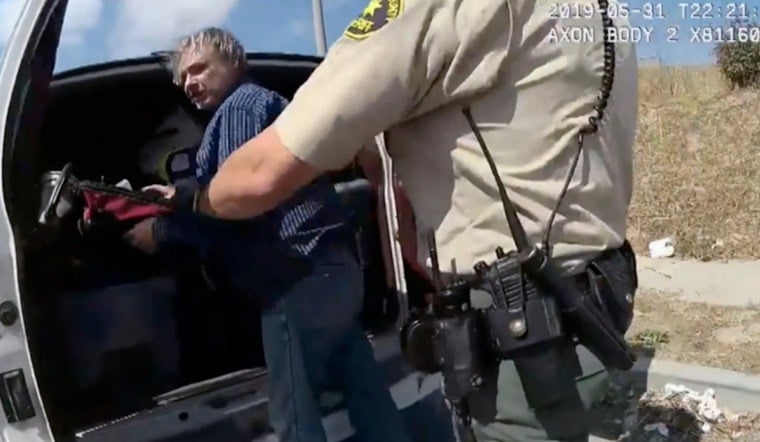
Randal Tanner spent nearly four years in wheelchairs and nursing beds after San Diego County sheriff's deputies pinned him to the ground during a 2019 van tow stop in Otay Mesa, leaving him quadriplegic and unable to use his hands. He died on February 12, 2023, and the county medical examiner later ruled his death a homicide tied to blunt force injuries of the head and neck. Yet the civilian watchdog board that cleared the deputies of wrongdoing back in 2020 says it still cannot reopen that finding because there is, in its own words, no new evidence.
The case, first detailed by The San Diego Union-Tribune, began on May 31, 2019, when Deputy Donald Glover approached Tanner's van on Piper Ranch Road. The van was illegally parked more than 18 inches from the curb and its registration had lapsed more than six months earlier, according to the newspaper's reporting. Glover called a tow truck to impound the vehicle, and he and his partner, Trissa Taguacta, pinned Tanner to the ground with pressure on his back, then hit his head on the curb. Tanner told them, “I can't move, I'm paralyzed,” and deputies requested emergency medical services to evaluate him for a head injury before he was transported to Scripps Mercy Hospital.
A Body Camera Ruling That Cleared the Deputies
Tanner never walked again after that encounter. He developed quadriplegia, a cervical spinal cord contusion injury, cervical myelopathy and neurogenic shock, and he spent the next four years cycling through rehabilitative and skilled nursing facilities, wheelchair-bound and unable to use his hands. The Citizens' Law Enforcement Review Board reviewed the incident in 2020, using sheriff's office body-camera video that was posted alongside the department's initial reports, and found the excessive-force allegations against Taguacta unfounded while concluding that Glover's actions were justified.
Tanner was never charged with a crime connected to the encounter. His only prior brushes with the law, per the Union-Tribune's reporting, were a 2016 arrest on suspicion of illegal possession of ammunition and possession of concentrated cannabis, and a separate 2016 arrest on misdemeanor cannabis-possession and unlawful-lodging charges. He was born in San Jose in 1961 and had received a medical discharge from the military before finishing basic training, according to the paper's account of his background.
Homicide Ruling Reopens Old Wounds, Not the Case
Near the end of his life, Tanner was intubated and suffered septic shock. He ultimately died from small bowel ischemia and necrosis, and the county medical examiner ruled his manner of death a homicide. Under California medicolegal standards, that classification means the death resulted from the direct action of another person — it is a factual determination, not a legal finding of criminal intent or unlawful conduct, according to guidance from the County of Los Angeles Medical Examiner that outlines the statewide standard.
Tanner's brain and spinal cord were sent to an outside laboratory for secondary consultation, which demonstrated remote traumatic injury to the mid-cervical spinal cord. CLERB's executive director, Paul Parker, said the board is obligated to open a new investigation because of Tanner's death, and the board did reopen the case in 2024. But when it completed its secondary review, CLERB found no new evidence regarding the original excessive-force complaint. Parker said blunt force injuries of the head and neck contributed to Tanner's death and argued the case should be reconsidered in a comprehensive CLERB investigation, even as the board's own review came up empty-handed on new findings.
Why the Board's Hands Are Tied
CLERB staffer Brett Kalina said delays in learning about the homicide ruling and in securing documents held up the secondary review. Under the board's own rules and regulations, a closed complaint investigation can only be reopened for reconsideration if significant new evidence surfaces that is likely to alter the original findings, or upon the board's own initiative in the public interest, according to CLERB's own rules and regulations. Without that new evidence, the board says it cannot revisit its original findings on the use of force.
There's also a hard legal clock working against any administrative discipline. Under California Government Code § 3304(d) of the Public Safety Officers Procedural Bill of Rights Act, public agencies face a strict one-year statute of limitations from the date misconduct is discovered to complete investigations and notify officers of proposed discipline, according to guidance from the Peace Officers Research Association of California. That statute can only be reopened under narrow circumstances involving newly discovered material evidence, county officials noted in a December 2024 board agenda item exploring how to align CLERB's reopening rules with state law. Glover left the sheriff's office in 2024, and Taguacta retired from the department in 2023, meaning any administrative penalty against either would face steep legal hurdles even if new evidence emerged.
Attorney: Deputies Used Force on an Unarmed Man
Attorney Julia Yoo, representing Tanner's interests, said deputies used force on an unarmed man that rendered him quadriplegic. District Attorney Summer Stephan declined to comment on the medical examiner's homicide finding. The District Attorney's Office is reviewing the case for potential criminal charges, consistent with San Diego County protocols under which deputy-involved deaths investigated as homicides undergo comprehensive criminal evaluation once law enforcement homicide units complete their case files, per the San Diego County Sheriff's Department.
CLERB was created by San Diego County voters through a 1990 charter amendment as an 11-member independent civilian oversight board with subpoena authority to investigate misconduct complaints and deaths involving sheriff's deputies and probation officers. The board has faced intensifying scrutiny of late: a February 2022 report by the California State Auditor concluded the sheriff's department had repeatedly failed to adequately prevent and respond to in-custody deaths, and in September 2025 the county Board of Supervisors voted 4-1 to expand CLERB's oversight to include jail medical staff and contracted healthcare workers, over Sheriff Kelly Martinez's objection. CLERB is scheduled to convene its regular monthly meeting today at 5:30 PM, where Tanner's case is expected to come up again.





