

























































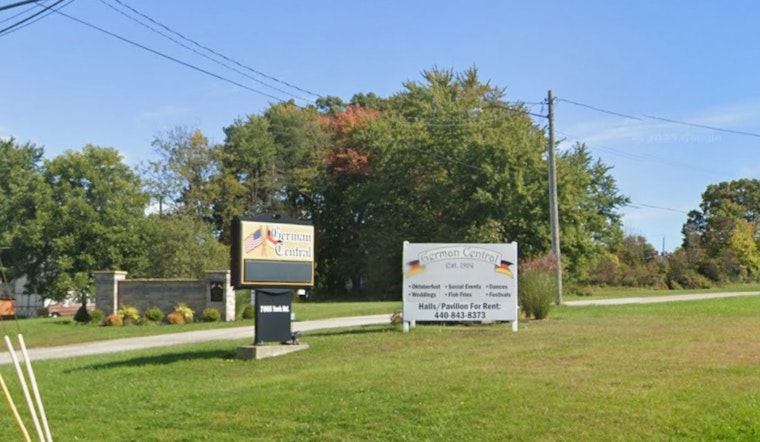
Thousands of visitors are expected to descend on German Central in Parma next Sunday for the 70th annual Hungarian Festival, a daylong celebration of food, folk dancing and live music that typically draws around 3,000 attendees. Running from 10 a.m. to 8 p.m. on September 6, the festival kicks off with a flag-raising ceremony at 10:30 a.m. and keeps its kitchen serving until the doors close.
According to Cleveland.com, the festival's kitchen opens at noon and will dish out staples like chicken paprikas with dumplings, stuffed cabbage rolls, grilled pork steak, Hungarian sausages, lángos, and jam-filled crepes, all available for take-out. Café Budapest will run alongside the main kitchen, offering tortes, pastries, strudel and espresso coffee for anyone craving something sweeter. Mike Horvath, the festival's media coordinator, said people attend for the Hungarian food, live music, dance performances and community camaraderie, per the same report.
A Milestone Tied to 75 Years of Scouting
This year's festival carries extra significance: 2026 also marks the 75th anniversary of Hungarian scouting in Greater Cleveland, where the first North American Hungarian scout troop was established in 1951, according to Destination Cleveland. All festival proceeds directly support the year-round educational and outdoor activities of nearly 200 active Hungarian boy and girl scouts across Northeast Ohio, the same source notes.
To mark the scouting milestone, organizers offered a $2 discount off general admission for anyone who wore or brought an official Hungarian scout neckerchief, known as a “nyakkendő,” according to a Facebook post from the festival's organizers. Those scouting proceeds also help maintain the 130-acre Teleki Scout Park in Ashtabula County, a primitive camping retreat named after former Hungarian Prime Minister Pál Teleki, per a history document hosted on Scribd.
Folk Dancers, Live Music and a Chance to Learn the Steps
The festival's main cultural draw is the Hungarian Scout Folk Ensemble, made up of scouts aged 14 and older who perform folk dances in authentic costumes and will teach basic Hungarian dance steps to attendees after their sets, per Cleveland.com's account. Members meet weekly on Tuesday nights to study traditional regional dances, songs and Hungarian crafts, Destination Cleveland notes.
Live musical entertainment this year features the return of the New Jersey-based Fészer Band, performing alongside Cleveland musician Walt Mahovlich and the ensemble Harmonia, according to CoolCleveland. The festival also includes Catholic and Protestant church services held in Hungarian, and organizers describe the event as a celebration of a 1,000-year-old Hungarian culture, per Cleveland.com's coverage.
Roots That Run Deep in Cleveland
The festival's staying power reflects just how deeply Hungarian heritage is woven into Greater Cleveland. The city's Buckeye neighborhood was once known as “Little Hungary” or “Little Debrecen,” home to more than 35,000 Hungarian immigrants in the 1930s in what was considered one of the largest concentrations of Hungarians outside Budapest, according to Case Western Reserve University's encyclopedia of Cleveland history — a history Hoodline previously explored in its report on new Buckeye Corridor sculptures. Saint Elizabeth of Hungary Roman Catholic Church, founded on Buckeye Road in 1892 as the nation's first Hungarian Catholic parish, remains an active historic landmark today, per Cleveland Historical.
Post-World War II suburbanization eventually shifted much of that population out to communities like Parma, where German Central now sits at 7863 York Road as one of the region's enduring Hungarian gathering spaces. Greater Cleveland still counts more than 107,000 residents claiming Hungarian ancestry, representing the third-largest concentration of Hungarian speakers in the United States, with Hungarian Americans making up roughly 3.1 percent of Cuyahoga County's population, according to figures cited on Wikipedia. Northeast Ohio has been reported to have the largest Hungarian congregation outside Hungary, per Cleveland.com.
What to Know Before You Go
General admission runs $12, with children 10 and under admitted free, and parking at German Central is free as well, according to Cleveland.com. The venue offers accessibility throughout the park along with handicapped spaces near the entrance gate, but organizers ask that visitors leave pets and coolers at home.
Past single-day festivals have drawn crowds of nearly 2,800 people who worked through more than 1,600 orders of lángos, 1,500 stuffed cabbage rolls and 500 pounds of chicken paprikash, according to figures from the Cserkész Barátok Köre. Beyond the food and dancing, the festival also includes kids' activities and folk dance lessons for attendees of all ages, rounding out a day built as much for family fun as for keeping a decades-old tradition — and its scouting programs — alive.





