

























































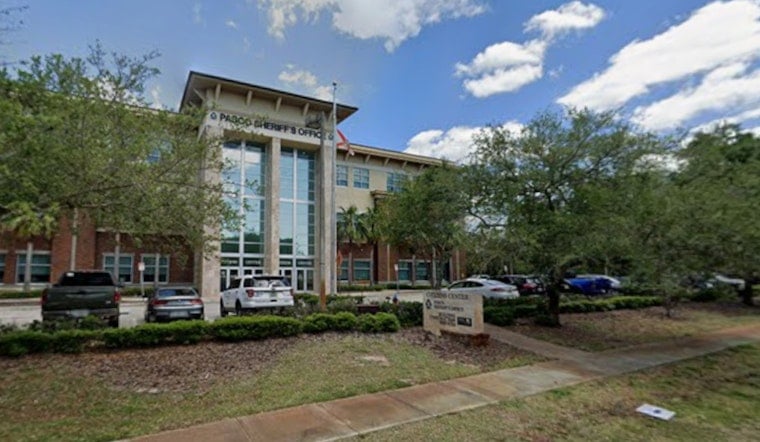
A 12-year veteran of the Pasco Sheriff's Office was found dead inside the agency's construction facility in Land O' Lakes on Wednesday morning, the result of what officials describe as an apparent self-inflicted gunshot wound from his own agency-issued handgun. Deputy William Wynn, 51, was discovered around 8 a.m. inside the facility located in the Charles Bo Harrison Way area, according to the sheriff's office.
The Pasco Sheriff's Office shared the news “with profound sadness” in a statement posted to social media Wednesday, confirming that a deputy had taken his own life that morning. Deputy Wynn's identity and years of service were reported by Local BN, filling in details that were missing from the agency's initial post. The sheriff's office statement itself, shared via Pasco Sheriff, did not name Deputy Wynn or detail his tenure.
A Campus Steeped in Local History
The road where the deputy died, Charles Bo Harrison Way, carries deep meaning within the department. It was named for Pasco Sheriff's Capt. Charles “Bo” Harrison, who was shot and killed in the line of duty on June 1, 2003, just 15 days before his planned retirement. According to the Pasco Sheriff's Office, Capt. Harrison was the highest-ranking African American deputy in the agency's history.
The complex on that road now houses Florida's F1RST campus, a public safety research and training facility that includes the Helen A. Rich K9 Campus and the Center for Recovery of Endangered or Missing Persons, according to Florida's F1RST. The multi-building site serves as a central hub for the agency's training and investigative operations. It is also, according to a March 2026 procurement solicitation posted on DemandStar, the future site of a new Mental, Physical, and Emotional Health Center the sheriff's office is planning to build at 10370 Charles Bo Harrison Way — a project meant to expand internal wellness resources for deputies at the very complex where Deputy Wynn died.
Existing Resources and Legal Protections for Officers
The Pasco Sheriff's Office already operates a Behavioral Health Intervention Team, launched in 2019 as one of Florida's largest behavioral health units within a local law enforcement agency. The unit was created to connect residents and individuals in crisis with community mental health counselors and resources, per background from the agency's own materials. Whether Deputy Wynn had accessed any agency wellness or peer support programs before his death remains unknown, and the sheriff's office has not addressed the question publicly.
Florida law offers specific protections meant to encourage first responders to seek help without fear of exposure. Under Florida Statute Section 111.09, communications between a first responder and a designated peer support specialist are legally confidential, shielded from disclosure in civil, criminal, or administrative proceedings, according to the Florida Senate. The statute was designed to remove confidentiality concerns that might otherwise keep officers from using internal support systems.
A National Pattern Behind the Local Loss
Deputy Wynn's death fits into a troubling national pattern documented by researchers who study first responder mental health. A study by CNA analyzing 1,287 officer suicides recorded between 2016 and 2022 found that law enforcement personnel face a significantly higher statistical risk of dying by suicide than being killed in the line of duty, with officer suicides nationwide reaching a recorded peak of 234 in 2019 before fluctuating in the years since.
Cultural stigma remains a major barrier to early intervention. Research published in March 2026 by SoundThinking found that 60% of police officers believe their peers would not disclose mental health struggles, and nearly 75% believe officers avoid reporting concerns to supervisors out of fear of professional consequences. Firearms, meanwhile, were involved in 57% of all suicide deaths in the United States, according to 2024 CDC data cited by the American Foundation for Suicide Prevention — a statistic that underscores the risks tied to firearm access among officers.
In April, federal lawmakers introduced the Answering the Call Act of 2026 to enhance the national 988 Suicide & Crisis Lifeline with specialized training and confidential outreach tailored to emergency personnel. Sponsors, including the office of U.S. Rep. Kat Cammack, noted that emergency workers underutilize general crisis lines due to stigma and fear of career impacts.
Wednesday's death is the latest in a string of critical incidents involving the Pasco Sheriff's Office this year, following a deputy-involved shooting on Causeway Boulevard earlier this month and an earlier deputy-involved shooting reported in a New Port Richey neighborhood in March. The agency, based in West Central Florida, has asked anyone with information to contact its non-emergency line at (727) 847-8102, or 911 in an emergency. People experiencing a mental health crisis can call or text 988 to reach the Suicide and Crisis Lifeline, which connects callers with a trained counselor, or chat at 988lifeline.org/chat.





