

























































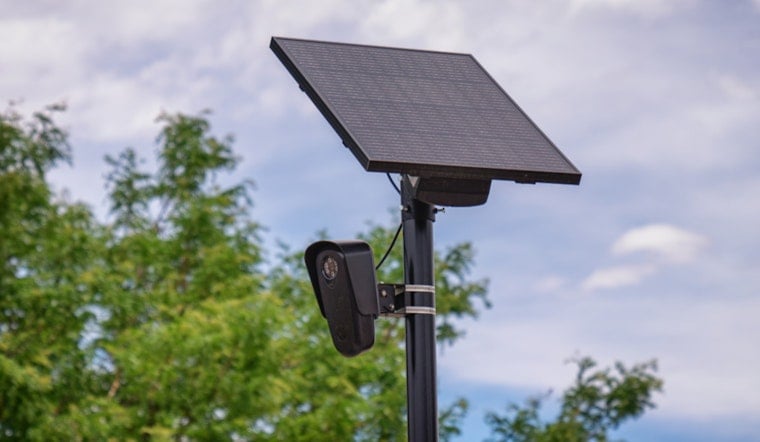
Automated license plate readers known as Flock cameras have quietly multiplied across Pennsylvania street corners, including more than 180 units now operating in south-central Pennsylvania alone, and state lawmakers say it's time to write the rules for how police can use the data they collect. On August 10, a bipartisan group of five state representatives announced plans to introduce legislation setting statewide privacy and accountability standards for the technology. The bill would arrive just as police departments increasingly credit the cameras with cracking cases, even as critics warn the same technology can be turned into a tool for stalking or unchecked government tracking.
State Rep. Nate Davidson (D-Cumberland/Dauphin), along with Reps. Tarik Khan (D-Phila.), Robert Leadbeter (R-Columbia), Jennifer O'Mara (D-Delaware), and Napoleon Nelson (D-Montgomery), circulated Co-Sponsorship Memo 49092 to build support for the bill, according to the Pennsylvania House Democratic Caucus. The measure is expected to be formally introduced when the state House returns to session in September, as reported by fox43.com. Davidson said lawmakers need to balance the public safety benefits of the cameras against residents' privacy, according to the same report.
Davidson has pointed to specific incidents to make his case, telling fox43.com that reports have described individuals using Flock cameras to stalk former partners or for other nefarious purposes. He argued that passive AI surveillance technology may go beyond the spirit of the Fourth Amendment, since the cameras can collect information about where people travel and, in his view, could lead police to suspect illegal activity based on nothing more than someone's daily travel habits. Davidson also warned that a vehicle could be searched merely for being near a crime, raising questions about Fourth Amendment protections against unreasonable searches and seizures.
What the Bill Would Require
The proposed legislation would begin establishing statewide standards for who can access Flock camera data and why, along with requirements for informing the public about the technology's presence. Per the Pennsylvania House Democratic Caucus, the bill would mandate clear data access rules, required search justifications, mandatory audit trails, and data retention standards. It would also create civil penalties for unauthorized data access and give individuals harmed by misuse the right to bring a civil lawsuit.
The bill is not the first attempt by Harrisburg lawmakers to rein in the technology. PennLive reported that Davidson previously proposed prohibiting law enforcement from sharing ALPR data to investigate or enforce laws interfering with healthcare access, such as out-of-state reproductive care, while former Rep. Josh Siegel introduced a separate bill directing PennDOT to create an ALPR permitting system. A parallel state Senate bill, meanwhile, would make it easier for communities to obtain approval to install Flock cameras in the first place, since PennDOT guidelines currently permit the readers only on non-PennDOT structures with owner approval.
A National Debate Playing Out Locally
Flock Safety, the company behind the cameras, operates more than 80,000 AI-powered units across 49 states, serving over 5,000 law enforcement agencies and 1,000 corporate clients, according to Forbes. The company's standard policy deletes data after 30 days. Pennsylvania's push for statutory guardrails follows a broader national pattern, as Land Line Media reports that at least 16 states have already enacted laws governing the readers, including eight with statutory data-retention limits and six that explicitly restrict government usage.
Supporters of the cameras say they can identify vehicles almost instantly and have proven their worth in real cases. Hoodline has previously reported how state police used ALPR data to trace suspect vehicles after a shooting near Tredyffrin Township, and how ALPR pings alerted Indiana authorities to a fleeing burglary suspect vehicle, leading to an arrest. Locally, Bensalem Township has built a network combining more than 400 registered community security cameras with license plate readers to track suspect vehicles across municipal lines, according to Hoodline's reporting on a recent Falls Township case.
Privacy Advocates Have Sounded the Alarm for Years
The concerns raised by Davidson echo warnings the ACLU of Pennsylvania has made for over a decade. The organization has argued that collecting and storing ALPR location data without individualized suspicion creates a comprehensive mass surveillance network capable of revealing personal travel patterns and other sensitive daily activities. Davidson's focus on stalking and harassment tracks with his other legislative work; he was a co-sponsor of House Bill 1909, which the Pennsylvania House passed with bipartisan support in February to increase criminal penalties for Protection from Abuse order violations.
Around Harrisburg, the cameras Davidson wants to regulate are already a fixture of daily life, with units positioned near Elmerton Avenue intersections and Bellevue Park. Whether the new bill can thread the needle between law enforcement's push for faster crime-solving tools and residents' demand for privacy protections will likely become clearer once the House reconvenes and the measure is formally introduced.





.jpg)