

























































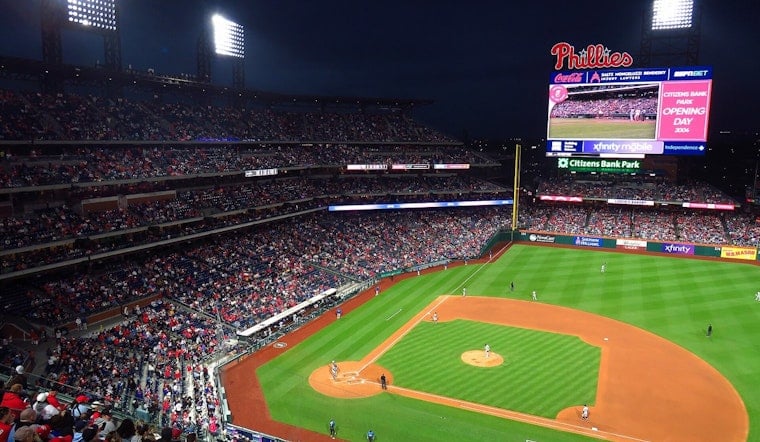
More than 600 local students filled Third Base Plaza at Citizens Bank Park this week for the Phillies' third annual Legacy of Historically Black Colleges and Universities Celebration, a pregame gathering that paired a college fair with a step show and campus bus tours before the team took the field. Students, alumni and community leaders mixed near the concourse as representatives from HBCUs across multiple states set up tables to recruit the next wave of applicants.
The event, held before a Phillies game, was built around education and culture, according to FOX 29 Philadelphia. Amirah Sharper, who helped organize the celebration, said the Phillies try to grow the event every year and bring HBCU culture directly to the community. The college fair drew representatives from HBCUs based in various states, giving students a chance to gather information face to face rather than through a brochure or a website.
A Step Show and a Sense of Belonging
Third Base Plaza featured HBCU traditions throughout the afternoon, including a step show performed by fraternities and sororities. Genea Bolton, an attendee, said it was a joy to be among the Divine Nine and everyone congregating. Those organizations trace back to the National Pan-Hellenic Council, founded May 10, 1930, at Howard University to coordinate historically Black Greek-letter fraternities and sororities that today maintain thousands of collegiate and alumni chapters worldwide, according to the council's own history.
Traci Benjamin, another attendee, said it was important that the Phillies recognized the impact HBCUs have had. The franchise has described itself as committed to building exposure for HBCUs, and organizers said they plan to expand the celebration's impact at future gatherings, the station's report noted.
Bus Tours Head to Historic Campuses
Beyond the ballpark tables, Dr. Connie Boswell provided details on bus tours that will take students to visit HBCU campuses directly, with stops planned at Cheyney, Lincoln, Howard and Spelman. Cheyney University, located roughly 25 miles west of Philadelphia and established in 1837 as the Institute for Colored Youth, is recognized as the nation's oldest HBCU, founded by Quaker philanthropist Richard Humphreys, according to Cheyney University. Lincoln University, chartered in 1854 as Ashmun Institute in Chester County, holds the distinction of being the nation's first degree-granting HBCU and counts Supreme Court Justice Thurgood Marshall and poet Langston Hughes among its alumni, per Lincoln University.
A representative from the Morgan State University alumni association said the event could spur interest in HBCUs and encourage students to explore attending one, though whether it actually shapes college decisions for the students who attended remains unclear, per the same FOX 29 account. It is similarly unknown how many of the roughly 600 students who came through Third Base Plaza will ultimately enroll at an HBCU.
Local Roots Run Deep
The region's ties to HBCU history extend well beyond the ballpark. Philadelphia Mayor Cherelle Parker, who earned a bachelor's degree in English Education from Lincoln University in 1994 and became the city's first woman and 100th mayor in January 2024, has made HBCU visibility a civic priority, according to the City of Philadelphia. Parker announced that the city will host One Philly HBCU Week 2026 from October 27 through 31, featuring a student opportunity fair, a Divine Nine Step Show, a Battle of the Bands and college football matchups between Delaware State and Norfolk State as well as Lincoln and Virginia Union. Hoodline previously reported on the football side of that city-wide HBCU celebration.
Citizens Bank Park itself has become a recurring stage for HBCU outreach. Just weeks before the college fair, the ballpark hosted Major League Baseball's fourth annual HBCU Swingman Classic on July 10, showcasing 50 Division I HBCU baseball players managed by Phillies legend Jimmy Rollins and Rickie Weeks, according to MLB.com. The HBCU celebration also fits within a broader slate of higher-education programming at the park, including the Phillies College Series sponsored by Temple University's Fox School of Business, which introduces students to sports management and front-office careers through panels and networking sessions.
Why the Push Matters Now
The Phillies' investment in HBCU visibility arrives as the schools themselves are drawing renewed national attention. There are 99 accredited, Title IV degree-granting HBCUs operating across 19 states, Washington, D.C., and the U.S. Virgin Islands, collectively enrolling nearly 290,000 students, according to the National Center for Education Statistics. A UNCF report released this month found that while HBCUs make up just 3% of the nation's higher-education institutions, they confer 16% of all STEM bachelor's degrees earned by Black graduates and 20% of those earned by Black women.
That academic footprint has coincided with sustained enrollment growth. HBCU enrollment rose 5.9% in fall 2024 compared with the prior year, marking three consecutive years of growth even as broader postsecondary enrollment among Black students nationwide declined, per National Student Clearinghouse Research Center data cited by the Chronicle of Higher Education. For the students who spent an afternoon at Third Base Plaza this week, that momentum was on full display in the recruiters, the step teams and the bus tours pointed toward campuses old enough to have shaped the history of Black higher education itself.





