

























































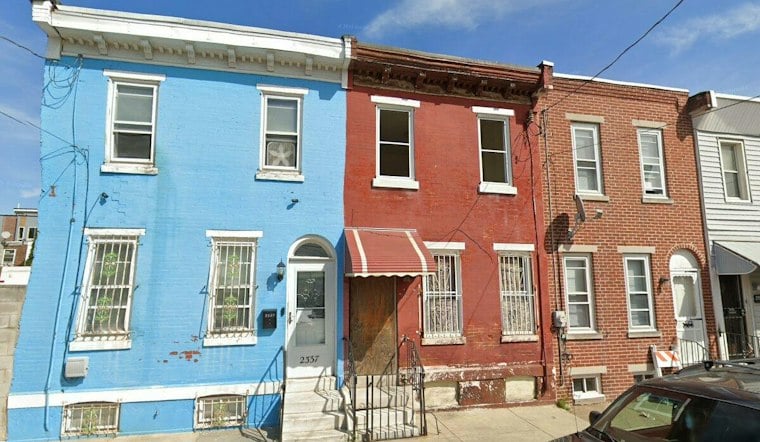
Inarvis Ramos is set to close next month on a renovated three-bedroom house that sat vacant for a decade — and her new mortgage payment, about $1,000 a month, will be lower than what she currently pays in rent. The 43-year-old, who works at a nearby school, is one of the latest buyers moving through a pilot program that is converting empty houses in North Philadelphia into affordable homes for first-time buyers.
The pilot is run by HACE, a nonprofit that is renovating existing homes for lower-income households as part of the city's broader Turn the Key initiative, according to The Philadelphia Inquirer. For four years, Turn the Key has subsidized sales of single-family homes newly built on city-owned vacant land, but HACE's approach is different: it rehabs existing properties rather than building from scratch, and the Inquirer reports the nonprofit is the first to do so through the program. “I'm happy, excited for a new beginning,” Ramos told the paper.
Ramos's four-person household earns about 37% of area median income, or roughly $45,200 — well below the average Turn the Key buyer, whose income as of September was about 57% of area median income, or roughly $70,000 for a four-person household, per the Inquirer. HACE's pilot is designed to make renovated homes affordable to households earning less than half of area median income, which for a four-person household in Philadelphia is $122,700, the paper reports.
A $160,000 House in Norris Square
Veronica Feliciano, a 32-year-old restaurant general manager, bought a fully renovated two-bedroom, 1½-bathroom home for $160,000 in August in Norris Square, according to the same Inquirer report. HACE continues to offer her support after the purchase. “It still feels surreal,” she said, adding that she is amazed to have a house of her own.
Her mother, Annie Feliciano, said she always believed her daughter would become a homeowner but did not imagine she could afford a renovated home in the neighborhood where she grew up, the paper notes. Veronica Feliciano said she hopes the program will acquire and renovate more homes going forward.
HACE has renovated five Turn the Key homes in Fairhill, North Philadelphia, with three sold, one under contract, and one still available, the Inquirer reports. The nonprofit plans to rehabilitate six more houses in its next pilot phase. Those homes sit within City Councilmember Quetcy Lozada's 7th District; Lozada said the pilot shows what's possible when the city invests in existing neighborhood homes, and that she backs Turn the Key projects when they are intentional, inclusive, and benefit long-time residents, per the paper.
How the Money Comes Together
The Philadelphia Housing Authority donated the single-family houses used in HACE's pilot, and LISC Philadelphia is funding the renovation effort, according to the Inquirer. LISC started with about $1.3 million for affordability-gap subsidies and awarded $40,000 grants in the first phase of its partnership with HACE — a figure independently confirmed by Impacto Media, which reported that the Philadelphia Housing Authority donated a property at 2335 N. Fairhill Street and that LISC provided a $40,000 subsidy toward that home's affordability gap. Impacto Media described the Fairhill property as HACE's fourth home incorporated into Turn the Key and, according to the organization, the first rehabilitation of an existing home completed through the initiative anywhere in Philadelphia. HACE had scheduled an inauguration event for the property at 11 a.m. on October 30. A listing on HACE Homes describes that house as newly renovated, with three bedrooms, 1.5 bathrooms and 1,098 square feet.
LISC may provide larger grants in future phases if needed to match buyers' affordability needs, and the organization is working with Xiente and Habitat for Humanity Philadelphia, which are in the early stages of following HACE's model, the Inquirer reports. LISC Philadelphia executive director Andrew Frishkoff said the organization sought to counter outside investors buying single-family homes and converting them into rentals. LISC has received funding from the Pennsylvania Housing Finance Agency and the U.S. Department of Housing and Urban Development, and has also financed developers' construction of new homes under the broader program, per the paper.
Turn the Key's Broader Numbers
The Philadelphia Housing Development Corporation administers Turn the Key, which the city funds partly through grants, with the Philadelphia Land Bank providing vacant land to developers. As of September, developers had sold about 470 homes through the program, according to the Philadelphia Land Bank's executive director, with more than 200 additional homes under construction, the Inquirer reports. Mayor Cherelle L. Parker has separately announced an $800 million plan to build or repair 30,000 homes citywide.
Program figures vary somewhat depending on the source and reporting period. WHYY reported that 415 units had been sold, with 200 more under construction and 1,048 additional units approved, while a separate WHYY report on the program's expansion into Tioga put the completed, sold, or under-contract total at 494, with 200 under construction and 1,118 more approved for development. The Philadelphia Land Bank's own advisory lists the average final Turn the Key home price after grants and buydowns at $183,499, which lines up closely with the $183,500 average the Inquirer cites for new Turn the Key homes after subsidies.
Income averages for the program also diverge depending on the source. WHYY reported the average income for Turn the Key households at about $54,000, while the Philadelphia Land Bank's advisory put the average homebuyer income at $45,000 annually, or 57% of area median income. The land bank advisory also notes that Turn the Key is funded by City Council's Neighborhood Preservation Initiative and that the city provides buyers up to $85,000 for mortgage buydowns and downpayment or settlement assistance; the Inquirer separately describes the city's contribution as up to $75,000 toward reducing mortgages and home prices, with buyers eligible for up to $10,000 more through the Philly First Home grant.
Why Rehab Instead of New Construction
Renovating a home is typically less expensive than building new, which is part of what makes HACE's approach attractive to officials and funders hoping the pilot can become a model, according to the Inquirer. Turn the Key is open to homebuyers earning up to 80% or 100% of area median income depending on the project, and buyers must qualify for mortgages, complete housing counseling, and carry minimum credit scores of around 640. Turn the Key monthly mortgage payments average $1,400 across the broader program — well above what HACE's lower-income buyers like Ramos are paying.
By comparison, newly built Turn the Key homes in other parts of the city, such as the West Venango Street project described by WHYY as the first Turn the Key project in the 8th Council District, are expected to produce 22 three-bedroom homes starting at about $280,000 before subsidies, with buyers eligible for up to $75,000 in mortgage buydown assistance. The Philadelphia Tribune reported that average Turn the Key payments of about $1,400 compare favorably to an estimated $1,800 average rent for a two-bedroom Philadelphia apartment — part of the broader affordability gap the program is designed to close.
HACE's Maria Gonzalez said the organization is finding creative ways to serve families who can't afford traditional Turn the Key properties, adding that homeownership builds family wealth and should be within reach of families typically shut out of the market. LISC's Angela Brooks said the pilot demonstrates that rehabilitation can help expand homeownership, while LISC Philadelphia's Kelvin Jeremiah said the affordable-housing crisis requires multiple approaches, creative solutions, and strong partnerships. The Philadelphia Housing Development Corporation notes that submitting a Turn the Key application does not guarantee housing or add an applicant to a waiting list, and defines a first-time buyer as someone who has never owned a home or has not owned one in the three years before applying.



