

























































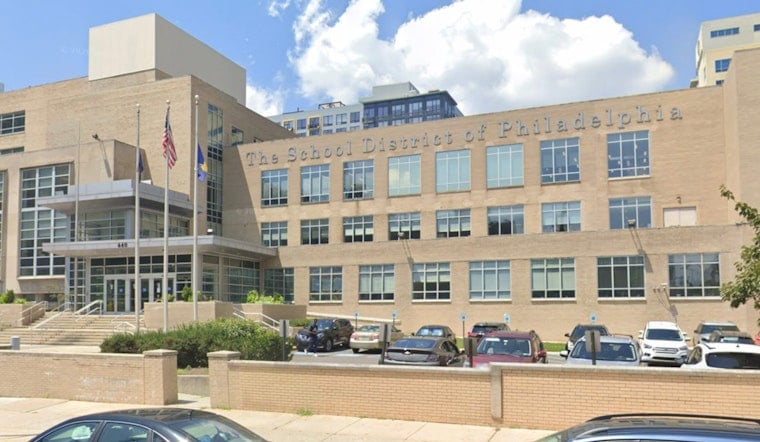
Philadelphia families preparing to apply to the district's roughly three dozen selective magnet schools are heading into next week's application window without knowing what test, if any, their children will need to take. The School District of Philadelphia has not disclosed when an alternative assessment will be offered or whether it will even be mandatory, even as the application period opens Tuesday, September 8.
The confusion traces back to a rocky spring for Pennsylvania's standardized testing system. As reported by Axios, PSSA and Keystone results are normally required criteria for Philadelphia's school selection process, but the district is not using results from the spring 2026 exams this year. District spokesperson Monique Braxton said there were no further details about the new test as of Monday, per the same report.
Pennsylvania's Department of Education has not completed verification of the state's testing data, which was expected to wrap up by August 18. A department spokesperson declined to reveal both the cause of the delay and when the data will ultimately be released, according to the same Axios account. The agency typically doesn't access finalized PSSA and Keystone data until November, though it did distribute preliminary school-level figures to districts in June.
Philadelphia Diverges From Suburban Districts
That preliminary June release created a split among Pennsylvania districts. According to Chalkbeat, while other state districts and local charter schools released their preliminary data, Philadelphia chose to withhold the scores from teachers entirely and refused to use them for magnet admissions. Philadelphia district leaders have said last year's test results cannot be used as required school-selection criteria, and district officials have blamed the Pennsylvania Department of Education for the last-minute change, per Axios.
Neighboring districts took a different path. Lower Merion School District spokesperson Amy Buckman said her district is using last year's district-level testing data, according to Axios, and regional school districts more broadly are relying on their own district-level PSSA and Keystone figures from the previous year rather than waiting on the state.
Part of what triggered the mess was a statewide rollout problem. Pennsylvania mandated fully online administration of the PSSA for the first time in spring 2026, and the switch produced widespread technical failures tied to software vendor Data Recognition Corporation, as detailed by CBS News. The PSSA online rollout included glitches and technical difficulties in some districts, and the PSSA covers grades 3 through 8 while the Keystone exams cover high school students.
New Admissions Rules Layer Onto the Testing Fog
The testing uncertainty lands on top of a separate round of admissions changes the district announced this month. As reported by The Philadelphia Inquirer, the School District of Philadelphia updated criteria for the 2027-28 school selection process in August, restricting core academic grade evaluations to English Language Arts, Math, and Science while guaranteeing high school placement for students already enrolled at feeder magnet middle schools.
Geography remains part of the equation too. For this application cycle, the district modified its priority zip codes to 19132, 19133, 19135, 19138, 19140, and 19141, granting qualified applicants in those areas priority placement at selective magnets like Central and Masterman, according to WHYY. The zip codes were chosen based on historic underrepresentation at the district's top magnet schools.
That zip-code preference system has already drawn legal fire. In February, the U.S. Third Circuit Court of Appeals ruled the arrangement could be viewed as unconstitutionally race-based, and the district executed a $360,000 settlement with three plaintiff families in July without altering its admissions policies, per the Inquirer's earlier coverage. The lawsuit stemmed from a 2022 filing by families alleging the lottery and zip-code system discriminated against qualified applicants.
A Superintendent Under Pressure to Deliver
Superintendent Tony Watlington, who became superintendent in 2022, has pledged to improve academic achievement and to make Philadelphia the fastest-improving large urban school district in the nation, according to Axios. He now faces potential reputational damage from any large decline in test scores once verified figures eventually surface, and he has already received pushback on his separate $2.8 billion plan to close and update school facilities.
That facilities overhaul carries its own stakes for magnet families. Hoodline has previously reported that the plan includes a grade-by-grade phase-out of AMY Northwest magnet middle school starting in the 2027-28 school year, part of a broader proposal to close or repurpose 18 school buildings due to repair costs and low enrollment.
The district's current admissions framework itself dates to 2021, when officials ended principal-led admissions committees in favor of a centralized computerized lottery meant to increase demographic diversity at criteria-based schools, according to FOX 29 Philadelphia. That system was itself a response to earlier complaints that individual principals held too much unchecked power over magnet acceptances.
Technology has been a recurring headache for the process. In August 2024, the Philadelphia School Board approved a $1.6 million contract with software provider Avela to implement a deferred acceptance matching algorithm, built on a Nobel Prize-winning model, after platform glitches under previous vendor SchoolMint created widespread applicant errors. Students with special education needs and English language learners, meanwhile, remain covered separately under the 1995 LeGare v. School District of Philadelphia consent decree, which mandates individualized application reviews and test waivers for those students.
Despite the current chaos, the district has posted notable academic gains in recent years. According to the 2026 Harvard-Stanford Education Scorecard, cited in Hoodline's reporting on a City Council-ordered audit, Philadelphia recorded the fastest learning-rate improvement in grades 3 through 8 among the nation's 25 largest urban school districts between 2022 and 2025. For now, students applying for the 2027-28 school year are set to have an opportunity to take some alternative assessment, but with the application window opening in days, families are left waiting for the district to say what that actually means.





