

























































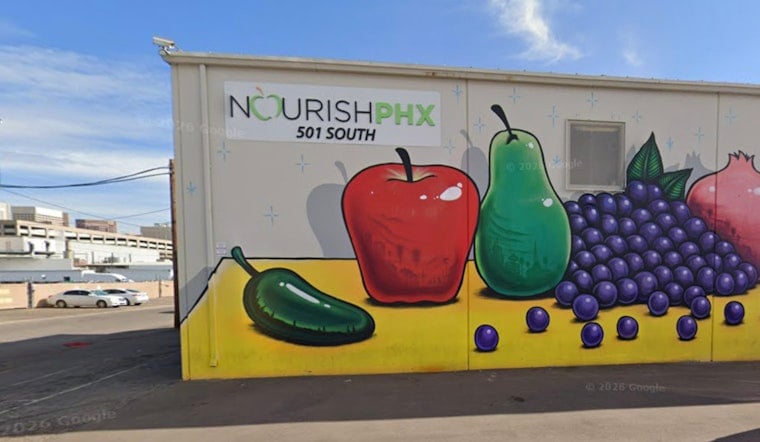
A 12-year-old Phoenix girl named Sloan just wrapped up her fifth annual diaper drive, collecting nearly 30,000 diapers for families served by Nourish Phoenix. She had set out to gather 22,500 diapers this year, but the community blew past that mark, stocking up the nonprofit's shelves well into 2027.
The scale of this year's haul is a big jump from where Sloan started. As reported by Arizona's Family, the drive has now helped thousands of Phoenix families who rely on Nourish Phoenix for support. According to Sloan's Diaper Drive, this year's campaign gathered donations through online wish lists on Amazon, Target, and Walmart, as well as local porch pickups, before landing well past the original 22,500-diaper target.
An Empty Shelf Sparked a Movement
Sloan's Diaper Drive traces back to 2022, when Sloan was just eight years old. She had visited Nourish Phoenix to help package food boxes and noticed the diaper shelves sitting empty, according to Sloan's Diaper Drive. Staff there told her diapers were among the items in highest demand and the first to run out, a detail that stuck with her and turned into an annual campaign now in its fifth year.
Nourish Phoenix, the nonprofit benefiting from Sloan's collection, has been serving working-poor families since 1983, when it launched as the ICM Food and Clothing Bank through Interfaith Cooperative Ministries, according to Fresh Food Connect. The organization operates as a low-barrier hub offering food boxes, clothing, workforce coaching, and hygiene items, and it serves roughly 150 families daily at its facility on 9th Avenue, per North Central News.
Why Diapers Are So Hard to Come By
Diaper insecurity is not a small or isolated problem. Nearly 1 in 2 U.S. families with young children experience it, according to the National Diaper Bank Network's 2026 report, and 1 in 4 affected parents have missed work or school because of childcare diaper requirements. Most licensed childcare centers require parents to supply a full day's worth of disposable diapers just for a child to attend, the network notes.
Part of the problem is baked into federal policy. SNAP and WIC benefits, the country's primary nutrition safety nets, cannot legally be used to buy diapers under the Food and Nutrition Act, as Hoodline previously reported in its coverage of a Salt Lake diaper drive. TANF cash assistance can legally cover diapers, but it reaches only about 23 percent of families living below the federal poverty line, the diaper bank network reports.
The financial burden is steep even for families who do have income. Disposable diapers run between $80 and $100 a month per child, or $900 to $1,100 a year, according to the Coalition on Human Needs. For the lowest-income households, that can eat up as much as 14 percent of total income, and infants typically go through between 2,500 and 3,000 diaper changes in their first year alone.
Arizona's Long History With Diaper Banking
Arizona has a particular claim to fame in this space. The nation's first diaper bank got its start in Tucson in 1994, and it expanded statewide in 2022 through a merger that formed the Arizona Diaper Bank, according to 12News. That statewide network has distributed more than 20 million diapers and incontinence items over three decades, the outlet reports.
Nourish Phoenix's own capacity to keep pace with demand rests heavily on volunteers. The nonprofit relies on more than 2,200 volunteers a year who contribute over $730,000 worth of donated labor packing food boxes, sorting clothing, and managing diaper distributions, according to reporting from Independent Newsmedia carried by Your Valley. That volunteer force supports a core paid staff of roughly eight people, per North Central News.
Adjusting Hours, and Pushing for Federal Change
To reach working parents who cannot make it in during standard hours, Nourish Phoenix added semi-monthly evening Food Box Happy Hours alongside its regular weekday morning pantry service, which normally runs Monday through Friday from 9 to 11 a.m., North Central News reports.
On the federal level, lawmakers introduced H.R. 7367, known as the TANF Hygiene Access Act, in February 2026 to create pilot grants letting states partner with basic-needs banks to expand hygiene and diaper access, according to the National Diaper Bank Network. A separate bipartisan bill introduced the same month, H.R. 7657, would establish a $1 million annual Military Family Diaper Fund.
Against that backdrop of legislative gaps and rising costs, a preteen's backyard-scale drive collecting nearly 30,000 diapers stands out as a rare, tangible dent in a problem that mostly gets discussed in policy terms. For the families Nourish Phoenix serves, it is stocked shelves heading into next year.


