

























































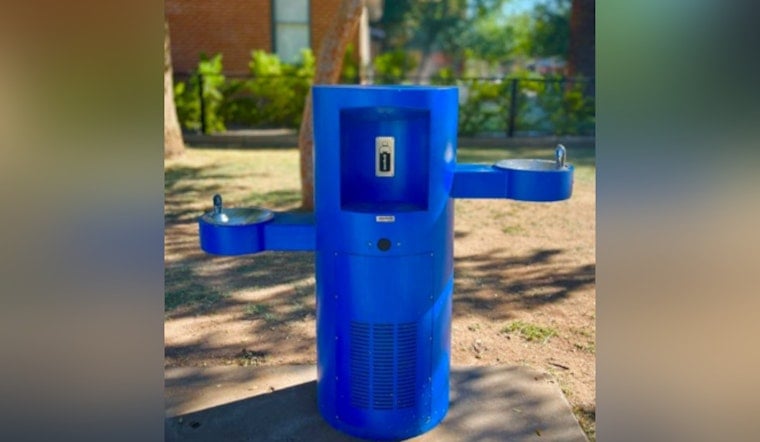
Phoenix operates nearly a dozen water cooling stations built to serve chilled, filtered drinking water around the clock, but recent testing of several downtown units found something alarming: water that came out warm, or in some cases, hot enough to make instant noodles. The finding lands in the middle of one of the deadliest heat seasons the Valley has seen in years, when functioning outdoor hydration has become a matter of survival for pedestrians, cyclists, and the region's unhoused population.
The problem surfaced when a resident testing multiple downtown Phoenix cooling stations alongside FOX 10 Phoenix found that several units produced warm or hot water instead of the chilled water they were designed to deliver. The test evaluated four stations, letting water run for several seconds before checking the temperature, according to the outlet's report.
Kenny Young, who was training for a marathon and regularly passes the city's water cooling stations, told the station he checked about seven stations that were dispensing water, and only about one produced chilled water. Young said the water from the others was hot enough to cook ramen noodles. He said he hopes maintainers and developers will improve the stations' underlying technology.
Homeless Residents Say Cold Water Is a Lifeline
For Robert, a homeless Phoenix man who relies on the stations for cool water, the results were bluntly disappointing. He described the water coming from one station as piss warm and reported measuring temperatures of 108 and 114 degrees at two separate stations, per the same account relayed to FOX 10. Robert said homeless people depend on access to cold water to survive the extreme heat, a reliance borne out by countywide data on who is dying from it.
Unhoused individuals accounted for approximately 49% of all heat-related deaths in Maricopa County during 2025, according to the Maricopa County Department of Public Health, making them the single most vulnerable group to extreme outdoor temperatures. That vulnerability is playing out against a grim backdrop this year: the county had confirmed 81 heat-related deaths through mid-August, more than double the 35 confirmed at the same point in 2025, with another 587 fatalities still under active investigation, according to KJZZ.
City Says Extreme Heat Damaged the Units
Phoenix launched its water cooling station program roughly a year ago, in August 2025, placing chilled water units at strategic locations around the city, each costing several thousand dollars, per the FOX 10 report. City officials responded to the testing findings by acknowledging that extreme summer heat damaged the cooling units, and said they are now working with the vendor to repair the fountains. Officials also said the city will add shade to all of the cooling stations going forward, though it remains an open question whether that retrofit will be enough to reliably lower water output temperatures under Phoenix's most extreme ambient conditions.
The chilled-water push traces back further than the fountains themselves. Phoenix's broader effort to deliver chilled drinking water in public spaces launched in January 2024, when the city installed custom bottle-filling stations near City Hall and along active transit routes, according to the City of Phoenix. That initiative grew out of an April 2023 hackathon, in which community innovators proposed non-metal polycarbonate fountain shells and thermoelectric chilling plates specifically to prevent the kind of solar heat absorption now being blamed for the malfunctions, as reported by Cities Today.
A Network Built With Heavy Public Reliance
By June 2025, five custom chilled water units were active across Downtown and West Phoenix, delivering the equivalent of more than 130,000 standard water bottles to pedestrians, cyclists, and transit riders, the city reported in an update to its Economic Development and Housing Subcommittee. The project was developed with pro-bono consulting support from Bloomberg Associates alongside Downtown Phoenix Inc., HandsOn Greater Phoenix, and the city's Water Services and Public Works departments.
The fountain troubles come just months after the city council unanimously approved an updated Heat Response Plan containing 23 specific actions, including a 24/7 downtown heat respite site and expanded cooling center hours, a step Hoodline covered in its report on the council's heat plan. Regionally, the Maricopa Association of Governments and county health department launched the 2026 Heat Relief Network on May 1, mapping more than 200 cooling centers, respite sites, and hydration stations across the Valley as a backstop for residents when individual stations go down.
Long-term trends show the region has made real progress against heat mortality even as this year's numbers spike: Maricopa County recorded a record 645 heat-related deaths in 2023, a figure that fell to 608 in 2024 and 430 in 2025 following expanded regional heat relief efforts, according to county health officials. Whether that progress holds through the rest of this brutal summer may depend, in part, on getting stations like the ones tested downtown back to actually running cold.





