

























































A 20-year-old Pittsburgh man has been sentenced to five years in federal prison after prosecutors say he was caught during an April 2025 traffic stop carrying crack cocaine, heroin, fentanyl, a veterinary sedative and a gun. Brandon Watson will also serve four years of supervised release once he's out, following a conviction for breaking federal drug laws.
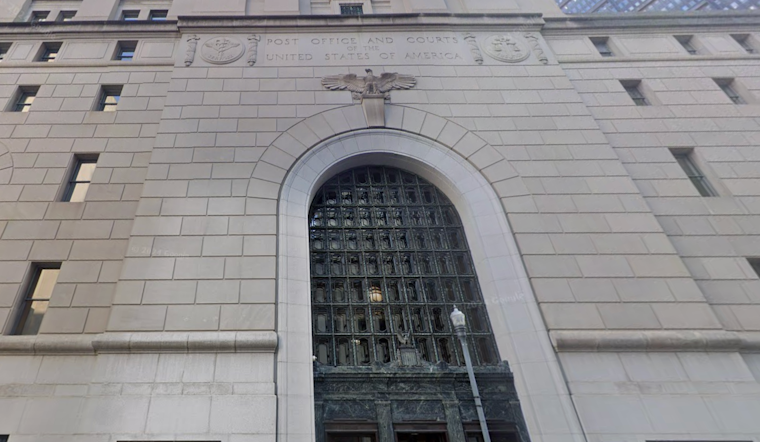
U.S. District Judge W. Scott Hardy handed down the sentence in federal court in Pittsburgh, according to the U.S. Attorney's Office for the Western District of Pennsylvania, which credited Assistant U.S. Attorney Nicole A. Stockey with leading the prosecution. The case was investigated by the Bureau of Alcohol, Tobacco, Firearms and Explosives, the office said. As WPXI first reported, Watson was stopped by police and reportedly found with $1,100 in cash along with the drugs and a firearm.
Prosecutors said Watson was carrying roughly 45 grams of crack cocaine, an amount that pushed him over the threshold for a mandatory minimum sentence. Under 21 U.S.C. § 841(b)(1)(B), possessing 28 grams or more of crack cocaine with intent to distribute carries a mandatory floor of five years in prison, according to the Legal Information Institute. The judge, per the Justice Department, said the crack cocaine involved in the case could ruin lives and described Watson's crime as dangerous.
A Familiar Name in Pittsburgh's Criminal Courts
Watson's arrest is not his first brush with the justice system. At age 17, he was charged as an adult in connection with the January 2022 fatal shooting of 15-year-old student Marquis Campbell outside Oliver Citywide Academy, a case that drew major concern over youth violence at the Pittsburgh special education school, the station's report notes. His case was later transferred to juvenile court, where he was adjudicated delinquent of criminal conspiracy to commit third-degree murder.
Watson's older brother, Eugene Watson, pleaded guilty as the primary shooter in that 2022 case and was sentenced in January 2024 to 20 to 40 years in state prison for third-degree murder, according to a report from the same period. Police had identified both brothers on school surveillance video during the homicide investigation.
A Sedative Turning Up in Pittsburgh's Drug Supply
Among the substances prosecutors say Watson was carrying was medetomidine, a synthetic veterinary sedative not approved for human use. Medical experts estimate it can be up to 200 times more potent than xylazine, the animal tranquilizer commonly known as “tranq,” according to the Pittsburgh Post-Gazette.
The drug has been spreading rapidly through the region's illicit supply. Testing by harm-reduction group PA Groundhogs found medetomidine in 85% of street fentanyl samples checked across Pittsburgh, Philadelphia and Trenton by January, the Post-Gazette reported, noting the substance has quickly eclipsed xylazine as the primary non-opioid adulterant found in Pennsylvania street drugs. Hoodline previously reported on the drug's spread through the local supply in an article detailing how ER doctors sound ICU alarm over the trend.
A study published by the Centers for Disease Control and Prevention found that 23 adult patients who used illicit street opioids in Pittsburgh between October 2024 and March 2025 needed ICU-level care and dexmedetomidine infusions due to severe medetomidine withdrawal, according to the CDC. In a separate April Health Advisory, the agency reported that law enforcement drug seizures containing medetomidine increased 32-fold nationwide over two years, warning that clandestine labs are synthesizing the chemical to cut street drugs.
Why Overdose Reversal Alone Isn't Enough
State public health officials warn that naloxone, the standard overdose-reversal drug, does not reverse the sedating effects of non-opioid adulterants like medetomidine. That means overdose victims can remain deeply unconscious for hours even after their breathing is restored, according to guidance from the New Mexico Department of Health, which urges immediate rescue breathing and 911 calls when responding to suspected overdoses.
Watson's sentencing closes out a federal case that began with a routine traffic stop but ultimately tied together a mandatory-minimum drug conviction, a firearm, and one of the most dangerous adulterants now circulating in Western Pennsylvania's drug supply. His four years of supervised release will follow the completion of his five-year federal prison term.





