

























































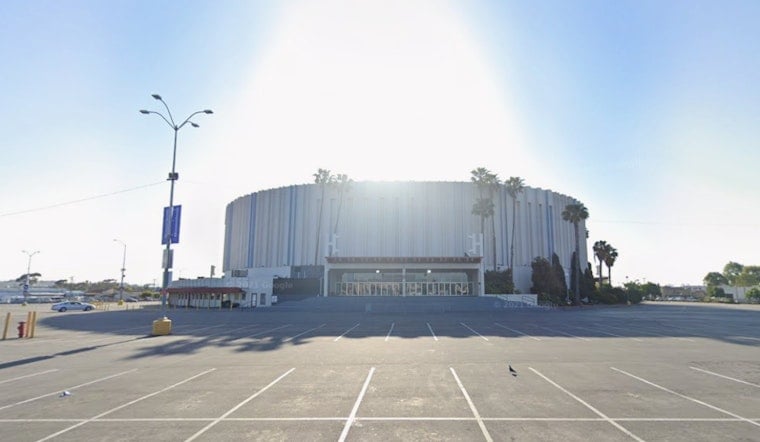
Boos rang out at Pechanga Arena in Point Loma on Sunday as residents confronted the Midway Rising development team over a proposed 4,200-apartment, 16,000-seat arena project that has already survived two court defeats and is now leaning on a contested state bill to move forward. State Sen. Akilah Weber Pierson hosted the community forum, where audience members jeered officials' comments and pushed back hard on assurances about traffic, transparency and environmental review.
The forum, held at the 49-acre site's namesake arena at 3500 Sports Arena Blvd., gave the Midway Rising development team a half-hour question-and-answer session and public workshops to lay out the project's current status, as reported by Times of San Diego. The plan calls for more than 4,000 housing units, including 2,000 affordable apartments and 2,200 market-rate units, alongside a rebuilt sports arena, 14.5 acres of parks and open space, 130,000 square feet of commercial and retail space, and pedestrian-friendly streets and roads.
Traffic Fears Dominate the Q&A
Eric Law, who challenged both the meeting's stated intent and the transparency of project proponents, said officials had not attended his planning board's meetings or answered its questions, according to the same Times of San Diego account. Law estimated the project would bring 50,000 additional people and 20,000 additional cars into the area, a projection that fed directly into resident anger over congestion.
Amy Restelli, who handles traffic engineering for the Midway Rising team, said the project would deliver capacity and intersection improvements for people traveling by car and other modes, the outlet reported. Not everyone in the room was hostile — Cathy Kenton endorsed the large-scale project, while local labor unions have voiced support for Midway Rising's plans, per the same account. But community group United Communities used the forum to reiterate its opposition, warning that the project would worsen existing infrastructure and traffic problems in Midway and beyond, and campaigning instead for zoning that concentrates density along existing and planned mass transit lines while preserving the 30-foot coastal height limit.
A Height Limit With Deep Roots
That 30-foot restriction is not new. San Diego voters approved it in 1972 to preserve shoreline views and limit density west of Interstate 5, according to Voice of San Diego, and the Midway District has remained subject to it even though the neighborhood lacks direct beach frontage. The existing Pechanga Arena, notably, stands 77 feet tall — built six years before the current height cap took effect, per the seed dossier's timeline, with the state Coastal Commission later setting the current 30-foot maximum for the Midway-Pacific Highway Community Plan in 2018.
Voters have twice tried to lift the cap specifically for Midway. Measure E passed in November 2020 and Measure C followed in November 2022 with 51.14% approval, but both were struck down after community group Save Our Access successfully argued the city failed to conduct required environmental studies before placing the measures on the ballot, Voice of San Diego reported. In January 2026, the California Supreme Court denied the city's petition to review the appellate ruling, officially restoring the 30-foot limit and rejecting the prior voter-approved measures because the city had failed to adequately disclose the environmental impacts associated with taller buildings.
SB 958 Splits the Room
That judicial dead end is why Weber Pierson authored Senate Bill 958, which would bar increased building height alone from being classified as a significant environmental impact under CEQA for infill projects. At the forum, she defended Midway Rising's plans and maintained that SB 958 is a broad-based housing tool intended to provide clarity without eliminating necessary environmental reviews. The bill, also sponsored by Mayor Todd Gloria, advanced through the Assembly Appropriations Committee this month, though earlier drafts contained project-specific exemptions before being amended into broader CEQA language.
Detractors see it differently, arguing the bill amounts to a political maneuver designed to exempt Midway Rising from key CEQA requirements. San Diego's Community Planners Committee, representing planning groups citywide, voted in July to oppose SB 958 following a town hall organized by four local coastal planning groups after Weber Pierson was unable to attend in person, as detailed by Times of San Diego's earlier coverage. The state has already weighed in on the project's density elsewhere: in May, the California Department of Housing and Community Development confirmed that state density bonus law can apply to Midway Rising's commercial components, including the proposed 16,000-seat arena, extending those incentives across the full 49-acre footprint.
Stakes for California's Largest Affordable Housing Bet
City officials have framed the project's affordable housing component as historic. Per the City of San Diego's 2025 housing report, Midway Rising's 2,000 units restricted to households earning 80% or below the area median income would represent the largest single affordable housing project in California history — a distinction city leaders and labor unions have cited to argue the stakes extend well beyond Point Loma. The council formally selected the Midway Rising development team in September 2022 after a competitive 90-day negotiation process required under the state's Surplus Land Act.
The financial scale matches the political stakes: the redevelopment carries an estimated $3.9 billion to $4 billion price tag, financed primarily by private partners led by The Kroenke Group along with developers Chelsea Investment Corporation, Zephyr and Legends, according to San Diego Magazine. Zephyr is also behind a separate 223-unit apartment tower on the former Perry's Cafe site in Old Town, a smaller sign of the same development team's growing footprint near Midway.
Environmental questions extend beyond height limits and traffic counts. Community members at the forum and other August public meetings raised concerns that the 49-acre site sits at or near water level and will require continuous dewatering pumps similar to the San Diego Convention Center, which spends $1.2 million annually on groundwater pumping to route rising water into San Diego Bay, according to OB Rag. For now, the project remains suspended between a mayor and state senator pushing for a legislative fix, a community group demanding the height limit stay intact, and residents like Law who say their questions still have not been answered.


