

























































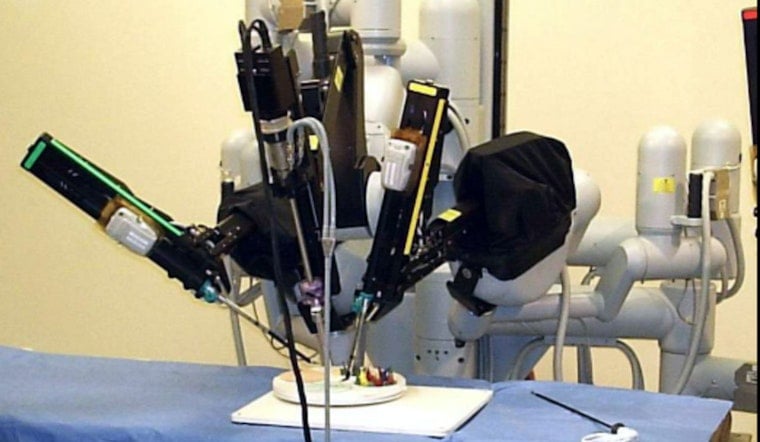
Pomona Valley Hospital Medical Center has completely replaced its fleet of surgical robots, swapping out its older da Vinci Xi machines for three brand-new da Vinci 5 systems. The hospital showcased the upgraded technology to the public on Wednesday, positioning itself among the first medical centers in the region to bring in the fifth-generation robotic platform.
The hospital uses the surgical systems for obstetrics, gynecology, urology and other general surgeries, according to NBC Los Angeles. This isn't a first foray into robotic surgery for the Pomona-based hospital — it originally established its robotic surgery program back in 2011 and last upgraded its fleet in 2018, according to Pomona Valley Hospital Medical Center, making the 2026 rollout the facility's third generation of robotic surgical tools.
A Complete Overhaul, Not an Add-On
Rather than simply adding new units alongside its existing equipment, the hospital fully retired its previous da Vinci Xi robots so that every robotic surgery patient at the facility now receives care with the newest available technology, per the hospital's own account. Pomona Valley Hospital Medical Center now has three Intuitive da Vinci 5 surgical systems in operation, the hospital confirmed. Hospital president and CEO Richard Yochum said the hospital is proud to offer the next generation of advanced technology at home, per NBC Los Angeles.
The da Vinci 5 provides a more realistic 3D image than previous models and features improved resolution, per NBC Los Angeles's report. Those visual upgrades trace back to a substantial jump in computing power — Intuitive says the new platform features more than 10,000 times the processing capacity of the 2014-era da Vinci Xi, according to Intuitive Surgical. That added horsepower supports newer software tools, including real-time visual force-sensing gauges and in-console video replay for surgeons.
Less Force, More Precision, Company Says
Manufacturer Intuitive says its latest surgical robot fleet can deliver up to 43% less force on tissue compared with earlier models, per the company's own figures cited by NBC Los Angeles. Pomona Valley Hospital Medical Center will put the new technology to use with a team of more than 30 robotically trained surgeons, the station reports. The hospital has said it has provided patients with the latest minimally invasive robotic surgery for 15 years.
Regulatory Green Light Came in Stages
The da Vinci 5 platform didn't arrive overnight. The U.S. Food and Drug Administration granted initial 510(k) clearance for the multiport system in March 2024, covering urologic, general, gynecologic, and thoracic procedures, according to Intuitive Surgical Investor Relations. That approval marked the company's first full generational platform update since 2014. Then in January, the FDA expanded clearance to cardiac procedures, opening the door to open-chest alternatives such as mitral valve repair and internal mammary artery mobilization without a full sternotomy, per the same investor announcement.
Serving a Wide Regional Patient Base
Pomona Valley Hospital Medical Center is a 427-bed non-profit community hospital and Level II trauma center serving patients across eastern Los Angeles County and western San Bernardino County, according to the hospital. That regional reach places the facility's technology decisions within a broader wave of hospital investment in robotic surgery nationwide. Da Vinci procedure volume grew 15% in 2025 to surpass 2 million procedures across the country, with Intuitive projecting global procedure growth between 13.5% and 15.5% for 2026, according to MedTech Dive.
A Dominant Market Facing New Rivals
Intuitive Surgical commands an estimated 86.5% market share in the U.S. soft-tissue robotic surgery sector, and roughly 60% to 76% globally, with more than 11,000 systems installed worldwide, according to Medical Device Network. That dominance hasn't gone unchallenged: competitors Medtronic and Johnson & Johnson secured U.S. regulatory approvals for rival platforms, Hugo and OTTAVA, in late 2025 and mid-2026 respectively, as reported by The Motley Fool. The global robotic surgery market was valued at $15.2 billion in 2025 and is projected to reach $17.6 billion in 2026, driven largely by patient demand for shorter hospital stays and reduced tissue trauma, per Intel Market Research.





