

























































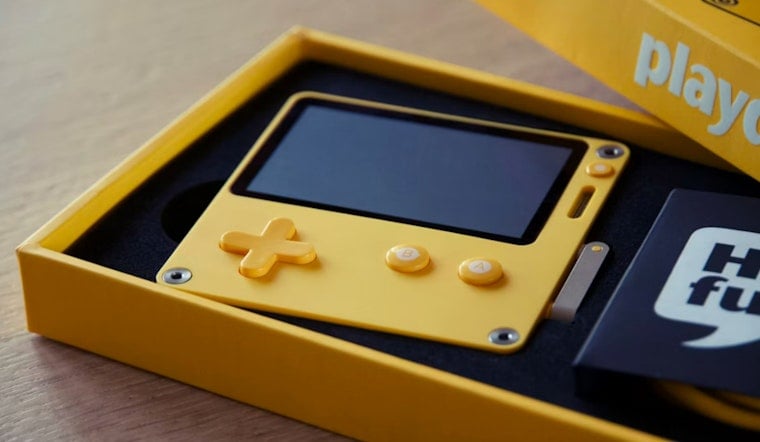
Playdate owners around the country started seeing unexpected refund notices land in their email inboxes this month, courtesy of downtown Portland tech company Panic Inc. The credits, typically running around $10 to $20 apiece, repaid a tariff surcharge that Panic had tacked onto its crank-driven handheld video game console before the fee was struck down as illegal. In total, Panic refunded nearly $100,000 to Playdate customers who bought the device while the charge was in effect.
Panic co-founder Cabel Sasser said customers were surprised and delighted by the refunds, according to OregonLive. The company had treated the tariff as a sales tax, adding it as its own line item on Playdate receipts rather than folding it quietly into the console's price, which sells for $229 on Panic's website. Sasser told the outlet that tariffs added complexity to manufacturing and marketing Playdate, and that navigating the on-again, off-again duties diverted time and energy from the company's core business.
Panic applied a 19 percent tariff fee as an itemized surcharge on Playdate orders before eliminating it after April 21, 2026, according to Game Developer. It then took until August for the company to process customer credit card refunds, after it received its own payout from the federal government. Panic used a five-step process to seek the refunds and deposited the money directly into the credit card accounts of customers who had bought Playdate while the tariffs were in effect.
A Legal Fight That Upended Tariff Policy
The refunds trace back to a U.S. Supreme Court ruling in February 2026, when the justices held 6-3 in Learning Resources, Inc. v. Trump that the International Emergency Economic Powers Act does not authorize the executive branch to impose tariffs. Per Justia, the Court found that tariff-setting is a core taxation power reserved to Congress under Article I of the Constitution and cannot be delegated through emergency statutes without explicit statutory language. President Donald Trump has imposed and rescinded tariffs multiple times during his administration, and has said he hopes the duties will push companies to manufacture more products in the United States. Playdate's tariffs themselves changed repeatedly before being eliminated.
To handle the fallout, the federal government established a portal for businesses to seek tariff refunds. U.S. Customs and Border Protection launched Phase 1 of its Consolidated Administration and Processing of Entries system inside its Automated Commercial Environment portal on April 20, 2026, per U.S. Customs and Border Protection. The scale of the payback effort has been enormous: federal court filings and trade data reviewed by Thompson Hine LLP show CBP faced roughly $166 billion in refundable IEEPA duties across 53 million entry summaries from more than 330,000 importers, with unreturned duties accruing interest at approximately $650 million a month as of May 2026. The U.S. government has refunded more than $100 billion in tariffs since the Supreme Court ruling, per OregonLive's report.
Most Big Companies Are Keeping the Money
Panic's decision stands out because so few large companies have followed suit. Amazon received $600 million in tariff refunds and plans to pass refunds on to customers once it can determine which tariffs specific buyers paid, while FedEx and UPS both intend to refund tariffs to customers on products they delivered, according to the same OregonLive account. But those are exceptions rather than the rule.
Oregon-based Nike was hit with a proposed class-action lawsuit in Portland federal court in May 2026 accusing the company of double-dipping — seeking government tariff refunds on $1 billion in import duties while retaining the $5 to $10 footwear price hikes it had passed on to shoppers, as Fox Business reported. Nintendo of America faced a similar lawsuit filed that April in Washington federal court alleging it passed tariff costs to gamers, even as it sued the U.S. government in the Court of International Trade to claim its own $300 million tariff refund, per Game Developer. Hoodline covered the fallout in Portland when shoppers sued Nike over its refund, and reported separately on the parallel case against Nintendo in Seattle.
Congress Weighs Consumer Rebates
That pattern — companies collecting refunds while consumers who paid the higher prices get nothing — has fueled a broader push in Congress. U.S. Representative Haley Stevens introduced the Tariff Refund Act in July 2026, proposing that the Treasury Department issue direct rebate checks of up to $1,700 per household to offset an estimated $231 billion in consumer costs created by the struck-down tariffs. Lawmakers behind the bill argue that federal portals like CAPE only refund importers of record, leaving everyday shoppers who absorbed price hikes uncompensated without new legislation.
Panic makes the Playdate, a handheld console with buttons on the front and a crank on the side, and a suite of games played on its black-and-white screen. The company is a technology outfit based in downtown Portland, and its willingness to seek refunds for tariffs it viewed as illegal — even after felling short of a legal obligation to do so — set it apart from bigger players still fighting in court. Tariff turbulence hasn't ended: after the Supreme Court's February ruling, the White House shifted to Section 301 of the Trade Act of 1974 to impose replacement tariffs of 10 percent to 12.5 percent on imports from 60 economies, prompting a new lawsuit from 25 state attorneys general in August, a fight Hoodline has also tracked in its coverage of the ongoing Section 301 dispute.





