

























































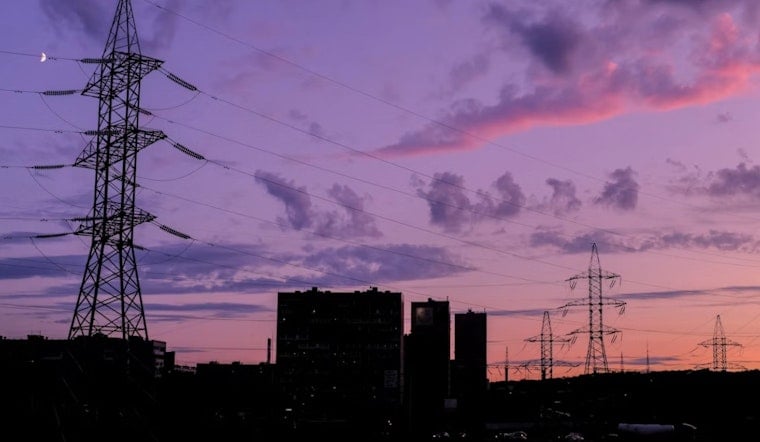
A power outage knocked out electricity to nearly 8,500 PG&E customers across South San Jose's Cambrian and Almaden neighborhoods, starting at 7:30 p.m. yesterday and leaving thousands of homes in the dark overnight. PG&E had restored service to all but 2,591 customers, though the utility could not immediately say what triggered the unplanned outage.
The blackout was unplanned, according to The Mercury News, which first reported the outage that largely affected the Cambrian and Almaden areas of South San Jose. A PG&E spokesperson told the outlet the utility was actively investigating the cause but did not have a time estimate for when power would be fully restored to the remaining customers. Most of the affected homes were expected to have power back by the end of the day, per the same report.
The outage did not come entirely out of nowhere. Localized incident reporting had already logged multiple smaller PG&E outages in the Cambrian Park area in early August, including reports near Kipling Court and Cherry Avenue, according to Citizen, suggesting some instability in the local grid before yesterday's larger blackout.
A Grid Under Strain in South San Jose
South San Jose residents have grown accustomed to grid trouble in recent years. In Almaden Valley, neighbors have complained for years about overgrown trees and deteriorating utility poles that contribute to outages, prompting PG&E to report a 60% increase in reliability investments across San Jose in 2025, including a project to relocate 6,500 feet of power lines underground in the area, according to San José Spotlight.
Under the city's utility structure, San Jose Clean Energy handles renewable power generation for residents, while PG&E retains sole responsibility for the transmission lines, distribution grid maintenance, and restoring service when outages strike, per San Jose Clean Energy. That means when a blackout like Sunday's hits, PG&E — not the city's green-power provider — is the agency responsible for flipping the lights back on.
PG&E's own annual reliability figures give some sense of how often these interruptions occur systemwide. The utility recorded a System Average Interruption Duration Index of 276.7 minutes of outage per customer and a System Average Interruption Frequency Index of 1.824 sustained outages per customer across its service area, according to PG&E Corporation.
City and Utility at Odds Over Grid Control
Sunday's outage lands amid a broader tug-of-war between San Jose officials and PG&E over the future of the city's power grid. San Jose signed a milestone agreement with PG&E last August to fast-track grid capacity and electrical infrastructure expansion, building on a 2023 City Council vote establishing “San José Power” to explore municipal utility alternatives using new transmission lines expected to arrive by 2028, according to the City of San Jose.
State regulators, meanwhile, have their own rules for how utilities are supposed to handle major outages. Under California Public Utilities Commission General Order 166, jurisdictional electric utilities must maintain emergency response plans, notify local officials during major outages, and can face CPUC investigations after significant blackout events. Whether PG&E met those notification and restoration benchmarks for Sunday's outage remains an open question, as does the precise technical cause of the failure in Cambrian and Almaden.
The CPUC has also been pushing for more consistent outage reporting statewide. The commission launched a proceeding last year aimed at standardizing electric distribution outage definitions and reporting formats across investor-owned utilities, an effort meant to improve data transparency for communities like South San Jose that experience repeated localized failures.
What Affected Residents Should Know
For households still without power, food safety becomes a practical concern the longer an outage drags on. Guidance from the U.S. Department of Agriculture, cited by Michigan State University's College of Agriculture and Natural Resources, notes that an unopened refrigerator keeps food safe for only about four hours during a blackout, after which perishable items like meat, poultry, seafood, and milk should be discarded if temperatures climb above 40°F for more than two hours.
Compensation for extended outages is more limited than many residents assume. Under PG&E's Safety Net program, customers who endure continuous storm-related outages lasting 48 hours or longer can qualify for automatic bill credits between $25 and $100, but standard property claims tied to non-storm outages require customers to prove utility negligence.
Yesterday's blackout is not the first time a South Bay outage has left thousands without power. In December 2023, an equipment failure caused a major San Jose blackout affecting 18,000 customers before service was fully restored. PG&E has not yet said whether yesterday's outage stemmed from similar equipment issues or a different cause in the Cambrian and Almaden circuits.





