

























































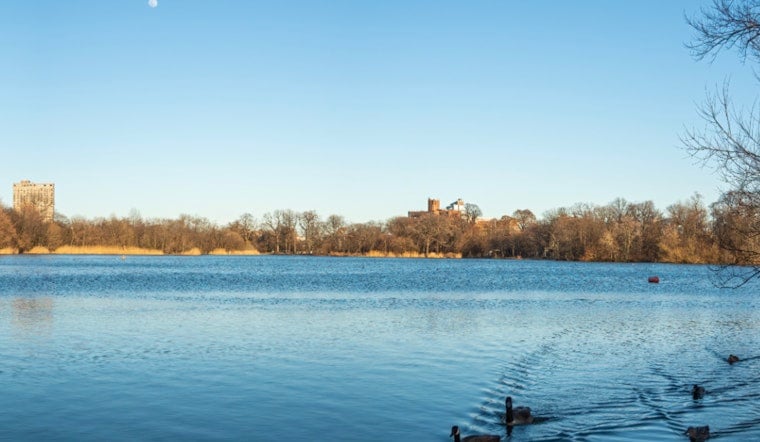
Prospect Park Lake, Brooklyn's only freshwater lake, just got a mechanical upgrade that could reshape how the 60-acre body of water handles both drought and downpour. City officials announced the completion of a $1.4 million underwater valve replacement that gives park staff far more precise control over how much water flows into the lake, and how quickly they can drain it before a major storm hits.
The project replaced an aging eight-inch service line valve that supplies potable water to the lake and the park's waterfall, according to Brooklyn Paper. The new valve is expected to cut potable water use by roughly 800,000 gallons per day and reduce sewer overflows by as much as 12 million gallons annually, the outlet reports. The New York City Department of Environmental Protection funded and oversaw the work, while NYC Parks managed design, supervision, and construction procurement.
From Three Weeks to 36 Hours
Before the upgrade, lowering the lake's water level ahead of a storm took roughly three weeks, a lag that left little room to prepare for fast-moving weather, per BKReader. With the new valve in place, Prospect Park Alliance staff can now stop water inflows before major rain events and drain the lake in under 36 hours, a dramatic shift in operational speed that could matter the next time a major storm bears down on Brooklyn.
That speed matters because Prospect Park Lake drains into New York City's combined sewer system at the park's southeast corner, according to the same Brooklyn Paper report. The Owls Head Wastewater Resource Recovery Facility in Bay Ridge handles wastewater and stormwater from nearly 13,000 acres of western Brooklyn, and it discharges untreated combined sewer overflows into Gravesend Bay and the Upper Bay when storms overwhelm its capacity, per the New York City Department of Environmental Protection. Keeping lake water out of that system during heavy rain is one small but concrete way to ease pressure on the plant.
A Lake Built for a Different Century
Frederick Law Olmsted and Calvert Vaux designed Prospect Park Lake in the late 1860s, relying on the natural topography and glacial kettle ponds of the landscape to filter stormwater naturally, according to CBS News New York. More than 150 years of surrounding development since then has paved over natural soil and increased runoff pressure on a system never built for a modern, heavily built-out Brooklyn.
The lake remains a significant ecological asset despite those pressures. It supports more than 20 fish species and serves as critical habitat for over 250 migratory bird species along the Atlantic Flyway, per the Prospect Park Alliance. Maintaining stable water levels gives fish and aquatic plants the depth they need while also limiting algal blooms, which is where the new valve's dual purpose comes into play.
The Algae Problem Hiding in Tap Water
Summer evaporation forces park staff to add water to the lake to maintain the levels needed for circulation and oxygenation, but that solution has long carried a hidden cost. Research published in 2022 found that supplementing the lake with municipal tap water accelerates toxic blue-green algae blooms, because NYC tap water contains orthophosphates added since the 1990s to prevent lead pipe corrosion, according to a study hosted on PMC. The new valve's finer control lets staff limit that municipal water dependence, which officials say should help improve the lake's ecosystem health during sunny summer days.
It is not the first attempt to tackle the lake's algae troubles. In 2020, the Prospect Park Alliance and Brooklyn College launched a pilot testing ecoWEIR, an underground natural filtration system funded by a $390,000 state grant designed to filter phosphorus out of park runoff before it reaches the lake, according to Brooklyn College. The new valve adds another lever to that ongoing effort rather than replacing it.
Officials Frame It as an Early Step
Prospect Park Alliance President Morgan Monaco said the project supports ecological goals, reduces strain on the sewer system, and complements long-term lakeshore restoration work already underway, per Brooklyn Paper's reporting. EPA Region 2 Administrator Lisa F. Garcia said the upgrades deliver real benefits for water conservation and climate resilience, while NYC Parks Brooklyn Borough Commissioner Tricia Shimamura said the project makes New York City more livable and improves quality of life for both humans and wildlife.
The valve is one early piece of a much larger $68 million flood resilience package announced in December, combining a $50 million DEP-funded Bluebelt initiative with the Prospect Park Alliance's own $20 million lakeshore restoration plan, according to the Prospect Park Alliance. The Bluebelt effort — bringing to Prospect Park a stormwater-management model that originated on Staten Island in the 1990s — will include rain gardens, ponds designed to slow and filter runoff, and systems for capturing and redirecting floodwaters, though major construction is not slated to begin until 2029 and isn't expected to wrap until 2032.
Why the Timeline Matters
That multi-year gap is significant given what Brooklyn has already weathered. During Tropical Storm Ophelia in September 2023, record rainfall exceeding 9 inches caused up to 25 feet of basement flooding at the nearby Prospect Park Zoo, resulting in over $6.5 million in initial damage and forcing an eight-month closure until May 2024, according to the Wildlife Conservation Society. The lakeshore restoration plan is meant to rebuild the shoreline around the lake while emphasizing environmental resilience and a better visitor experience, and together the Bluebelt and lakeshore projects aim to create a coordinated stormwater-management system protecting the park's ecosystem, the zoo, and surrounding neighborhoods.
Until that larger construction begins, the valve stands as a comparatively small but immediate fix. Prospect Park Alliance will assist NYC Parks with ongoing operation and maintenance of the new system, officials say, as Brooklyn residents wait on the years-long timeline for the neighborhood's first full Bluebelt to take shape. Hoodline has previously reported on Newtown Creek's tunnel plan, part of the same citywide push to modernize aging combined sewer networks across Brooklyn's watersheds.





.jpg)