

























































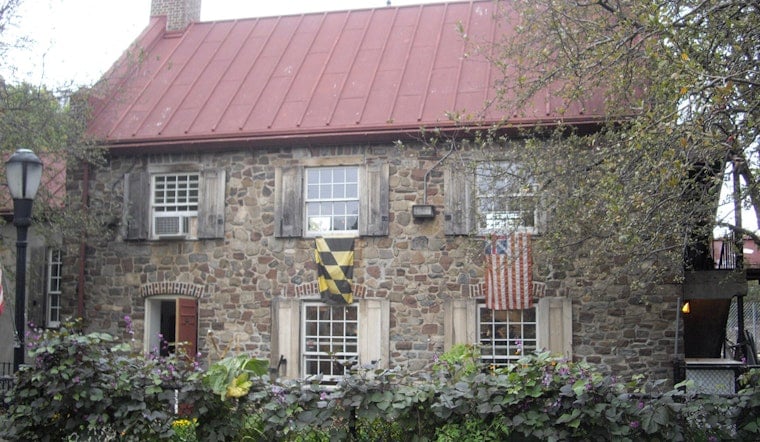
Two hundred fifty years after roughly 400 Maryland soldiers charged into a wall of British muskets to buy George Washington's army time to escape, Brooklyn is staging a free public reenactment tracing their final steps through Prospect Park. The event runs from 10 a.m. to noon and follows a route from Long Meadow down Third Street to the Old Stone House, the same ground where the Maryland Line made its desperate stand on August 27, 1776.
As PIX11 reports, the reenactment and commemoration is billed as a celebration of the 250th anniversary of the Battle of Brooklyn, which was the first military engagement fought after the Declaration of Independence was adopted in July 1776. The roughly 400 Maryland soldiers, led by William Alexander, Lord Stirling, conducted a countercharge against overwhelming British forces, and more than 250 of them were killed or captured in the fighting. The outlet notes the battle ultimately ended in victory for Britain, though the British army failed to capture Washington and his forces, who escaped across the East River.
The reenactment is organized by the Brigade of the American Revolution as part of a broader tactical demonstration that includes a Friday night reenactor encampment at Fort Hamilton, according to the Daughters of the American Revolution. Fort Hamilton is a historic Army installation at the base of the Verrazzano-Narrows Bridge, and reenactors are set to lodge there before marching the same path their historical counterparts once walked.
A Battle That Dwarfed the Rest of the War
The scale of what unfolded in Brooklyn 250 years ago is hard to overstate. Per the American Battlefield Trust, the Battle of Brooklyn was the largest engagement of the entire Revolutionary War by troop deployment, pitting roughly 10,000 Continental troops under Washington against more than 20,000 British regulars and German Hessian mercenaries. Despite that lopsided force, Washington avoided total catastrophe by secretly evacuating around 9,000 Continental soldiers across the East River to Manhattan overnight on August 29, 1776, without losing a single life, aided by dense fog and strong currents that concealed the retreat.
None of that escape would have been possible without the sacrifice made near what is now the Old Stone House. The U.S. National Park Service documents that over 250 of the roughly 400 Maryland soldiers who charged British lines were killed or captured that day, a casualty rate exceeding 60 percent, making it one of the highest casualty percentages of any single battle in American history. The countercharge delayed nearly 2,000 British soldiers long enough for the rest of the Continental Army to retreat, and Washington is said to have watched the sacrifice unfold while exclaiming, “Good God, what brave fellows I must this day lose,” according to Preservation Maryland. That praise for his “old line” gave Maryland its enduring nickname, the Old Line State.
The Old Stone House's Own Layered History
The building reenactors will march toward isn't the original structure that stood on the battlefield. NYC Parks notes that the Old Stone House standing today in Washington Park is a 1933 Colonial Revival reconstruction built using original fieldstones from the 1699 Vechte-Cortelyou farmhouse, which served as a British artillery stronghold during the battle before being demolished in 1897. That original farmhouse later had a second life as the first clubhouse of the Brooklyn Dodgers, a detail that threads the site's military past into the borough's baseball lore.
One mystery from the battle remains unresolved. The exact location of the mass grave where the fallen Maryland soldiers were buried in Brooklyn has never been found, and the Old Stone House notes that the Maryland State Archives has spent more than a decade researching and writing individual biographies for every identifiable soldier as part of a forthcoming book, “Finding the Maryland 400.”
Broader Programming and a Borough-Wide Commemoration
Alongside the reenactment, Prospect Park Alliance is hosting a replica of the historic Battle Pass fortification and a pop-up exhibit at Lefferts Historic House titled “Black People and the Battle of Brooklyn,” which examines the complex roles of enslaved and free Black residents during the conflict, according to Prospect Park Alliance. Battle Pass was a key defensive ridge in Flatbush where American troops held off British forces before ultimately being outflanked.
The Prospect Park event is funded in part through New York State's Brooklyn250 initiative and forms one piece of a multi-day, borough-wide commemoration running from August 21 to 23, which also includes a Daughters of the American Revolution wreath-laying and subsequent ceremonies at Green-Wood Cemetery. The anniversary is being marked well beyond Brooklyn, too: the Long Island Museum is running a 2026 exhibition titled “The Seat of Action,” and the National Park Service is hosting its own commemorative programs in Washington, D.C., reflecting how the battle's 250th anniversary is rippling across the region and the country.
The Prospect Park reenactment is free to attend, offering Brooklyn residents a rare chance to walk the same ground where a few hundred soldiers bought the Continental Army the time it needed to survive one of the darkest days of the Revolutionary War.





