

























































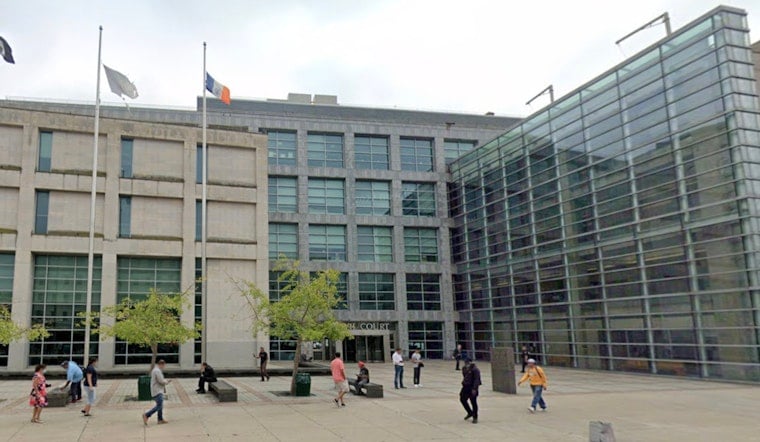
Queens Civil Court Judge Joseph Kasper has been ordered removed from the bench after state regulators found he let a longtime friend and convicted felon pose as an attorney in his old law practice, kept practicing law himself after taking office, and left thousands of dollars in client escrow funds unaccounted for. The New York State Commission on Judicial Conduct announced Kasper should be removed on Thursday, capping an investigation into misconduct that stretched back to before he won his seat in 2022.
According to The City Reporter, the commission found that Kasper continued practicing law after taking the bench, in violation of court rules barring full-time judges from doing so. Janice Bar, described in the outlet's reporting as Kasper's longtime friend and paralegal, filed at least 22 legal documents under Kasper's name and signed court papers as “Janice Bar, Esq.,” despite not being a licensed attorney. Bar was also examined as a witness in open court while posing as a lawyer, the outlet reported.
Commission administrator Robert Tembeckjian, cited by The City Reporter, said Kasper facilitated “a felon's masquerade as a lawyer.” Bar had been convicted of forgery and making an apparently sworn false statement in 2016, according to the same reporting. Tembeckjian said flatly that a full-time judge is prohibited from practicing law.
A Friendship That Predates the Bench
Kasper and Bar were friends for years, and the two served as Republican Party co-district leaders together in Queens during the 1990s, per The City Reporter's account. Bar reportedly told Kasper about pretending to be an attorney, and the judge did nothing in response, the outlet reported. Bar had also repeatedly supported Kasper's judicial campaigns over the years, the outlet noted.
Kasper's financial conduct drew similar scrutiny. The commission found he could not account for more than $7,000 in attorney escrow funds as of 2024, and left roughly $17,200 sitting in attorney escrow accounts for more than two years after he took the bench, according to The City Reporter's reporting. The outlet also reported that Kasper told a former client she had to pay him $1,000 in cash before he would complete her divorce, and that he repeatedly failed to comply with financial disclosure rules. He continued handling some private practice cases at his old law office even after being elected judge, the outlet said, and kept practicing law for roughly two years after taking office.
Defense Attorney Vows an Appeal
Kasper's attorney, Richard Emery, said he would appeal the commission's ruling to New York's highest court, and argued that his client's misconduct did not warrant removal. Emery, notably, spent 13 years as a member of the same Commission on Judicial Conduct from 2004 to 2017, according to his law firm's website, ECBAWM. While Emery admitted Kasper committed misconduct, he argued that Bar's allegations did not directly involve Kasper himself.
Under Section 44(7) of the New York Judiciary Law, a judge recommended for removal has 30 days from receiving the determination to seek review from the Court of Appeals, and remains suspended from judicial duties during that window, according to a New York State Commission on Judicial Conduct release. If no review is requested within that period, the Court of Appeals automatically enters a final removal order. New York's highest court has final say on the commission's decision, and history suggests it rarely overturns one: of 102 judicial discipline determinations the Court of Appeals has reviewed since 1978, it accepted the commission's determination in 79 cases, including 70 removals, while modifying 13 removal orders to lesser sanctions such as censure or admonition, the commission's release states. In two instances, the court actually increased a censure to removal.
A Term Already Nearing Its End
Even without the removal fight, Kasper's time on the bench was numbered. He turns 70 in 2026, and New York's constitution has long required judges to retire at the end of the year they reach that age. The New York Court of Appeals unanimously reaffirmed that mandatory retirement rule in June, rejecting arguments that the state's 2024 Equal Rights Amendment invalidated age caps on the bench, according to Courthouse News. Kasper's elected term was not set to expire until December 31, 2031, but the retirement rule meant he could not serve past 2026 regardless of the misconduct case, leaving him with about three months left on the bench at the time of the commission's announcement.
A formal Court of Appeals removal carries consequences beyond a simple early exit, since it would leave Kasper permanently ineligible to hold judicial office in New York State — a harsher outcome than retirement alone. Kasper was elected to the Queens 3rd Municipal District Civil Court seat in 2022 after defeating Democrat Paul Vallone by 839 votes in the November 2021 general election, a race in which he received 51 percent of the roughly 38,100 votes cast, according to Ballotpedia. His win was notable in Queens political circles: it marked the first Republican victory in a contested general election for that judicial seat in nearly 60 years, according to City Limits, which reported that no Republican had won a head-to-head Queens judicial general election since 1963. Kasper had run for judicial office in Queens for years before that victory.
Vallone, the son of former City Council Speaker Peter Vallone, was a former city council member himself and a member of one of Queens' most prominent political families. He died suddenly in January 2024 at age 56, according to The City Reporter. The commission's action against Kasper comes amid a broader surge in judicial ethics complaints statewide — the commission received a record 3,353 complaints in 2024 and issued public decisions in 24 cases that year, resulting in 16 judge removals or permanent resignations, according to its 2025 Annual Report.



