

























































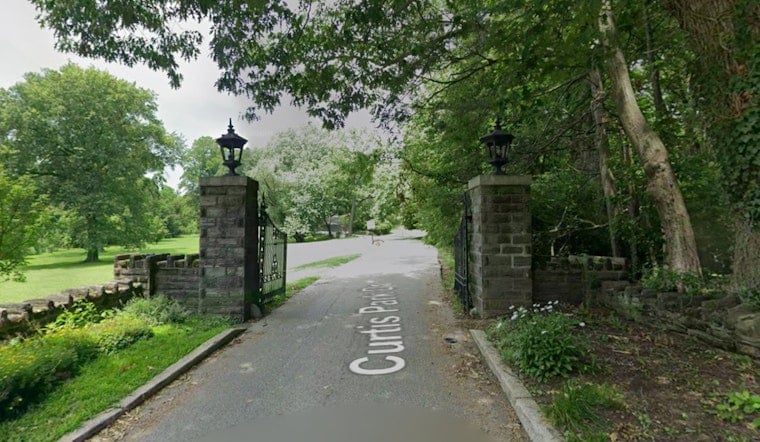
A coyote shot dead by Cheltenham Township police last week after attacking a resident and their dog at Curtis Dog Park has tested positive for rabies, officials confirmed. The diagnosis, announced Wednesday, caps a tense 24-hour stretch in Wyncote that saw officers deploy aerial drones over residential streets before finally cornering and killing the animal.
The scare began on August 21, when Cheltenham Township police warned residents about multiple reports of an aggressive coyote roaming Wyncote, with sightings reported on Washington Lane, Rock Creek Drive, and Hopeland Road, according to NBC10 Philadelphia. Officers deployed aerial thermal drones across the neighborhood after the initial complaints came in, according to Patch. A FOX 29 Philadelphia camera crew driving through the area during the search alert captured exclusive video of the coyote wandering residential sidewalks and attempting to hunt deer on Hopeland Road, brazen daytime behavior that underscored just how far the animal's fear of humans had broken down.
Attack at Curtis Dog Park Ends the Search
Police located the coyote later that same day and killed it after it attacked a resident and their dog at Curtis Dog Park, per the NBC10 Philadelphia report. The animal's body was then turned over to the Pennsylvania Game Commission for testing, since no approved test exists for detecting rabies in a living animal — confirmation requires direct fluorescent antibody analysis of brain tissue conducted after death, according to Silver Maple Veterinary Clinic.
Officials confirmed Wednesday that the coyote tested positive for rabies, and warned that people and pets who had contact with the animal should seek medical or veterinary care immediately, per the same NBC10 Philadelphia account. Pets that are not currently vaccinated against rabies are considered at especially high risk, officials said, since the virus spreads through bites, scratches, or contact with an infected animal's saliva.
A New Chief's First Week on the Job
The search and rabies confirmation unfolded during the first week in office for Cheltenham Township's new Chief of Police, Richard Schaffer, who was sworn in on August 19, according to Glenside Local. Schaffer previously served as the department's Detective Lieutenant before his promotion, the outlet reported.
Anyone who believes they or a pet came into contact with the coyote is urged to seek care right away, since post-exposure prophylaxis — a regimen of human rabies immune globulin followed by a multi-dose vaccine series — must begin before symptoms appear. Rabies can incubate for weeks or months, but the disease becomes nearly always fatal once clinical symptoms set in, according to guidance from the Allegheny County Health Department. Residents with questions can also reach the Pennsylvania Department of Health's rabies information line at 877-PA-HEALTH (877-724-3258).
Why a Rabid Coyote Is Unusual in Pennsylvania
Rabid coyotes remain relatively rare in the Commonwealth. Raccoons, bats, skunks, and foxes account for more than 90% of confirmed wildlife rabies cases in Pennsylvania each year, according to the Pennsylvania Game Commission. The raccoon rabies strain has circulated in the state since an outbreak peaked in 1989. Statewide, labs test between 5,000 and 6,000 animal specimens for rabies annually, confirming somewhere between 250 and 400 positive cases each year.
Coyotes have been part of the suburban Philadelphia landscape since expanding into the region following the 19th-century extirpation of native wolves, and periodic aggressive encounters have followed, including a 2017 rabid coyote attack on a hiker in Morris County, New Jersey, and past sightings in Philadelphia's Roxborough and Chestnut Hill neighborhoods, per reporting from PhillyVoice. Modern suburban coyotes in the region typically weigh around 30 pounds and adapt readily to residential edge habitats.
Pennsylvania law requires all dog and cat owners to vaccinate their pets against rabies by 12 weeks of age, with violations carrying summary criminal fines of up to $300 per day, under the state's Rabies Prevention and Control in Domestic Animals and Wildlife Act. Cheltenham Township's own emergency management guidance, issued in 2023, warns residents that the hazing techniques normally used to scare off healthy coyotes are ineffective — and dangerous — when an animal is rabid and no longer displays a normal fear of people. Anyone who sees wildlife acting erratically or without fear of humans is instructed to call 911 immediately rather than attempt to confront the animal.



