

























































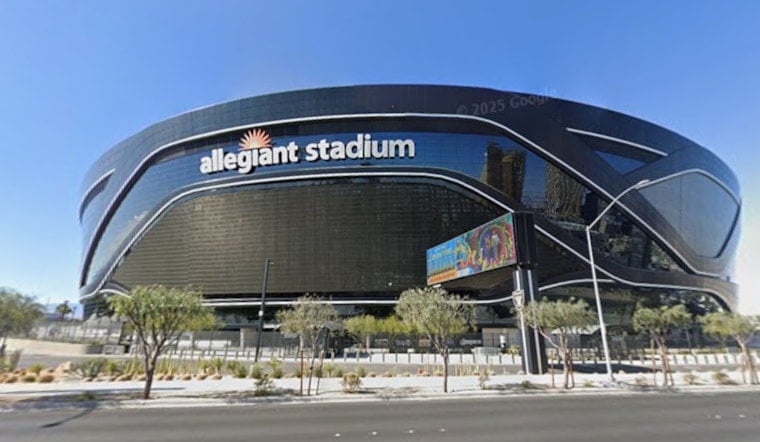
The Las Vegas Raiders and Waymo have announced a new multi-year partnership that will bring dedicated autonomous rideshare pickup and drop-off zones to Allegiant Stadium, complete with clear signage aimed at cutting through the post-game chaos that regularly snarls traffic around the venue. The deal marks what organizers describe as the first partnership between a professional football team and an autonomous vehicle company.
According to a release cited by FOX5 Vegas, fans traveling to games will have access to a designated area for Waymo pickups and drop-offs, rather than fighting for space in the general rideshare scrum. Waymo Chief Operating Officer Suzanne Philion said the partnership with the Raiders can create a convenient and magical experience for riders. Nevada Governor's Office of Economic Development Chair Sandra Douglass Morgan added that the arrangement gives fans a safe, reliable autonomous designated driver so they can focus on enjoying the event.
Beyond the pickup logistics, Waymo is sweetening the deal for fans. The company is offering pre-game field passes, a kickoff kid program, and upgraded VIP seats tied to the partnership, according to the same report. Fans are encouraged to download the Waymo app and express interest in being among the first to experience the ride service at the stadium.
Why Allegiant Stadium Needs the Help
Allegiant Stadium can hold up to 65,000 spectators for Raiders games and other major events, and that crush of people has historically created serious bottlenecks. Post-event rideshare wait times have stretched from 45 to 90 minutes, with surge pricing multipliers running between 3.5x and 5.5x standard rates, according to Detailed Drivers. Major conventions and stadium events routinely add to vehicle congestion along Interstate 15 as well.
Some of that pressure is already relieved by pedestrian infrastructure. During major Raiders games and stadium events, local transportation authorities close the 0.3-mile Hacienda Avenue bridge over I-15 to vehicle traffic, letting roughly 22,000 fans — about a third of total stadium attendance — walk directly between the Las Vegas Strip and the stadium, per LVSportsBiz. The new Waymo zones are meant to ease the burden for everyone else still relying on wheels.
A Crowded Robotaxi Battlefield
The stadium deal lands amid a rapid buildout of autonomous vehicle competition in Southern Nevada. Waymo announced plans to launch robotaxi service across the Las Vegas Strip on July 8, 2026, and per Electrek, that announcement made Las Vegas part of a broader driverless expansion alongside Denver, San Diego, and Tampa. Waymo had secured its initial Nevada DMV testing permit in late December 2025, allowing supervised operations with human safety drivers starting in January 2026, before moving to fully driverless rides just seven months later.
Amazon-owned Zoox began offering paid robotaxi rides on the Las Vegas Strip on August 10, using custom-built vehicles without steering wheels or pedals — a launch that came just days before the Raiders and Waymo unveiled their stadium arrangement. Tesla has also filed an application with the Nevada Transportation Authority, requesting authorization to run up to 5,000 paid commercial robotaxis in Clark County during its first year of operation, according to BASENOR.
None of this is happening in a regulatory vacuum. Nevada became the first U.S. state to authorize AV testing and operation on public roads back in 2011, and the state issued its first testing license to Google in 2012. Nevada Administrative Code Chapter 706B still governs how these companies operate today, prohibiting autonomous vehicle network companies from soliciting passengers directly at curbsides and requiring driverless vehicles to stay at least 50 feet from designated taxicab stands unless picking up a pre-arranged fare.
Scale and Recent Bumps in the Road
Waymo's push into stadium logistics comes as the company operates at significant scale. Across its active markets in 2026, Waymo runs a fleet of roughly 3,500 robotaxis delivering around 500,000 paid rides per week and has logged more than 20 million driverless miles, backed by a $16 billion funding round raised earlier this year, per Electrek. Hoodline has previously covered Waymo securing Nevada approvals for the Las Vegas market and the company's broader fleet expansion in other cities.
The company's Las Vegas rollout hasn't been entirely smooth. On July 20, an unoccupied Waymo robotaxi operating in autonomous mode on Polaris Avenue near West Sunset Road was struck by a human-driven SUV that had lost control before crashing into a power pole. Local police investigated the incident, and Waymo stated its vehicle was not at fault, as Hoodline reported at the time in its story on the Polaris Avenue crash.
With Zoox already running paid rides on the Strip and Tesla angling for its own permit, the Raiders-Waymo partnership positions Allegiant Stadium as a proving ground for how autonomous vehicles handle the kind of dense, high-stakes crowd events that have long tested the limits of Las Vegas traffic infrastructure.




