

























































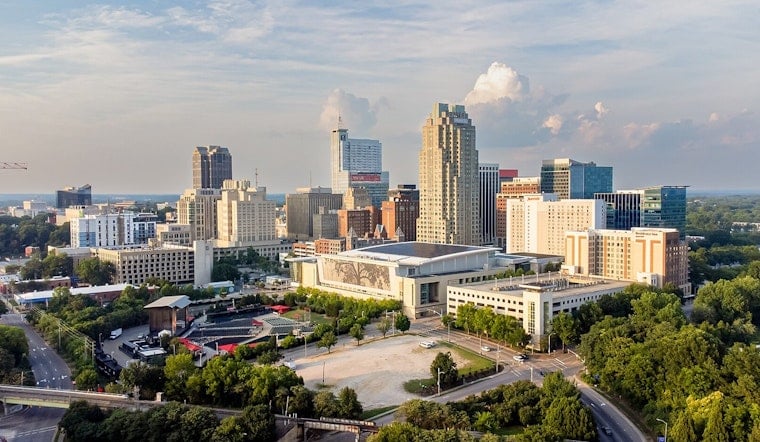
Raleigh has claimed the title of best big city in America for Gen Z, unseating Minneapolis and Atlanta, which had traded the top spot for the past four years. A new study from CommercialCafe gave Raleigh the No. 1 ranking after evaluating cities with populations over 400,000 across nine weighted metrics covering demographics, affordability, employment, education, and lifestyle. Raleigh edged out Minneapolis, Atlanta, and Tucson for the crown, marking the first time since 2022 that a city other than Minneapolis or Atlanta has topped the list.
The rise didn't happen overnight. As reported by CBS17, Raleigh scored 65.9 points in the latest CommercialCafe evaluation and ranked first in the South, after placing fifth nationally in the firm's Gen Z livability reports in both 2023 and 2025. That steady climb reflects years of momentum rather than a sudden spike, according to Becker's Hospital Review, which tracked Raleigh's 2025 standing when the city posted a 30.3% share of entry-level jobs suited to recent graduates and an 8.8% adult Gen Z population share.
Gen Z now makes up 9.7% of Raleigh's roughly 500,000 residents, per the study, giving the city the third-highest share of Gen Z residents among those evaluated. Nearly half of that cohort, 46.4%, remains enrolled in school, giving Raleigh the third-highest Gen Z school enrollment rate in the South. Fayetteville Street, in the heart of downtown Raleigh, has become a visible symbol of that youthful density as the city's population continues to skew younger.
Jobs and Schools Feed a Self-Sustaining Pipeline
Raleigh landed among the top five cities in the study for entry-level job share, and the region ranked second in the South for the amount of jobs available to recent graduates. The city also posted the fifth-highest percentage of jobs suited to recent graduates nationally, at 31.6%, the study notes. That job pipeline is fed directly by the region's massive student population: North Carolina State University recorded a total headcount of 40,503 students for the fall 2025 semester, including 27,885 undergraduates, according to NC State University.
Wake Technical Community College, meanwhile, reached a historic high of more than 30,750 degree-seeking students for the fall 2026 semester, solidifying its position as the largest community college in North Carolina, per Wake Technical Community College. Students from both schools can find entry-level opportunities in education, health care, or life sciences across the Triangle, the seed reporting notes, a pipeline anchored by Research Triangle Park's 7,000 acres and more than 300 companies, according to a June 2026 CommercialCafe study on graduate retention. That same research found the Raleigh metro ranked second in the Southern U.S. for young adult population retention, expanding its young adult cohort by 18.8% over a five-year tracking period, with Raleigh and Durham functioning as a joint opportunity ecosystem.
Lower Costs Help, But Homeownership Looms as a Barrier
CommercialCafe found Raleigh's living costs run around 5.3% below the national average, and the city posted the lowest internet costs of any city in the study at roughly $63 a month. Those affordability advantages extend to housing, at least for renters: typical monthly rent in Raleigh stood at $1,694 as of May 2026, requiring a household income of $67,762 to keep rent within 30% of earnings, about 13% lower than what's needed to afford typical U.S. rent, according to Zillow.
North Carolina's flat individual income tax rate also dropped to 3.99% for tax year 2026, down from 4.25% in 2025, with further cuts scheduled to 3.49% in 2027 and 2.49% by 2029, a policy shift Hoodline detailed in its prior coverage of Raleigh's retirement rankings and housing costs. But that same reporting flagged a tension building beneath the rental affordability: Zillow reported Raleigh's median home purchase value at $438,364 in May 2026, a price point that requires household incomes well above six figures and could complicate the transition from renting to buying for young workers as they settle into careers.
A Tight Labor Market Backs Up the Rankings
The Raleigh-Cary metro area maintained a low unemployment rate of 3.1% in June 2026, supported by 770,000 total nonfarm jobs and 2.6% year-over-year job growth, according to SunBeltPulse. Federal employment data cited in that report shows the region's job mix led by professional services at 16.3%, government at 14.8%, healthcare at 13.6%, and technology at 11.1%. Robust housing construction has helped keep rents in check even as the population grows: the Raleigh-Cary metro led major Sun Belt markets in early 2026 with 12.81 residential permits per 1,000 residents, outpacing Austin's 11.74 and Orlando's 9.39, per REI Prime, which noted the metro issued 18,206 residential building permits over a 12-month period.
Raleigh's broader appeal isn't limited to the under-30 set, either. U.S. News & World Report ranked Raleigh fourth overall on its 2026-2027 list of the best big cities to live in the United States, according to Raleigh Economic Development, a ranking built on housing value, quality of life, job market health, and overall desirability. Taken together, CommercialCafe's study frames Raleigh as one of the best places in the country for the student-to-career transition, a status that reflects years of steady climbing rather than a single lucky year at the top.





