

























































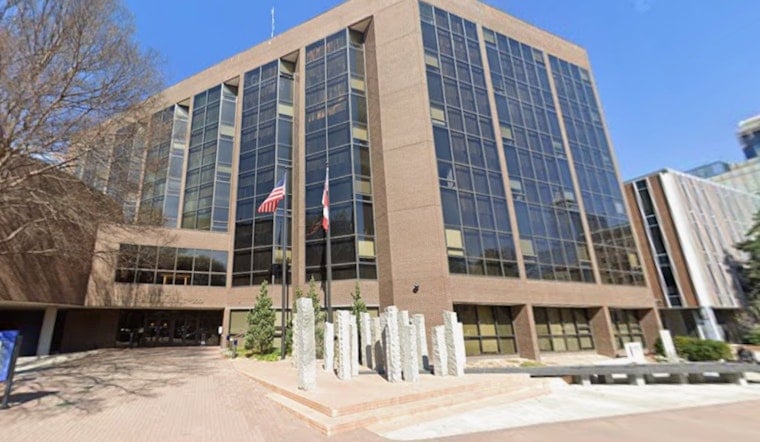
Raleigh has once again landed on Forbes' national list of best places to retire, marking the North Carolina capital's fifth appearance on the ranking since 2014. The city was the only North Carolina location to make this year's list of 25 destinations, chosen after Forbes evaluated economic and quality-of-life metrics across the country.
Forbes studied nearly 1,000 U.S. locales with populations above 10,000 to identify the 25 affordable retirement destinations, drawing on data from the federal government, Zillow and other sources, according to the Raleigh News & Observer. Raleigh joined several other college towns on the latest list, an outcome the paper's report tied to the presence of North Carolina State University and Shaw University within the city, which sits inside the state's Research Triangle. Reporter Simone Jasper, a service journalism reporter at the News & Observer, wrote that Forbes published its 2026 selections in alphabetical order rather than ranking cities against one another.
Home Prices Run High Even as Other Costs Stay Near National Norms
Raleigh's median home price of $434,000 made it the second-most expensive housing market among the 25 cities Forbes selected, trailing only Colorado Springs, Colorado, at $449,000, according to Forbes. Despite that price tag, the News & Observer's reporting characterized Raleigh's broader economic factors and cost of living as within striking distance of national norms. The city drew praise in the coverage for its good air quality and favorable tax rates, along with good medical care.
Those tax rates have been trending in retirees' favor. North Carolina's flat individual income tax rate dropped to 3.99% for tax year 2026, down from 4.25% in 2025 and 4.5% in 2024, with state legislation mandating further cuts to 3.49% by 2027, per the North Carolina Department of Revenue. The state fully exempts Social Security benefits from income tax, though traditional IRA and 401(k) withdrawals are still taxed at the flat rate — a nuance detailed by Semmax Financial Group, which notes that residents 65 and older do receive a $4,000 deduction on private pension and retirement account income. Government pensions are fully exempt for those vested before August 12, 1989, under the state's Bailey exemption.
Property Tax Breaks Exist for Fixed-Income Seniors
North Carolina also offers property tax relief to eligible low- and moderate-income seniors 65 and older through the Homestead Property Exclusion, which reduces the taxable value of a permanent residence for homeowners earning below $37,900 annually, according to the North Carolina Department of Revenue. A separate Circuit Breaker Property Tax Deferment is available for qualifying seniors earning under $56,850. Those programs could help offset the sting of Raleigh's above-average home prices for retirees living on fixed incomes.
Not every metric favored Raleigh. The city had a serious-crime rate above the national average, and Forbes' evaluation found Raleigh was not very walkable or bikeable, both details noted in the News & Observer's report. Forbes did not share additional information with the paper when contacted Monday.
A Young City With an Aging Draw
Adults 65 and older make up roughly 14% of the Raleigh metro population and about 12% within city limits, both noticeably below the national average of 18%, according to USAFacts. Raleigh's overall median age sits around 34.2 to 34.7 years, well under the national median of 39.2. The city's population has swelled alongside its retirement-destination reputation, reaching nearly 500,000 within a metro region of more than 1.56 million residents, a 1.6% annual growth rate that amounts to 10.3% growth since the 2020 Census, according to the City of Raleigh.
Raleigh's medical infrastructure was a specific selling point in Forbes' evaluation, which highlighted the city's high doctor-to-patient ratio. Retirees have access to major systems including UNC Health, Duke Health, and WakeMed Health & Hospitals, though a planned 2027 North Carolina State Health Plan tier change will reclassify WakeMed as non-preferred, raising out-of-pocket costs for state government retirees, per WakeMed. Beyond medical care, North Carolina State University hosts the Osher Lifelong Learning Institute, a member-led program serving more than 1,500 adults 50 and older with non-credit courses, study trips and lectures, an offering that Cary Magazine traces back to a 1991 program called Encore before it received an endowment from the Bernard Osher Foundation.
Other Cities Recognized Nationally and Within North Carolina
Forbes' broader 2026 list spanned 21 states and four time zones, split evenly between cold and warm climates, with Fargo, North Dakota, remaining the only city to appear on the list every year across all 16 years of its publication. Other cities named alongside Raleigh included Appleton, Bethlehem, Colorado Springs, Athens and College Station. Forbes also profiled a newlywed Houston couple, Adrian Kasbergen and Karen White, who built a data spreadsheet comparing home prices, climate, medical access, tax rates and racial diversity before choosing Raleigh as their own retirement destination.
Raleigh's latest recognition follows previous designations naming Greensboro, Winston-Salem, Blowing Rock, Beaufort and Charlotte as top North Carolina places for older adults to live, according to the News & Observer's reporting. Whether Raleigh's rising home prices will eventually push it off future editions of Forbes' list remains an open question the report did not address.




