

























































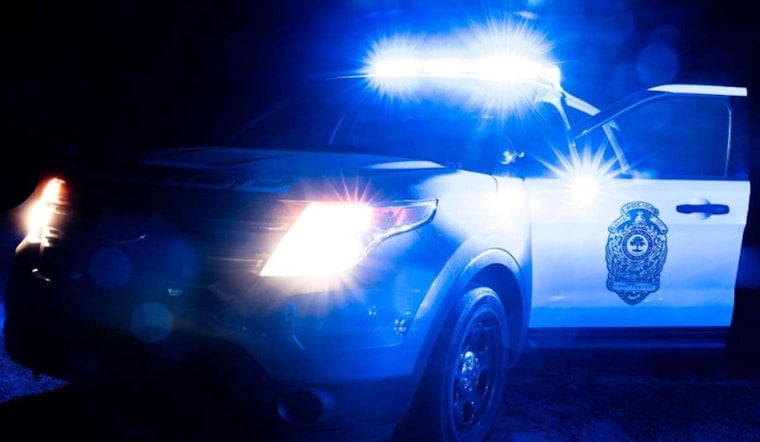
Raleigh parents are speaking out ahead of the City Council's vote on a proposed teen curfew, with some saying it could genuinely improve safety and others warning it will accomplish nothing unless parents step up. The debate comes weeks after thousands of teenagers flooded Brier Creek and Glenwood South, leading to chaotic scenes and several people injured in shootings. City leaders are now searching for ways to prevent similar incidents from happening again.
The council is set to review the proposed curfew and decide whether to adopt it on Tuesday, August 18, according to ABC11. Raleigh mother Tabitha Codrington told the station she has mixed feelings about the idea but believes it could ultimately help, saying teen freedoms should be balanced with community safety. Another Raleigh parent, Brittany Gamble, said she supports the proposed curfew but stressed that its success depends largely on parental involvement.
Parents Question Whether Rules Will Stick
Gamble pointed to what she already sees in her own neighborhood, mentioning children being out past 11 or 12 o'clock even while school is in session. She said a curfew will not matter if parents do not enforce it themselves. Codrington echoed a similar hesitation, framing her support as cautious rather than certain that a curfew alone will fix the underlying problem.
Raleigh Police Chief Rico Boyce has also cautioned that a curfew alone will not solve the problem, according to the same ABC11 report. He said community input will play an important role in developing any curfew proposal, and that any restriction should be coupled with other proven activities to keep youth and the community safe. Boyce noted upcoming events like Friday night football, the State Fair, and a Halloween that falls on a Saturday night as moments when the city will need to think carefully about managing large youth crowds.
What Triggered the Curfew Push
The proposal traces back to the Fourth of July weekend, when roughly 8,000 juveniles gathered across Brier Creek and Glenwood South, resulting in 29 arrests, 11 seized firearms, and nine people injured in shootings across three city locations, according to the City of Raleigh. Police have noted that roughly half of the teenagers involved came from outside Raleigh city limits. Restoring order that night required nearly 300 officers along with five outside agencies, including the Wake County Sheriff's Office and State Highway Patrol, and took three hours, as reported by WPTF. Boyce has said the volume of armed teenagers that night was unprecedented in his 26-year policing career.
The draft ordinance under council review would set a citywide curfew for minors 17 and under between 11 p.m. and 6 a.m., with city officials selecting the 11 p.m. start time to align with curfews in nearby cities while avoiding harm to college-age nightlife businesses. Separately, WNCN reports that Boyce has said the city is evaluating provisions that would hold parents legally and civilly liable if their minor children violate curfew, an enforcement approach already used in several North Carolina municipal ordinances. Under North Carolina General Statute § 166A-19.31, Mayor Janet Cowell also holds legal authority to enact an emergency youth curfew by mayoral proclamation before Tuesday's scheduled vote if public safety intelligence warrants it, though the council vote remains the path currently underway.
A Statewide Pattern of Teen Takeovers
Raleigh's debate is unfolding alongside similar moves in other North Carolina cities responding to what officials are calling teen takeovers. Charlotte-Mecklenburg police recommended a unified 9 p.m. citywide curfew for all minors under 18, which has advanced through Charlotte City Council's safety committee, per WFAE. CMPD has said a single 9 p.m. cutoff is easier for officers to enforce because teenagers often lack photo identification. In June, Greenville Mayor P.J. Connelly invoked statutory emergency powers to issue a temporary juvenile curfew after disorderly downtown gatherings organized on social media.
Legal experts at the John Locke Foundation have noted that many of these social-media-driven youth gatherings could qualify as riots under North Carolina Statute § 14-288.2, which defines a riot as a public disturbance by three or more people creating an imminent danger of injury or property damage, according to the Carolina Journal. That legal threshold requires only three participants engaging in disorderly conduct to be met. The pattern also predates this summer's unrest in one key Raleigh corridor: Glenwood South recorded 299 crimes between January 2022 and March 2024, including 40 weapons violations, a 400 percent increase over 2019 levels, along with 56 assaults, according to WRAL.
Task Force Aims at Root Causes
Alongside the curfew ordinance, the City Council authorized a youth task force to study the root causes of juvenile violence and coordinate programming with Wake County Public Schools and the District Attorney's office. City leaders have framed the task force as a way to pair any new restrictions with prevention efforts, since youth advocates have argued that curfews alone fail without positive social alternatives. That tension between immediate enforcement and longer-term solutions is echoed in the concerns Raleigh parents like Codrington and Gamble raised heading into Tuesday's vote, where the council will ultimately decide whether the ordinance moves forward as written.





