

























































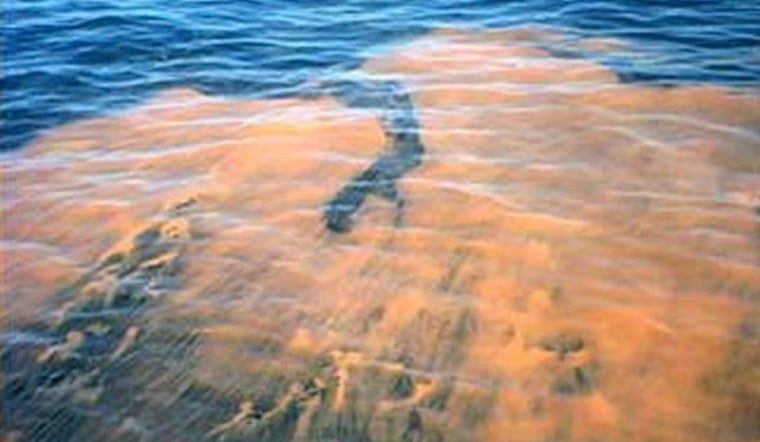
A red tide bloom rarely seen on Florida's Atlantic coast has turned up near Fort George Inlet in Jacksonville, and it's already changing weekend plans. Belynda Rutledge had been planning to go paddleboarding near the inlet, but she changed course after learning about the red tide warning circulating through the area.
The Florida Department of Health in Duval County issued a formal health alert on Monday after water samples collected on August 6 near the inlet confirmed the presence of Karenia brevis, the microscopic alga responsible for red tide, according to Action News Jax. The Florida Fish and Wildlife Conservation Commission has rated the concentration around the inlet as medium, and per FWC, that tier covers 100,000 to 1,000,000 Karenia brevis cells per liter, a range associated with respiratory irritation, probable fish kills, and detection from satellite imagery.
As News4JAX reports, red tide is a harmful algal bloom that can release toxins into both water and air, and Karenia brevis produces toxins capable of harming fish, birds, and other marine life. Exposure can cause burning or watery eyes, throat irritation, skin irritation, and coughing or sneezing, and the outlet notes that anyone experiencing irritation at the beach should move away from the affected area. Pet owners are advised to keep animals away from affected water and dead fish, since red tide toxins can make pets sick.
A Gulf Coast Phenomenon Showing Up in the Wrong Place
What makes this bloom notable isn't just its intensity but its location. Red tide is found almost exclusively in the waters stretching from the Gulf of Mexico to Florida, per FWC, and Karenia brevis is primarily a Gulf organism that rarely survives the trip around the Florida peninsula. Blooms spreading to Florida's Atlantic coast are exceptionally rare, having been documented only nine times in the past 70 years according to historical state and climate records cited by TIME.
Oceanographers have explained the mechanism behind these rare crossings: massive Gulf blooms get entrained by the Loop Current, pushed through the Straits of Florida, and then carried north by the fast-moving Gulf Stream, according to WKMG. FWC notes that these blooms can then be pushed along the coast by winds and currents, and the Gulf Stream itself is capable of carrying red tide organisms as far north as Delaware. Currently, per FWC's tracking map, Northeast Florida is the only area in the state with positive red tide test results.
The timing lines up with the agency's most recent statewide snapshot. In its status report dated August 7, the FWC recorded Karenia brevis at background to low concentrations across 13 samples along Florida's East Coast, specifically in Nassau and Duval counties, while Gulf Coast samples remained at background levels, according to the Bradenton Times. FWC says it anticipates receiving new water samples from the area and will add those results to its public red tide map as they're processed.
Longtime Residents Say They've Never Seen Anything Like It
For some locals, the bloom is simply unfamiliar. Tammy Trump told News4JAX the red tide showing up in the area was new to her, and she said the last time she saw red tide was when she was seven years old. The outlet is advising beachgoers to check local red tide conditions before heading to the beach given how unusual the situation is for the region.
The Duval County health department has also issued specific guidance for people living near the inlet. Coastal residents are being told to close home windows and run air conditioners with well-maintained filters, since wave action can break apart algal cells and send aerosolized toxins drifting inland in sea spray, per First Coast News.
Shellfish Rules and a Local Precedent From 2007
Beyond beach safety, the bloom carries direct implications for local seafood harvesting. Karenia brevis toxins accumulate in shellfish and clams, and state regulations mandate the immediate temporary closure of commercial and recreational molluscan shellfish harvesting once cell counts exceed 10,000 per liter, a threshold meant to prevent Neurotoxic Shellfish Poisoning, according to Protecting Florida Together.
Northeast Florida has seen this kind of event before, though rarely. In September 2007, a red tide bloom along Fernandina Beach in neighboring Nassau County caused a cluster of occupational respiratory illnesses among coastal dredging workers, prompting a joint public health investigation by county officials and the CDC, according to research published on PubMed. That episode remains one of the clearest local precedents for how an Atlantic red tide event can ripple beyond the beach and into the regional workforce.
The economic stakes of a lingering bloom can also be significant. During a severe statewide red tide event in 2018 that migrated into Atlantic coastal counties, local charter fishing and marine recreation businesses reported revenue drops ranging from 36% to 61%, per research from the University of Florida's IFAS Extension. Marine scientists have also pointed to a broader driver behind worsening blooms near shorelines: while Karenia brevis naturally originates 10 to 40 miles offshore, coastal nutrient pollution from land-based nitrogen and phosphorus runoff feeds algal growth and can amplify bloom severity closer to the coast, according to the Sanibel-Captiva Conservation Foundation.
For now, the situation near Fort George Inlet remains fluid, with FWC awaiting new samples and residents like Rutledge and Trump adjusting their routines around water they'd normally treat as safe. Whether this bloom fades quickly or lingers into a broader Northeast Florida event is something only the next round of water testing will show.





