

























































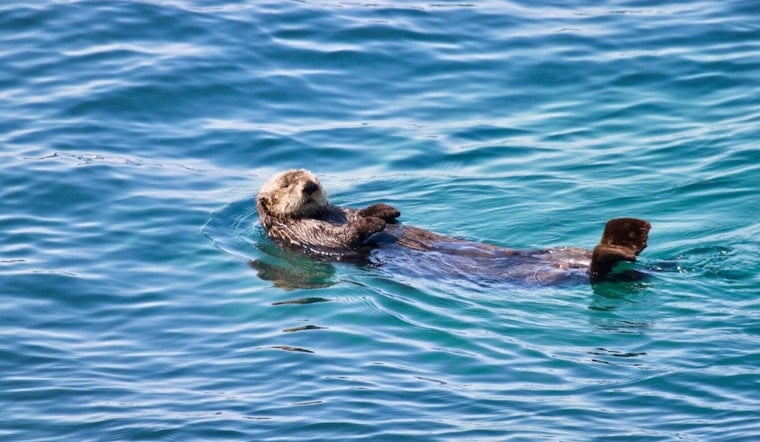
A sea otter has been floating and resting in the bull kelp beds around Turn Rocks near Friday Harbor for more than a month, according to naturalists who have tracked the animal through the summer. The sighting has raised eyebrows across the San Juan Islands, where local marine biologists say a true sea otter appearance is a genuinely rare event.
Naturalists from San Juan Safaris first reported the sustained presence of the single animal in the kelp-heavy waters around Turn Rocks, a hazard reef in the San Juan Channel just outside Friday Harbor, according to San Juan Safaris. As FOX 13 Seattle reports, the spotting has left local marine biologists excited, describing the sea otter as seen floating in the surf near Friday Harbor.
Independent observers backed up the sighting. Naturalists with Western Prince Whale Watching documented the same otter floating wrapped in bull kelp near Friday Harbor navigational markers throughout July and August, per Western Prince Whale Watching. Turn Island and the surrounding channels host extensive bull kelp beds that tend to draw ocean fauna, giving the otter a reliable place to rest for weeks at a time.
Why a Single Otter Is Such a Big Deal
Sea otters vanished entirely from Washington waters by 1911, wiped out by the maritime fur trade, according to National Marine Sanctuaries. The species only returned to the state after 59 Alaskan sea otters were translocated to the outer Olympic Peninsula coast at Point Grenville and La Push in 1969 and 1970.
That reintroduction effort has paid off on the outer coast. Washington's sea otter population grew from an estimated 208 animals in 1989 to roughly 3,000 individuals by 2022, according to joint survey records cited by the Seattle Aquarium. But the vast majority of those otters still stick strictly to the outer coast of the Olympic Peninsula, according to Washington Department of Fish and Wildlife survey documentation, which is exactly why a sighting inside the inland Salish Sea and San Juan Islands counts as a rare, extralimital event.
The state downlisted sea otters from endangered to threatened status in 2018 after the population hit recovery milestones, per the UW School of Aquatic and Fishery Sciences. The animals remain federally protected under the Marine Mammal Protection Act regardless of their state status.
Not to Be Confused With the Neighborhood River Otters
Marine educators note that casual observers in the San Juan Islands frequently mistake North American river otters, which are common in local saltwater bays, for their marine cousins. According to the National Aquarium, river otters weigh only 10 to 30 pounds and swim belly-down, while true sea otters weigh 60 to 90 pounds and float on their backs in kelp, a key distinction that lets scientists verify sightings like the one near Friday Harbor.
The Ecological Stakes of Otters Returning to the San Juans
Scientists watch these wandering otters closely because of what they could mean for the broader ecosystem. As keystone predators, sea otters keep sea urchin populations in check, preventing urchins from devouring the bull kelp forests that serve as essential nurseries for salmon and other marine life, according to reporting from the Journal of the San Juan Islands.
A 2022 study published in The Journal of Wildlife Management by University of Washington researchers found that Washington's marine habitat can support a higher sea otter equilibrium population than earlier models suggested, creating conditions for the species to gradually expand into historical habitat. That research, highlighted by the UW School of Aquatic and Fishery Sciences, offers a scientific explanation for why solitary otters might increasingly wander into inland waterways like the San Juan Channel.
Still, one otter does not make a comeback. U.S. Fish and Wildlife Service records show that while individual sea otters occasionally wander into the Strait of Juan de Fuca and the San Juan Islands, no permanent breeding rafts have established residence in inland Washington waters since the reintroduction effort began. Sea otters typically gather in large social groups to breed, meaning a lone animal resting in the kelp near Friday Harbor is a notable visitor, not necessarily a sign of permanent recolonization.





