

























































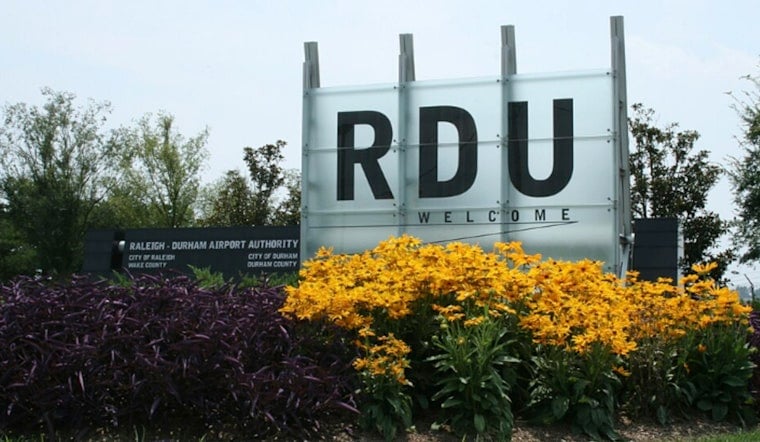
Raleigh-Durham International Airport has opened two indoor pet relief rooms beyond security checkpoints, giving traveling dogs a place to go without their owners having to leave the terminal and start the screening process over. The rooms sit near Gate A7 in Terminal 1 and near Gate C9 in Terminal 2, one in each terminal, and are open to service animals as well as ordinary pets.
Each room includes astroturf, a water fountain and bowl, dog waste bags, a sink for humans, and — perhaps the most novel touch — a fake fire hydrant, according to The News & Observer. The rooms were designed as separate spaces to give animals and their owners some privacy, the paper reports. RDU already had designated outdoor relief areas outside each terminal building, but those required pet owners to exit the secure side of the airport entirely.
Federal Rules Behind the New Rooms
The upgrade isn't just a nicety — it stems from a federal design mandate. The Federal Aviation Administration wants commercial airports to provide indoor relief areas beyond security checkpoints and close to gates, part of a broader effort to improve conditions for passengers with disabilities. Under U.S. Department of Transportation regulations implementing the Air Carrier Access Act, commercial airports handling 10,000 or more annual enplanements have been required by federal mandate since August 2016 to provide accessible service animal relief areas inside post-security sterile terminal areas, according to DOGIPOT.
The FAA also lays out specific engineering standards for these spaces in Advisory Circular 150/5360-14A, recommending dual surfaces such as non-slip entrance flooring paired with synthetic turf or mulch, enclosed perimeter fencing, handwashing sinks, and orienting cues for visually impaired handlers, per the Federal Aviation Administration. RDU's rooms must also be wheelchair accessible, accommodate a dog on a five-foot leash, and include a three-dimensional prop for dogs to lift a leg on — specifications the new fire-hydrant prop appears designed to satisfy.
Service Dogs Versus Everyday Pets
Not every animal that uses these rooms has the same legal standing once it's time to board. Department of Transportation rules updated under the Air Carrier Access Act limit cabin service animal recognition strictly to trained service dogs, explicitly excluding emotional support animals and non-canine species from mandatory cabin entry, according to the U.S. Department of Transportation. Airlines may also require passengers traveling with service dogs to complete standardized health and behavior attestation forms, along with a separate relief attestation form for flights lasting eight hours or longer.
Everyday pets face a different set of rules once they're airborne. Federal Aviation Administration safety regulations under 14 CFR § 121.589 mandate that non-service pets traveling in airplane cabins must remain stowed inside approved carriers beneath the seat in front of the passenger for the entire duration of taxi, takeoff, and landing. That restriction is part of why an indoor relief stop immediately before boarding matters so much for pet owners who no longer get a chance to let their animal move freely once the plane is in motion. Travelers should check with their air carrier before flying with a pet, since carrier-specific rules can vary.
A Small Piece of a Much Bigger Buildout
Prior to the new rooms, RDU's official pet policy required non-service pets to remain crated inside terminal buildings, limiting un-crated relief exclusively to those outdoor, ground-level stations near baggage claim, according to PetFlight. Nationally, more than 500,000 domestic pets travel by air each year in the United States, a volume that has pushed airports across the country to build dedicated indoor relief spaces to manage hygiene and passenger comfort.
The pet rooms arrive as RDU keeps setting passenger records. The airport processed 15.6 million total passengers in 2025, up from 15.5 million in 2024, ranking it the 34th busiest airport in the country. That growth has coincided with a climb in passenger satisfaction, with RDU landing 5th among North American airports in the 2025 J.D. Power North America Airport Satisfaction Study, up from 13th place the year before, per Raleigh Magazine.
The relief rooms are also a small but telling piece of RDU's big-money terminal revamp, the $2.5 billion Transform RDU initiative covering everything from concourse dining additions to terminal landside expansions and runway replacements. As that capital plan continues to reshape both terminals, the airport has also been adding new food options in Terminal 2 and working through operational headaches, including a lightning delay that left fliers stuck on the tarmac past midnight earlier this summer.





